Steven P. Erie - Böcker
Visar alla böcker från författaren Steven P. Erie. Handla med fri frakt och snabb leverans.
6 produkter
6 produkter
Del 15 - California Series on Social Choice and Political Economy
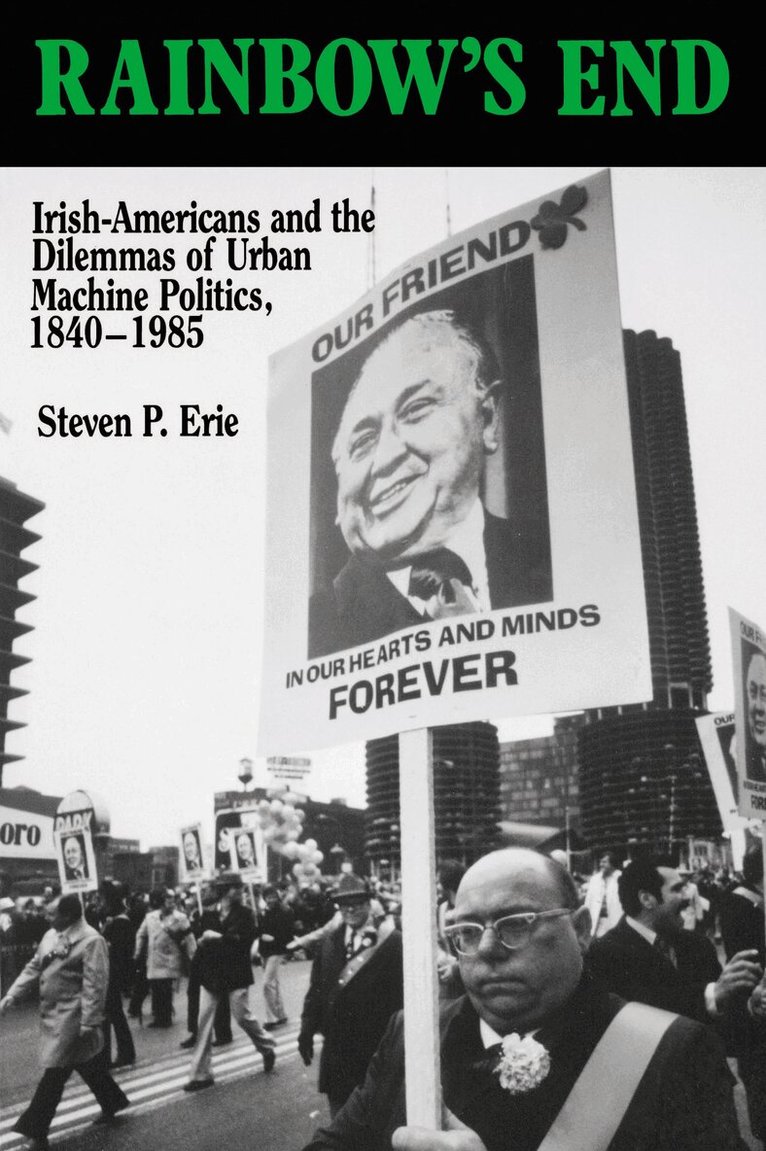
Rainbow's End
Irish-Americans and the Dilemmas of Urban Machine Politics, 1840-1985
Häftad, Engelska, 1990
577 kr
Skickas inom 3-6 vardagar
Unprecedented in its scope, Rainbow's End provides a bold new analysis of the emergence, growth, and decline of six classic Irish-American political machines in New York, Jersey City, Chicago, San Francisco, Pittsburgh and Albany. Combining the approaches of political economy and historical sociology, Erie examines a wide range of issues, including the relationship between city and state politics, the manner in which machines shaped ethnic and working-class politics, and the reasons why centralized party organizations failed to emerge in Boston and Philadelphia despite their large Irish populations. The book ends with a thorough discussion of the significance of machine politics for today's urban minorities.
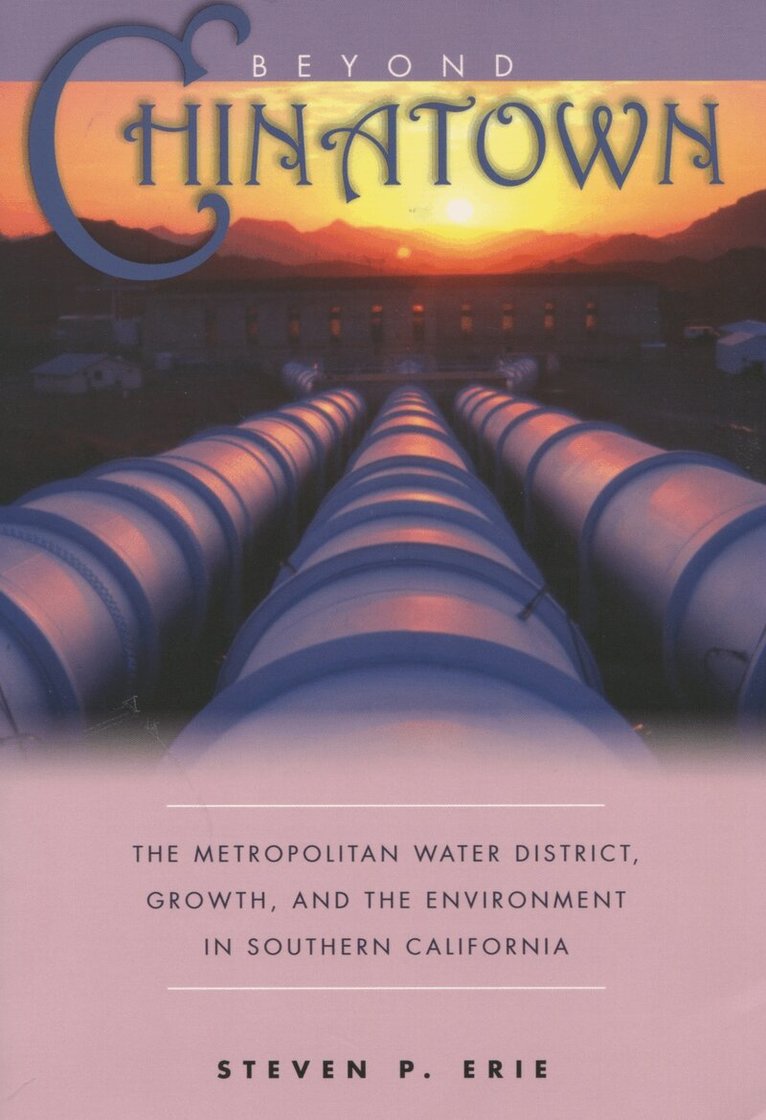
Beyond Chinatown
The Metropolitan Water District, Growth, and the Environment in Southern California
Häftad, Engelska, 2006
319 kr
Skickas inom 7-10 vardagar
As urban growth outstrips water supplies, how can the global challenge of providing "liquid gold" be met? Mixing history and policy analysis, Steven Erie tells the compelling story of the Metropolitan Water District of Southern California (MWD)—one of the world's largest and most important public water agencies—and its role in building the world's 8th largest economy in a semi-desert. No tawdry tale of secret backroom conspiracies—as depicted in the famed film noir Chinatown—this fresh telling concerns an unheralded regional institution, its entrepreneurial public leadership, and pioneering policymaking. Using untapped primary sources, the author re-examines this great regional experiment from its obscure 1920s-era origins, through the Colorado River Aqueduct and State Water Projects, to today's daunting mission of drought management, water quality, environmental stewardship, and post-9/11 supply security. A key focus is MWD's navigation of recent epic water battles: San Diego's combative quest for water independence from MWD and L.A.; lingering conflicts over the Colorado River and northern California's fragile Bay-Delta ecosystem; and the myriad challenges posed by water markets, privatization, and water transfers.Facing unprecedented challenges, MWD is devising innovative formulas to sustain this improbable desert civilization. Beyond Chinatown concludes by considering MWD's Integrated Resources Plan as a global model for water-resources planning and management, water supply diversification and reliability, affordability, and environmental sustainability. Chinatown's seductive mythologies have obscured MWD's authentic, instructive history and lessons.Praise for Steve Erie's previous book, Globalizing L.A.:"This book is a must-read for anyone interested in the politics of Western cities, the politics of urban development, and especially the future politics of cities that are likely to be contenders in the increasingly competitive arena of global trade. . . . Erie's analysis will forever direct us to look first at certain public agencies to begin to understand larger patterns of economic growth in any metropolitan area."—Journal of Urban Affairs"[A] fascinating history of the Los Angeles region's great assets and the forces that drove their development. . . . One hundred years ago, it was improbable that the Los Angeles region would become the 10th largest economy in the world. In Globalizing L.A., Erie explains how that happened and then, fingers crossed, offers lessons on how California's largest and most diverse city and region can keep playing a leading role."—Los Angeles Times "Referencing an impressive body of recent academic research, Erie argues that world-class seaport and airport facilities confer substantial economic advantages and more facilitating links between local businesses and the global economy."—The Sacramento Bee"Erie has built a potent political-economy of urban development that recognizes the crucial role of the public sector in mediating globalizing processes . . . and this is a valuable lesson for academics, dockworkers, community developers, and environmental activists alike."—Economic Geography
1 216 kr
Skickas inom 10-15 vardagar
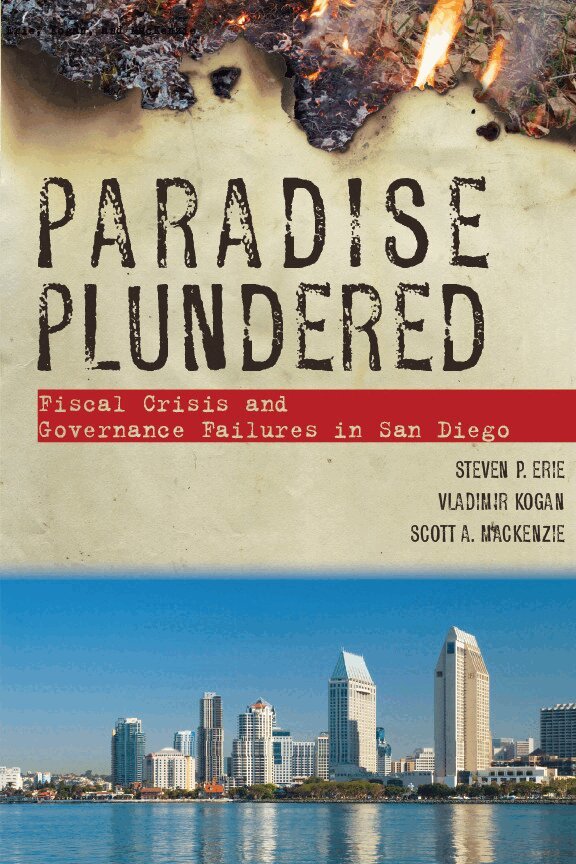
The early 21st century has not been kind to California's reputation for good government. But the Golden State's governance flaws reflect worrisome national trends with origins in the 1970s and 1980s. Growing voter distrust with government, a demand for services but not taxes to pay for them, a sharp decline in enlightened leadership and effective civic watchdogs, and dysfunctional political institutions have all contributed to the current governance malaise.Until recently, San Diego, California—America's 8th largest city—seemed immune to such systematic governance disorders. This sunny beach town entered the 1990s proclaiming to be "America's Finest City," but in a few short years its reputation went from "Futureville" to "Enron-by-the-Sea." In this eye-opening and telling narrative, Steven P. Erie, Vladimir Kogan, and Scott A. MacKenzie mix policy analysis, political theory, and history to explore and explain the unintended but largely predictable failures of governance in San Diego. Using untapped primary sources—interviews with key decision makers and public documents—and benchmarking San Diego with other leading California cities, Paradise Plundered examines critical dimensions of San Diego's governance failure: a multi-billion dollar pension deficit; a chronic budget deficit; inadequate city services and infrastructure; grandiose planning initiatives divorced from dire fiscal realities; an insulated downtown redevelopment program plagued by poorly-crafted public-private partnerships; and, for the metropolitan region, inadequate airport and port facilities, a severe underinvestment in firefighting capacity despite destructive wildfires, and heightened Mexican border security concerns. Far from a sunny story of paradise and prosperity, this account takes stock of an important but understudied city, its failed civic leadership, and poorly performing institutions, policymaking, and planning. Though the extent of these failures may place San Diego in a league of its own, other cities are experiencing similar challenges and political changes. As such, this tale of civic woe offers valuable lessons for urban scholars, practitioners, and general readers concerned about the future of their own cities.
291 kr
Skickas inom 7-10 vardagar
The early 21st century has not been kind to California's reputation for good government. But the Golden State's governance flaws reflect worrisome national trends with origins in the 1970s and 1980s. Growing voter distrust with government, a demand for services but not taxes to pay for them, a sharp decline in enlightened leadership and effective civic watchdogs, and dysfunctional political institutions have all contributed to the current governance malaise.Until recently, San Diego, California—America's 8th largest city—seemed immune to such systematic governance disorders. This sunny beach town entered the 1990s proclaiming to be "America's Finest City," but in a few short years its reputation went from "Futureville" to "Enron-by-the-Sea." In this eye-opening and telling narrative, Steven P. Erie, Vladimir Kogan, and Scott A. MacKenzie mix policy analysis, political theory, and history to explore and explain the unintended but largely predictable failures of governance in San Diego. Using untapped primary sources—interviews with key decision makers and public documents—and benchmarking San Diego with other leading California cities, Paradise Plundered examines critical dimensions of San Diego's governance failure: a multi-billion dollar pension deficit; a chronic budget deficit; inadequate city services and infrastructure; grandiose planning initiatives divorced from dire fiscal realities; an insulated downtown redevelopment program plagued by poorly-crafted public-private partnerships; and, for the metropolitan region, inadequate airport and port facilities, a severe underinvestment in firefighting capacity despite destructive wildfires, and heightened Mexican border security concerns. Far from a sunny story of paradise and prosperity, this account takes stock of an important but understudied city, its failed civic leadership, and poorly performing institutions, policymaking, and planning. Though the extent of these failures may place San Diego in a league of its own, other cities are experiencing similar challenges and political changes. As such, this tale of civic woe offers valuable lessons for urban scholars, practitioners, and general readers concerned about the future of their own cities.
1 666 kr
Skickas inom 10-15 vardagar
Originally published in 1972, this study aims to explore governmental interaction with people and publics interests and institutions in Metropolitan America. These papers discuss issues of how governance can be improved and the federal role in Metropolitanism as well as suggesting ways in which political reform can help. This title will be of interest to students of Environmental Economics and professionals.
495 kr
Skickas inom 10-15 vardagar
Originally published in 1972, this study aims to explore governmental interaction with people and publics interests and institutions in Metropolitan America. These papers discuss issues of how governance can be improved and the federal role in Metropolitanism as well as suggesting ways in which political reform can help. This title will be of interest to students of Environmental Economics and professionals.