Steven Stoft - Böcker
Visar alla böcker från författaren Steven Stoft. Handla med fri frakt och snabb leverans.
3 produkter
3 produkter
341 kr
Tillfälligt slut
1 049 kr
Skickas inom 7-10 vardagar
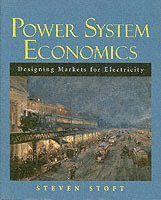
The first systematic presentation of electricity market design-from the basics to the cutting edge. Unique in its breadth and depth. Using examples and focusing on fundamentals, it clarifies long misunderstood issues-such as why today's markets are inherently unstable. The book reveals for the first time how uncoordinated regulatory and engineering policies cause boom-bust investment swings and provides guidance and tools for fixing broken markets. It also takes a provocative look at the operation of pools and power exchanges.* Part 1 introduces key economic, engineering and market design concepts.* Part 2 links short-run reliability policies with long-run investment problems.* Part 3 examines classic designs for day-ahead and real-time markets.* Part 4 covers market power, and* Part 5 covers locational pricing, transmission right and pricing losses.The non-technical introductions to all chapters allow easy access to the most difficult topics. Steering an independent course between ideological extremes, it provides background material for engineers, economists, regulators and lawyers alike. With nearly 250 figures, tables, side bars, and concisely-stated results and fallacies, the 44 chapters cover such essential topics as auctions, fixed-cost recovery from marginal cost, pricing fallacies, real and reactive power flows, Cournot competition, installed capacity markets, HHIs, the Lerner index and price caps. About the AuthorSteven Stoft has a Ph.D. in economics (U.C. Berkeley) as well as a background in physics, math, engineering, and astronomy. He spent a year inside FERC and now consults for PJM, California and private generators. Learn more at www.stoft.com.
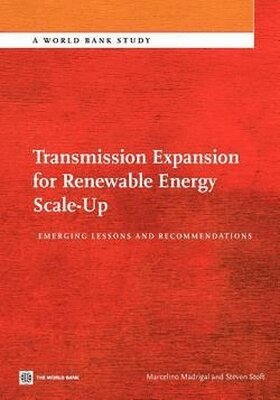
Transmission Expansion for Renewable Energy Scale-Up
Emerging Lessons and Recommendations
Häftad, Engelska, 2012
295 kr
Skickas inom 10-15 vardagar
In their efforts to increase the share of renewable in electricity grids to reducing emissions or increasing energy diversity, developed and developing countries are finding that a considerable scale-up of investments in transmission infrastructures will be necessary to achieve their goals. Renewable energy resources such as wind, solar, and hydro power, tend to be sited far from existing electricity grids and consumption centers. Achieving desired supply levels from these sources requires that networks be expanded to reach many sites and to ensuring the different supply variation patterns of renewable are combined with existing sources in the grid to ensure the constantly varying demand for electricity is always met. Expanding networks will be crucial to achieve renewable energy objectives efficiency and effectively. Efficiency is important to ensure renewable energy goals are achieved at the lowest cost while considering needed investment in transmission. Besides the cost of transmission, which is often worth, transmission needs be planned and built in such a way that the many sites being taped are connected in a timely fashion. The challenges of ensuring efficiency and efficacy in developing transmission for renewable become surmountable if the right planning and regulatory framework for expanding transmission are put in place. This report reviews emerging approaches being undertaken by transmission utilities and regulators to solve to cope with these challenges of expanding transmission for renewable energy scale-up. Proactively planning and regulating transmission networks are emerging as the premier approach to ensure that transmission networks are expanded efficiently and effectively. Linking planning with clear and stable cost-recovery regulation can also help bringing the private sector to complement the considerable investment needs in transmission. Based on the evolving experience and on established theory and practice on transmission regulation, the report also proposes some principles that could be useful to implement specific rules for the planning, development, and pricing of transmission networks.