Steven Weber - Böcker
Visar alla böcker från författaren Steven Weber. Handla med fri frakt och snabb leverans.
7 produkter
7 produkter
274 kr
Skickas inom 7-10 vardagar
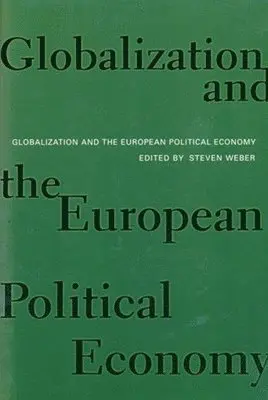
Exploring the impact of globalization -the increase in mobility of capital, goods, ideas, and people-on governance structures in the modern European political economy, the contributors to this volume evaluate a set of propositions about the effects of globalization in the context of several significant empirical settings: corporate governance, "sin regulation," regional economic development, fiscal reform, new equity markets, and legitimating discourse. This book brings together arguments about globalization, European integration, and a broad set of observations about new or unconventional governance structures that are developing in domestic politics, political economy, and international relations within Europe. What mix of causal forces from the global, European, and national level accounts for these changes? Is Europe "special" in any sense? And what are the implications for Europe's relationship with global structures and institutions?
306 kr
Skickas inom 10-15 vardagar
Much of the innovative programming that powers the Internet, creates operating systems, and produces software is the result of “open source” code, that is, code that is freely distributed—as opposed to being kept secret—by those who write it. Leaving source code open has generated some of the most sophisticated developments in computer technology, including, most notably, Linux and Apache, which pose a significant challenge to Microsoft in the marketplace. As Steven Weber discusses, open source’s success in a highly competitive industry has subverted many assumptions about how businesses are run, and how intellectual products are created and protected.Traditionally, intellectual property law has allowed companies to control knowledge and has guarded the rights of the innovator, at the expense of industry-wide cooperation. In turn, engineers of new software code are richly rewarded; but, as Weber shows, in spite of the conventional wisdom that innovation is driven by the promise of individual and corporate wealth, ensuring the free distribution of code among computer programmers can empower a more effective process for building intellectual products. In the case of Open Source, independent programmers—sometimes hundreds or thousands of them—make unpaid contributions to software that develops organically, through trial and error.Weber argues that the success of open source is not a freakish exception to economic principles. The open source community is guided by standards, rules, decisionmaking procedures, and sanctioning mechanisms. Weber explains the political and economic dynamics of this mysterious but important market development.
384 kr
Skickas inom 10-15 vardagar
Free-market capitalism, hegemony, Western culture, peace, and democracy—the ideas that shaped world politics in the twentieth century and underpinned American foreign policy—have lost a good deal of their strength. Authority is now more contested and power more diffuse. Hegemony (benign or otherwise) is no longer a choice, not for the United States, for China, or for anyone else.Steven Weber and Bruce Jentleson are not declinists, but they argue that the United States must take a different stance toward the rest of the world in this, the twenty-first century. Now that we can’t dominate others, we must rely on strategy, making trade-offs and focusing our efforts. And they do not mean military strategy, such as “the global war on terror.” Rather, we must compete in the global marketplace of ideas—with state-directed capitalism, with charismatic authoritarian leaders, with jihadism. In politics, ideas and influence are now critical currency.At the core of our efforts must be a new conception of the world order based on mutuality, and of a just society that inspires and embraces people around the world.
362 kr
Skickas inom 10-15 vardagar
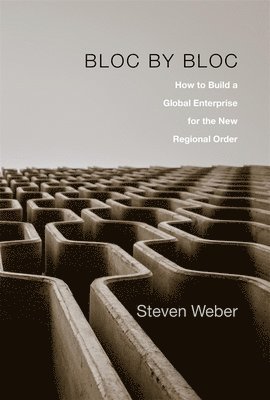
At a time when globalization is taking a step backward, what’s the best way to organize a global enterprise? The key, explains political economist Steven Weber, is to prepare for a world increasingly made up of competing regions defined by their own rules and standards.Globalization has taken a hit as trade wars and resistance to mass migrations dominate headlines. Are we returning to the old world of stand-alone nations? Political economist Steven Weber argues that we are heading toward something new. Global connectedness will not dissolve but will be defined by “regional” blocs, demarcated more by the rules and standards they follow than by territory. For leaders of firms and NGOs with global ambitions, navigating this transformation is the strategic challenge of the decade.Not long ago, we thought the world was flattening out, offering a level playing field to organizations striving for worldwide reach. As global economic governance expanded, firms shifted operations to wherever was most efficient—designing in one country and buying, manufacturing, and selling in others. Today, the world looks bumpier, with rising protectionism, national struggles over data control, and tensions over who should set worldwide standards. Expect emerging regional blocs to be dominated by the major rule-makers: the US, China, and possibly the EU. Firms and NGOs will need to remake themselves by building complete, semi-independent organizations in each region. Every nation will choose which rule-maker it wants to align with, and it may not be the one next door. This new world has the potential to be more prosperous, Weber argues, but friction between the dynamics of geography and technology will make it more risky.Pioneering research, creative thinking, and colorful storytelling from the frontlines of the global economy combine to make this a must-read for leaders and analysts facing tomorrow’s world.
488 kr
Skickas inom 10-15 vardagar
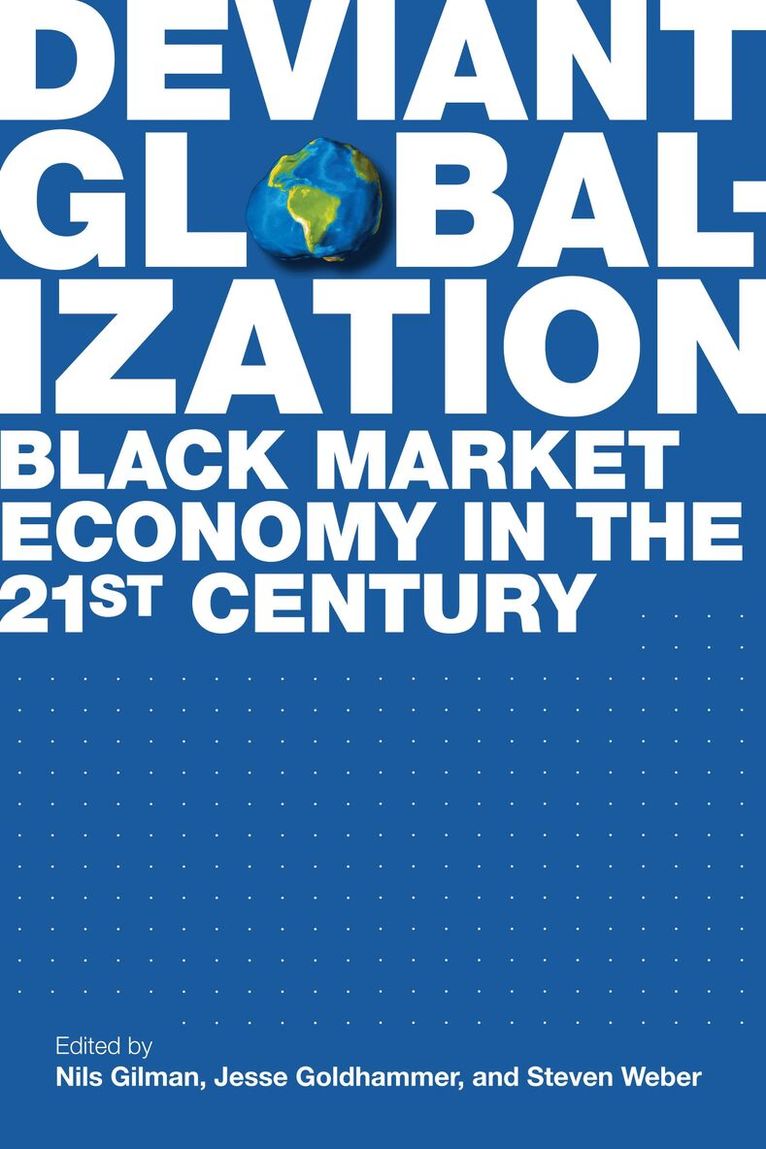
This collection of essays introduces the thriving illicit industries and activities within the global economy whose growth challenges traditional notions of wealth, power, and progress. Through essays contributed by leading experts and scholars, "Deviant Globalization" argues that far from being marginal, illicit activities are a fundamental part of globalization. Narcotrafficking, human trafficking, the organ trade, computer malware, transnational gangs are just as much artifacts of globalization as are CNN and McDonald's, free trade and capital mobility, accessible air travel and container shipping. In fact, almost every technology, process, and regulation that enables mainstream globalization is an enabler of deviant globalization. This unique book explains why understanding deviant globalization as a systemic and integral part of globalization is crucial for setting up policies that will maximize the benefits of globalization and minimize its ill effects. Going beyond the usual pro/con arguments about globalization, "Deviant Globalization" seeks to initiate a critical debate about the choices it presents to governments, firms, supra-national organizations, and individuals.An accessible treatment of the underbelly of globalization, the book offers a systematic treatment of the difficult policy choices that it creates and describes a much more complex and symbiotic relationship between illicit and mainstream globalization.
1 964 kr
Skickas inom 10-15 vardagar
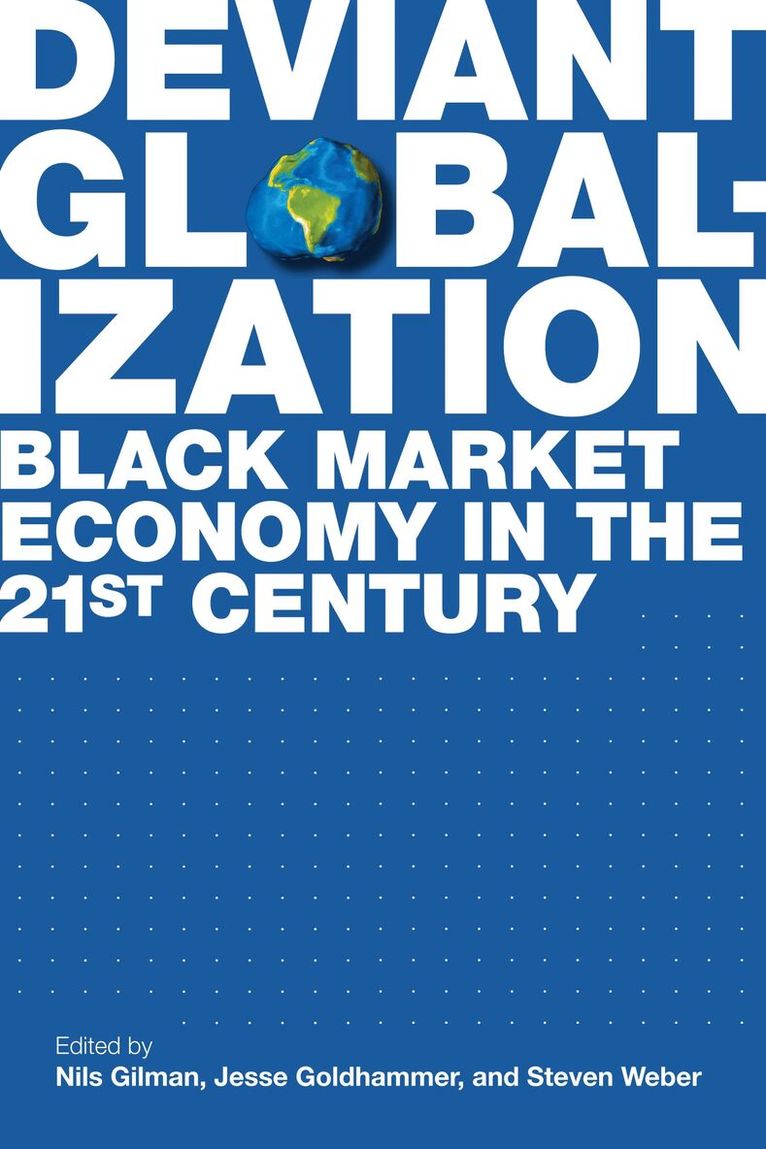
This collection of essays introduces the thriving illicit industries and activities within the global economy whose growth challenges traditional notions of wealth, power, and progress. Through essays contributed by leading experts and scholars, "Deviant Globalization" argues that far from being marginal, illicit activities are a fundamental part of globalization. Narcotrafficking, human trafficking, the organ trade, computer malware, transnational gangs are just as much artifacts of globalization as are CNN and McDonald's, free trade and capital mobility, accessible air travel and container shipping. In fact, almost every technology, process, and regulation that enables mainstream globalization is an enabler of deviant globalization. This unique book explains why understanding deviant globalization as a systemic and integral part of globalization is crucial for setting up policies that will maximize the benefits of globalization and minimize its ill effects. Going beyond the usual pro/con arguments about globalization, "Deviant Globalization" seeks to initiate a critical debate about the choices it presents to governments, firms, supra-national organizations, and individuals.An accessible treatment of the underbelly of globalization, the book offers a systematic treatment of the difficult policy choices that it creates and describes a much more complex and symbiotic relationship between illicit and mainstream globalization.
678 kr
Skickas inom 5-8 vardagar