Steven Wolf – författare
Visar alla böcker från författaren Steven Wolf. Handla med fri frakt och snabb leverans.
7 produkter
7 produkter
Inbunden, Engelska, 2001
1 086 kr
Skickas inom 10-15 vardagar
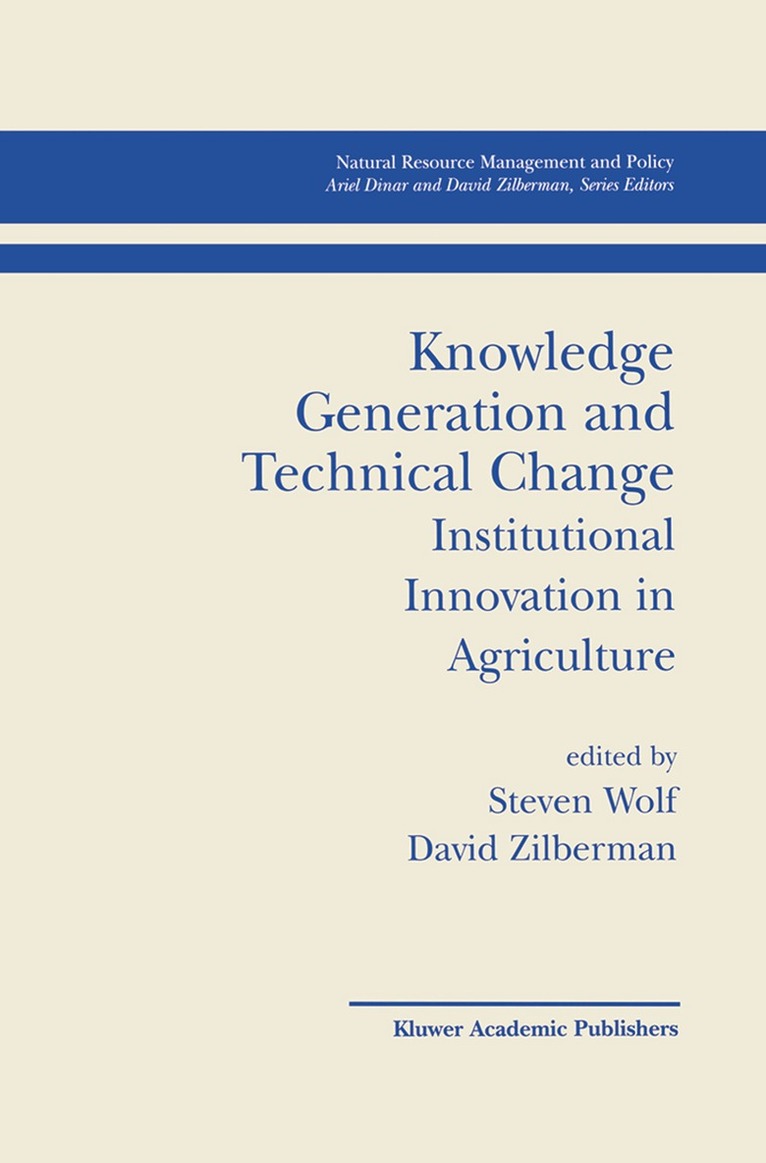
Knowledge generation and transfer mechanisms are being transformed in important and controversial ways. Investment in research and development has increased in response to recognition that scientific productivity is tightly connected to economic dynamism. Patent protection has been expanded in order to stimulate higher levels of private investment. Intellectual property rights held by public organizations and researchers are now increasingly transferred to private organizations to accelerate the diffusion and enhance the value of knowledge produced by public agencies and universities. Additionally, new institutions such as university offices of technology transfer, venture capital markets, and a variety of consortia in knowledge-intensive industries are being established throughout the US and in other parts of the world. These changes have led to a repositioning of the state in systems of innovation and an increase in the proprietary character of technical information.The purpose of this book is to review and analyze i) contemporary transitions in agricultural knowledge generation and extension arrangements from an empirical perspective, and ii) emerging and contradictory perspectives as to how knowledge systems can be assessed effectively. The authors aim to provide the reader with a better understanding of: the implications of new biotechnologies and new intellectual property rights regimes on public- private relations in science, the extent to which benefits from scientific knowledge are being appropriated by private sector actors; the diversity and possible outcomes of privatization initiatives in extension; and prospects for public goods production and ecological sustainability given contemporary trends. The book presents contrasting views on the degree of complementarity and substitution between private and public sector investments in research and extension. Recognizing that the labels "public" and "private" are incomplete and at times misleading descriptions of the structure and function of coordinating bodies in social systems, the analyses highlight ways in which public and private spaces and modes of functioning combine.
Del 19 - Natural Resource Management and Policy
Knowledge Generation and Technical Change
Institutional Innovation in Agriculture
Häftad, Engelska, 2012
1 086 kr
Skickas inom 10-15 vardagar
Knowledge generation and transfer mechanisms are being transformed in important and controversial ways. Investment in research and development has increased in response to recognition that scientific productivity is tightly connected to economic dynamism. Patent protection has been expanded in order to stimulate higher levels of private investment. Intellectual property rights held by public organizations and researchers are now increasingly transferred to private organizations to accelerate the diffusion and enhance the value of knowledge produced by public agencies and universities. Additionally, new institutions such as university offices of technology transfer, venture capital markets, and a variety of consortia in knowledge-intensive industries are being established throughout the United States and in other parts of the world. These changes have led to a repositioning of the state in systems of innovation and an increase in the proprietary character of technical information. The purpose of this book is to review and analyze i) contemporary transitions in agricultural knowledge generation and extension arrangements from an empirical perspective, and ii) emerging and contradictory perspectives as to how knowledge systems can be assessed effectively. The authors aim to provide the reader with a better understanding of the implications of new biotechnologies and new intellectual property rights regimes on public-private relations in science, the extent to which benefits from scientific knowledge are being appropriated by private sector actors, the diversity and possible outcomes of privatization initiatives in extension, and prospects for public goods production and ecological sustainability given contemporary trends. The book presents contrasting views on the degree of complementarity and substitution between private and public sector investments in research and extension. Recognizing that the labels `public' and `private' are incomplete and at times misleading descriptions of the structure and function of coordinating bodies in social systems, the analyses highlight ways in which public and private spaces and modes of functioning combine. In addition to illustrating a broad range of analytic methodologies useful for studying organizational questions in knowledge systems, the authors identify the implications of a range of past and potential institutional innovations.
E-bok
PDF, Engelska, 20121 367 kr
Läs direkt efter köp
Knowledge generation and transfer mechanisms are being transformed in important and controversial ways. Investment in research and development has increased in response to recognition that scientific productivity is tightly connected to economic dynamism. Patent protection has been expanded in order to stimulate higher levels of private investment. Intellectual property rights held by public organizations and researchers are now increasingly transferred to private organizations to accelerate the diffusion and enhance the value of knowledge produced by public agencies and universities. Additionally, new institutions such as university offices of technology transfer, venture capital markets, and a variety of consortia in knowledge-intensive industries are being established throughout the United States and in other parts of the world. These changes have led to a repositioning of the state in systems of innovation and an increase in the proprietary character of technical information. The purpose of this book is to review and analyze i) contemporary transitions in agricultural knowledge generation and extension arrangements from an empirical perspective, and ii) emerging and contradictory perspectives as to how knowledge systems can be assessed effectively. The authors aim to provide the reader with a better understanding of the implications of new biotechnologies and new intellectual property rights regimes on public-private relations in science, the extent to which benefits from scientific knowledge are being appropriated by private sector actors, the diversity and possible outcomes of privatization initiatives in extension, and prospects for public goods production and ecological sustainability given contemporary trends. The book presents contrasting views on the degree of complementarity and substitution between private and public sector investments in research and extension. Recognizing that the labels `public'' and `private'' are incomplete and at times misleading descriptions of the structure and function of coordinating bodies in social systems, the analyses highlight ways in which public and private spaces and modes of functioning combine. In addition to illustrating a broad range of analytic methodologies useful for studying organizational questions in knowledge systems, the authors identify the implications of a range of past and potential institutional innovations.
Inbunden, Tyska
305 kr
Skickas inom 3-6 vardagar
E-bok
PDF, Engelska, 2015199 kr
Läs direkt efter köp
Seminar paper from the year 2015 in the subject Business economics - Investment and Finance, grade: 1,3, The FOM University of Applied Sciences, Hamburg, language: English, abstract: In the past years the number of startups increased continuously. Often it is the case that a startup doesn't have the financial power to realize a business and if an investor or a financial institute refuses to support the startup many good ideas can fail already at the beginning. Therefore it is necessary for startups to find new ways for financing the business ideas. Crowdfunding is one method for financing and investing which nowadays reaches a high popularity and growth among innovative people, groups and companies. To get a better understanding of the whole context this term paper investigates the different perspectives and actors of crowdfunding to give an answer to the actual aim. The aim is to analyze whether crowdfunding is an appropriate way of gaining funds for startups or not. In the first part the theoretical information is provided. This includes definitions and differentiations of used basic terms like crowdfunding and crowdinvesting as well as the different forms of crowdfunding. Also in the same part the functionality and the historical development of crowdfunding will be shown. In chapter 3 the actors of crowdfunding the startups, the investors and the platforms will be described. This part will focus on the different reasons, aims and other important aspects for each of the actors. An overview of advantages and risks for startups and investors will be given in the fourth chapter. To have a better impression about the different crowdfunding forms, levels and scales, the fifth chapter will show some examples of successful crowdfunding campaigns. Based on all researched and derived information, the last chapter will give a summary and conclusion to the aim of this term paper.
Häftad, Engelska, 2015
347 kr
Skickas inom 3-6 vardagar
E-bok
PDF, Engelska, 2016396 kr
Läs direkt efter köp
Bachelor Thesis from the year 2016 in the subject Business economics - Business Management, Corporate Governance, grade: 1,3, The FOM University of Applied Sciences, Hamburg, language: English, abstract: Globalization and a very high competition level influence companies all around the world. In order to enlarge their businesses, they try to increase their market shares and look for new prospective markets for the further expansion. Nowadays many emerging markets, particularly India, attract solid overseas investments. The aim of this bachelor thesis is to estimate the potential attractiveness of India as a market for expansion of an online fashion retailer. In order to attain the mentioned aim, the thesis will consist of several chapters with theoretical and practical information. Chapter 2 will be focused on the principal information on this topic: market selection criteria, including evaluating market attractiveness and potential risks. Based on these criteria, the most important economical, political, demographical, geographical and administrative information about India, which is relevant to the research, will be provided in chapter 3. This will be followed by an analysis of Indian textile business, including retail market overview and its influencing factors (infrastructure, logistics, IT development, culture, legislative regulations and restrictions). According to restrictions in online business, chapter 5 will be focused on description of four market entry strategies, their advantages and disadvantages. Next the analysis of the pioneer and follower timing strategies will be provided. Based on all findings before, success factors for running online fashion retail business in India will be formulated. Then there will be given an overview about the important players in the field of online fashion retail in India, the main points of their activities in comparison. As the completion of the research, the potential Indian market entry strategy will be formulated. This includes an analysis of locations in India and a SWOT analysis, which information will be provided according to the previous findings of the thesis. All derived information and ideas formulated in the thesis will be summarized in conclusion and the main thesis question introduced in the aim will be answered.