Su Lin Lewis - Böcker
Visar alla böcker från författaren Su Lin Lewis. Handla med fri frakt och snabb leverans.
5 produkter
5 produkter
1 472 kr
Skickas inom 7-10 vardagar
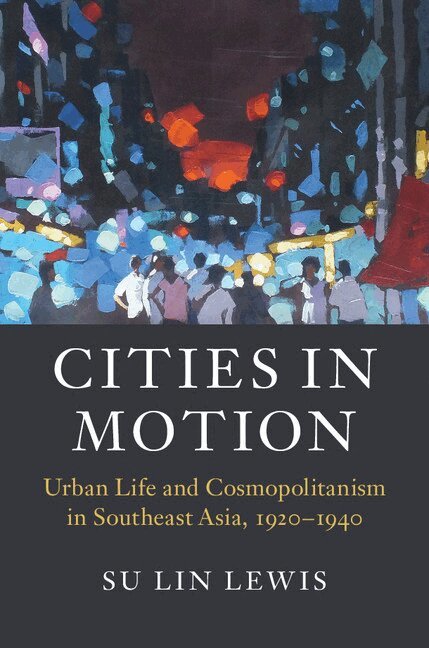
In the 1920s and 1930s, the port-cities of Southeast Asia were staging grounds for diverse groups of ordinary citizens to experiment with modernity, as a rising Japan and American capitalism challenged the predominance of European empires after the First World War. Both migrants and locals played a pivotal role in shaping civic culture. Moving away from a nationalist reading of the period, Su Lin Lewis explores layers of cross-cultural interaction in various spheres: the urban built environment, civic associations, print media, education, popular culture and the emergence of the modern woman. While the book focuses on Penang, Rangoon and Bangkok - three cities born amidst British expansion to the region - it explores connected experiences across Asia and in Asian intellectual enclaves in Europe. Cosmopolitan sensibilities were severely tested in the era of post-colonial nationalism, but are undergoing a resurgence in Southeast Asia's civil society and creative class today.
441 kr
Skickas inom 7-10 vardagar
In the 1920s and 1930s, the port-cities of Southeast Asia were staging grounds for diverse groups of ordinary citizens to experiment with modernity, as a rising Japan and American capitalism challenged the predominance of European empires after the First World War. Both migrants and locals played a pivotal role in shaping civic culture. Moving away from a nationalist reading of the period, Su Lin Lewis explores layers of cross-cultural interaction in various spheres: the urban built environment, civic associations, print media, education, popular culture and the emergence of the modern woman. While the book focuses on Penang, Rangoon and Bangkok - three cities born amidst British expansion to the region - it explores connected experiences across Asia and in Asian intellectual enclaves in Europe. Cosmopolitan sensibilities were severely tested in the era of post-colonial nationalism, but are undergoing a resurgence in Southeast Asia's civil society and creative class today.
Socialism, Internationalism, and Development in the Third World
Envisioning Modernity in the Era of Decolonization
Inbunden, Engelska, 2024
1 245 kr
Skickas inom 10-15 vardagar
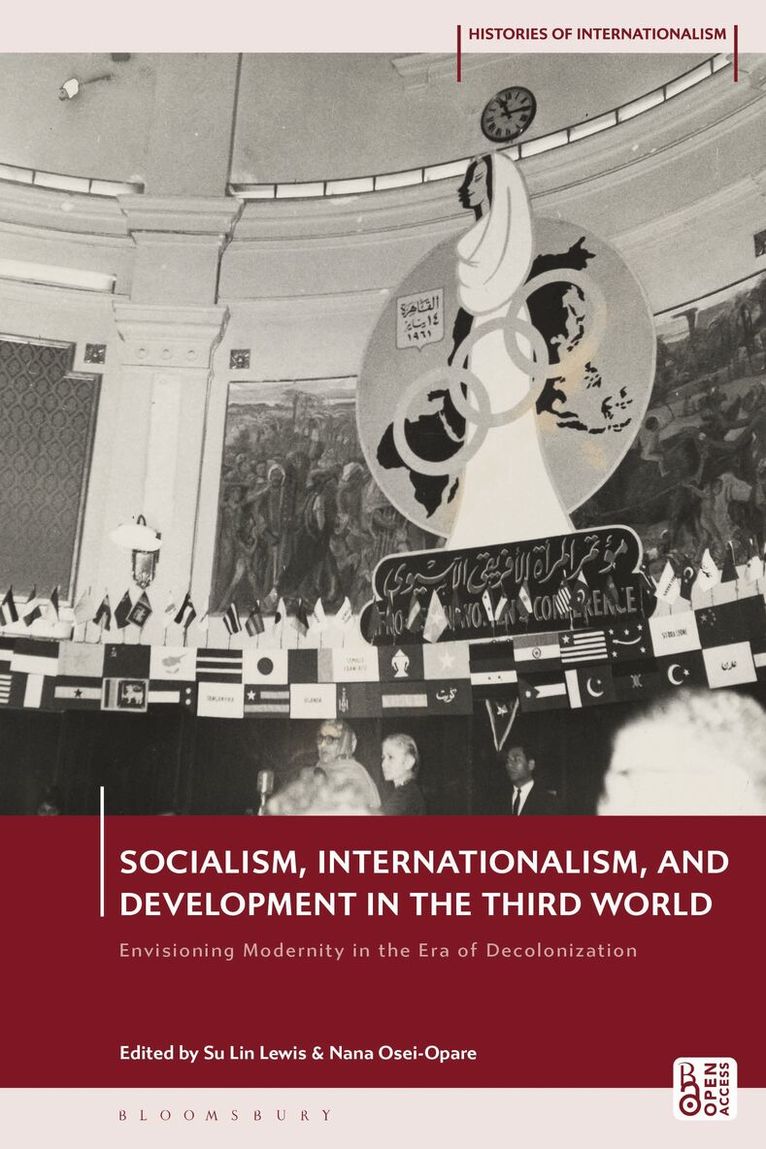
In the wake of colonial and racial exploitation, political leaders, technocrats, activists, and workers across the Third World turned to socialism to offer a new vision of post-colonial development. Against a backdrop of decolonization, white supremacy, and the Cold War, they fostered anti-colonial solidarity and created cooperative frameworks for self-reliance. In following these actors, the contributions to this volume show that “development” was not merely exported from North to South: people across the Global South collaborated with each other while engaging with a diversity of socialist ideas, from European Fabianism and Marxism to tailored African, Asian, and Latin American models. They led debates on race and inequality from the 1920s and 1930s and spearheaded local, regional, and internationalist efforts to re-envision modernity by the 1950s and 1960s. By examining the limitations and legacies of socialist development initiatives in and across the Third World, Socialism, Internationalism, and Development in the Third World offers new perspectives on the intertwined histories of socialism, development, and international cooperation, with lessons for both past and present.The ebook editions of this book are available open access under a CC BY-NC-ND 4.0 licence on bloomsburycollections.com. Open access was funded by UKRI and Rice University, USA.
Socialism, Internationalism, and Development in the Third World
Envisioning Modernity in the Era of Decolonization
Häftad, Engelska, 2026
499 kr
Kommande
In the wake of colonial and racial exploitation, political leaders, technocrats, activists, and workers across the Third World turned to socialism to offer a new vision of post-colonial development. Against a backdrop of decolonization, white supremacy, and the Cold War, they fostered anti-colonial solidarity and created cooperative frameworks for self-reliance. In following these actors, the contributions to this volume show that “development” was not merely exported from North to South: people across the Global South collaborated with each other while engaging with a diversity of socialist ideas, from European Fabianism and Marxism to tailored African, Asian, and Latin American models. They led debates on race and inequality from the 1920s and 1930s and spearheaded local, regional, and internationalist efforts to re-envision modernity by the 1950s and 1960s. By examining the limitations and legacies of socialist development initiatives in and across the Third World, Socialism, Internationalism, and Development in the Third World offers new perspectives on the intertwined histories of socialism, development, and international cooperation, with lessons for both past and present.The ebook editions of this book are available open access under a CC BY-NC-ND 4.0 licence on bloomsburycollections.com. Open access was funded by UKRI and Rice University, USA.
1 442 kr
Skickas inom 7-10 vardagar
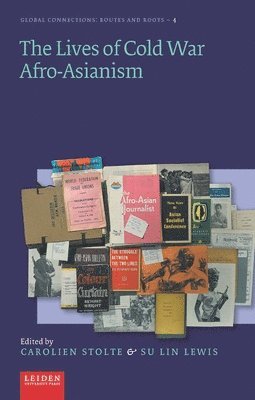
The Afro-Asianism of the early Cold War has long remained buried under the narrative of Bandung, homogenising and subverting the different visions of post-colonial worldmaking that co-existed alongside the Bandung project. This book turns the lens on these other visions, and the transnational interactions which emerged from various other gatherings of the 1950s and 1960s that existed beyond the realm of high diplomacy, while blurring the lines between state and non-state projects. It examines how Afro-Asianism was lived by activists, intellectuals, cultural figures, as well as political leaders in building a post-imperial world – particularly women. As a whole, this collection of essays examines the diversity of Afro-Asian ideals that emerged through such movements, untangling the personal relationships, political competition, racial hierarchies, and solidarities that shaped them. By visualising political Afro-Asianism and its proponents as a living network, a fuller picture of decolonization and the Cold War is brought into view.