Suminori Tokunaga – författare
Visar alla böcker från författaren Suminori Tokunaga. Handla med fri frakt och snabb leverans.
7 produkter
7 produkter
Del 60 - New Frontiers in Regional Science: Asian Perspectives
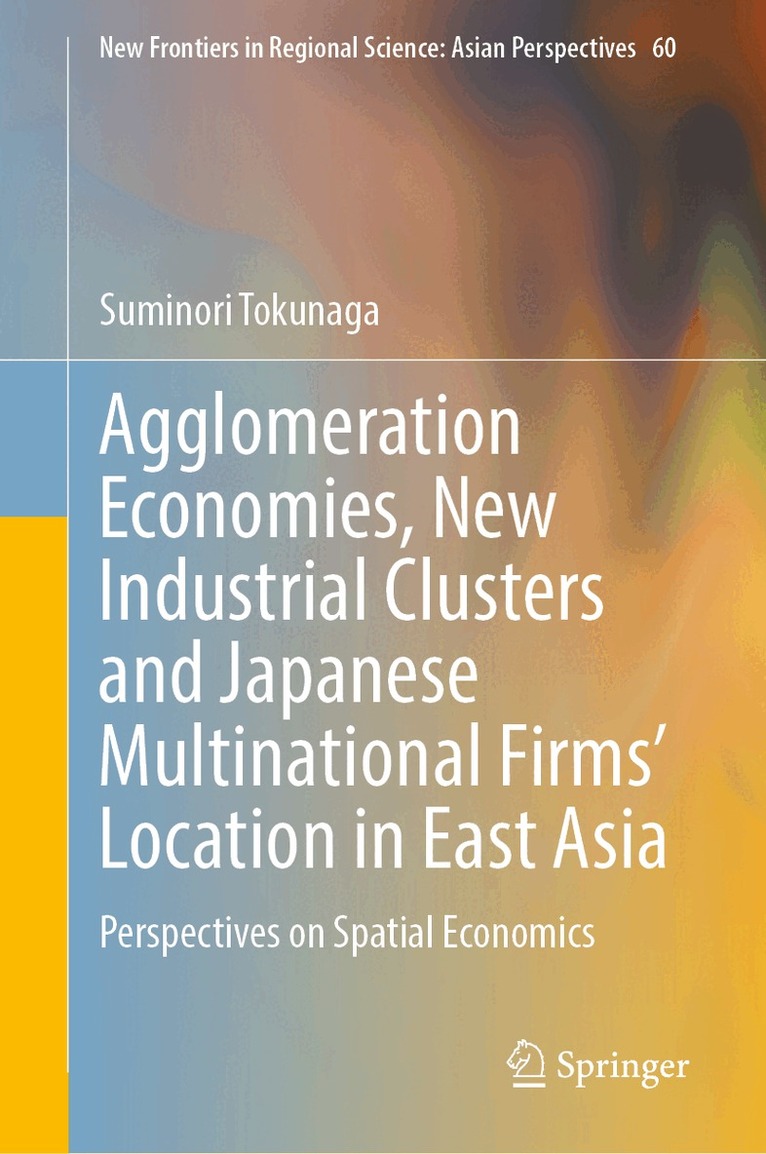
Agglomeration Economies, New Industrial Clusters and Japanese Multinational Firms’ Location in East Asia
Perspectives on Spatial Economics
Inbunden, Engelska, 2024
1 194 kr
Skickas inom 5-8 vardagar
This book shows that agglomeration economies, new industrial clusters, and Japanese multinational firms’ location are particularly important for the Japanese manufacturing industry in Japan and East Asia. For that industry, the author first estimated the flexible translog production function using four-digit SIC industry panel data and panel data of the indices of Ellison and Glaeser (1997) agglomeration with the same industry and coagglomeration with different industry groups for 1985–2000. From the estimated results, it was found that there are positive impacts of agglomeration economies on production, especially the externality coagglomeration effect and very slight increasing returns to scale in the Japanese manufacturing industry. Next, the estimation of the location for Japanese industry foreign direct investment (FDI) for 1986–2009 in East Asia using the new economic geography (NEG) model was shown. From these results of estimation of location factors, it was found that theagglomeration economies, market potential and supplier access are particularly important in the location choice of the Japanese manufacturing industry in East Asia. Finally, as Japan’s overall population has been declining since around 2010, the author was to build new industry clusters with digital technologies and elucidate their economic effects to overcome the negative economic impact of declining population and the COVID-19 pandemic using a dynamic four-region computable general equilibrium (D4SCGE) model. The innovation is promoted by these horizontal and vertical agglomerations, and construction of a production pyramid with an efficient production linkage—that is, the construction of new, efficient industrial clusters—is an important policy issue.
E-bok
Engelska, 20241 572 kr
Läs direkt efter köp
This book shows that agglomeration economies, new industrial clusters, and Japanese multinational firms’ location are particularly important for the Japanese manufacturing industry in Japan and East Asia. For that industry, the author first estimated the flexible translog production function using four-digit SIC industry panel data and panel data of the indices of Ellison and Glaeser (1997) agglomeration with the same industry and coagglomeration with different industry groups for 1985–2000. From the estimated results, it was found that there are positive impacts of agglomeration economies on production, especially the externality coagglomeration effect and very slight increasing returns to scale in the Japanese manufacturing industry. Next, the estimation of the location for Japanese industry foreign direct investment (FDI) for 1986–2009 in East Asia using the new economic geography (NEG) model was shown. From these results of estimation of location factors, it was found that theagglomeration economies, market potential and supplier access are particularly important in the location choice of the Japanese manufacturing industry in East Asia. Finally, as Japan’s overall population has been declining since around 2010, the author was to build new industry clusters with digital technologies and elucidate their economic effects to overcome the negative economic impact of declining population and the COVID-19 pandemic using a dynamic four-region computable general equilibrium (D4SCGE) model. The innovation is promoted by these horizontal and vertical agglomerations, and construction of a production pyramid with an efficient production linkage—that is, the construction of new, efficient industrial clusters—is an important policy issue.
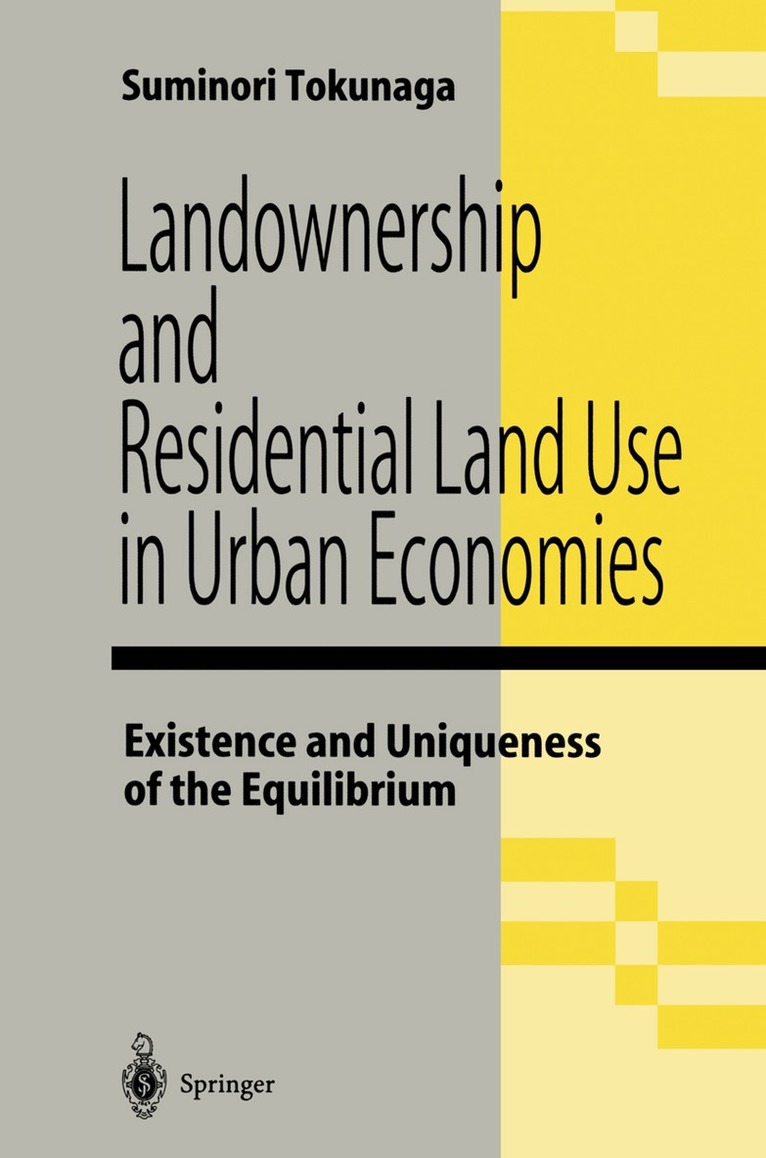
Landownership and Residential Land Use in Urban Economies
Existence and Uniqueness of the Equilibrium
E-bok
PDF, Engelska, 2012708 kr
Läs direkt efter köp
As a prototype for introducing landownership into an urban residential choice model, a basic model of residential land use is proposed in which a group of city residents is assumed to own jointly a circular area of land extending from the central business district. Absentee and public landownership models are considered as special cases. With this basic model, the existence and uniqueness of the land-use equilibrium can be shown, and the effects of landownership, household income, and population can be analyzed. By extending this model to an arbitrary subset of the city land and by introducing a crowding externalities variable, the effects of landownership on the land-use equilibrium are examined using comparative statistics. This book will be extremely useful for those whose work or research covers the fields of economics, urban planning, or regional studies.
Landownership and Residential Land Use in Urban Economies
Existence and Uniqueness of the Equilibrium
Häftad, Engelska, 2012
566 kr
Skickas inom 10-15 vardagar
As a prototype for introducing landownership into an urban residential choice model, a basic model of residential land use is proposed in which a group of city residents is assumed to own jointly a circular area of land extending from the central business district.
Del 11 - New Frontiers in Regional Science: Asian Perspectives
Spatial Economic Modelling of Megathrust Earthquake in Japan
Impacts, Reconstruction, and Regional Revitalization
Inbunden, Engelska, 2018
1 091 kr
Skickas inom 10-15 vardagar
This book presents an evaluation of the impacts of megathrust earthquakes and tsunamis on regional economies and subsequent reconstruction, as well as regional revitalization by the spatial economic model and dynamic macro and regional computable general equilibrium (CGE) models. The cases examined are the Great East Japan Earthquake and the Indian Ocean Tsunami. The study constructs three models of these megathrust earthquakes and the associated tsunami. In the first model, the regional CGE model is proposed with a database comprising the two-regional social accounting matrix for 2005 between the region comprising four disaster-affected prefectures of Japan and the non-disaster region. For the recursive dynamic regional CGE model, the model that expanded and improved the dynamic two-regional CGE model to reflect the incomplete employment conditions and the aging society is used to analyze the impacts of an earthquake and the construction of industrial clusters. In the second model, the interregional input–output model is proposed in order to analyze the impacts of the earthquake and rapid population decline and construction of a biogas electricity power plant. In the third model, a new economic geography (NEG) model is proposed, consisting of the 47 prefectures of Japan in order to investigate the impacts of the Great East Japan and Nankai megathrust earthquakes and the associated tsunami and to consider how they change the regional economies of Japan. Using these three models, the impacts of megathrust earthquakes and tsunamis on regional economies and reconstruction and on regional revitalization are evaluated.
E-bok
Engelska, 20171 387 kr
Läs direkt efter köp
This book presents an evaluation of the impacts of megathrust earthquakes and tsunamis on regional economies and subsequent reconstruction, as well as regional revitalization by the spatial economic model and dynamic macro and regional computable general equilibrium (CGE) models. The cases examined are the Great East Japan Earthquake and the Indian Ocean Tsunami. The study constructs three models of these megathrust earthquakes and the associated tsunami. In the first model, the regional CGE model is proposed with a database comprising the two-regional social accounting matrix for 2005 between the region comprising four disaster-affected prefectures of Japan and the non-disaster region. For the recursive dynamic regional CGE model, the model that expanded and improved the dynamic two-regional CGE model to reflect the incomplete employment conditions and the aging society is used to analyze the impacts of an earthquake and the construction of industrial clusters. In the second model, the interregional input–output model is proposed in order to analyze the impacts of the earthquake and rapid population decline and construction of a biogas electricity power plant. In the third model, a new economic geography (NEG) model is proposed, consisting of the 47 prefectures of Japan in order to investigate the impacts of the Great East Japan and Nankai megathrust earthquakes and the associated tsunami and to consider how they change the regional economies of Japan. Using these three models, the impacts of megathrust earthquakes and tsunamis on regional economies and reconstruction and on regional revitalization are evaluated.
Del 11 - New Frontiers in Regional Science: Asian Perspectives
Spatial Economic Modelling of Megathrust Earthquake in Japan
Impacts, Reconstruction, and Regional Revitalization
Häftad, Engelska, 2018
1 091 kr
Skickas inom 10-15 vardagar
This book presents an evaluation of the impacts of megathrust earthquakes and tsunamis on regional economies and subsequent reconstruction, as well as regional revitalization by the spatial economic model and dynamic macro and regional computable general equilibrium (CGE) models. The cases examined are the Great East Japan Earthquake and the Indian Ocean Tsunami. The study constructs three models of these megathrust earthquakes and the associated tsunami. In the first model, the regional CGE model is proposed with a database comprising the two-regional social accounting matrix for 2005 between the region comprising four disaster-affected prefectures of Japan and the non-disaster region. For the recursive dynamic regional CGE model, the model that expanded and improved the dynamic two-regional CGE model to reflect the incomplete employment conditions and the aging society is used to analyze the impacts of an earthquake and the construction of industrial clusters. In the second model, the interregional input–output model is proposed in order to analyze the impacts of the earthquake and rapid population decline and construction of a biogas electricity power plant. In the third model, a new economic geography (NEG) model is proposed, consisting of the 47 prefectures of Japan in order to investigate the impacts of the Great East Japan and Nankai megathrust earthquakes and the associated tsunami and to consider how they change the regional economies of Japan. Using these three models, the impacts of megathrust earthquakes and tsunamis on regional economies and reconstruction and on regional revitalization are evaluated.