Sung-Wook Nam – författare
Visar alla böcker från författaren Sung-Wook Nam. Handla med fri frakt och snabb leverans.
5 produkter
South Korea’s 70-Year Endeavor for Foreign Policy, National Defense, and Unification
Av Sung-Wook Nam, Sang-Woo Rhee m. fl.
Inbunden, 2018
679 kr
Lägg i varukorg
This book brings Korea's finest foreign policy minds together in contemplating the risks and rewards of finally ending the 70 year stalemate between North and South Korea through reunification. While North Korea is in conflict with the United States over denuclearization and regime security, the …
South Korea's 70-Year Endeavor for Foreign Policy, National Defense, and Unification
Av Seong-Ok Yoo, Young-Soon Chung m. fl.
E-bok, 2018
877 kr
Lägg i varukorg
This book brings Korea''s finest foreign policy minds together in contemplating the risks and rewards of finally ending the 70 year stalemate between North and South Korea through reunification. While North Korea is in conflict with the United States over denuclearization and regime security, the …
South Korea’s 70-Year Endeavor for Foreign Policy, National Defense, and Unification
Av Sung-Wook Nam, Sang-Woo Rhee m. fl.
Häftad, 2019
679 kr
Lägg i varukorg
This book brings Korea's finest foreign policy minds together in contemplating the risks and rewards of finally ending the 70 year stalemate between North and South Korea through reunification. While North Korea is in conflict with the United States over denuclearization and regime security, the …
NORTH KOREAN NUCLEAR WEAPON AND REUNIFICATION OF THE KOREAN PENINSULA
Inbunden, 2019
1509 kr
Lägg i varukorg
This book explains the origin and historical development of North Korean nuclear weapon dated from the aftermath of World War II. The story of North Korea's nuclear program began when the United States dropped atomic bombs over Hiroshima and Nagasaki in August 1945 which led to Japan's immediate …
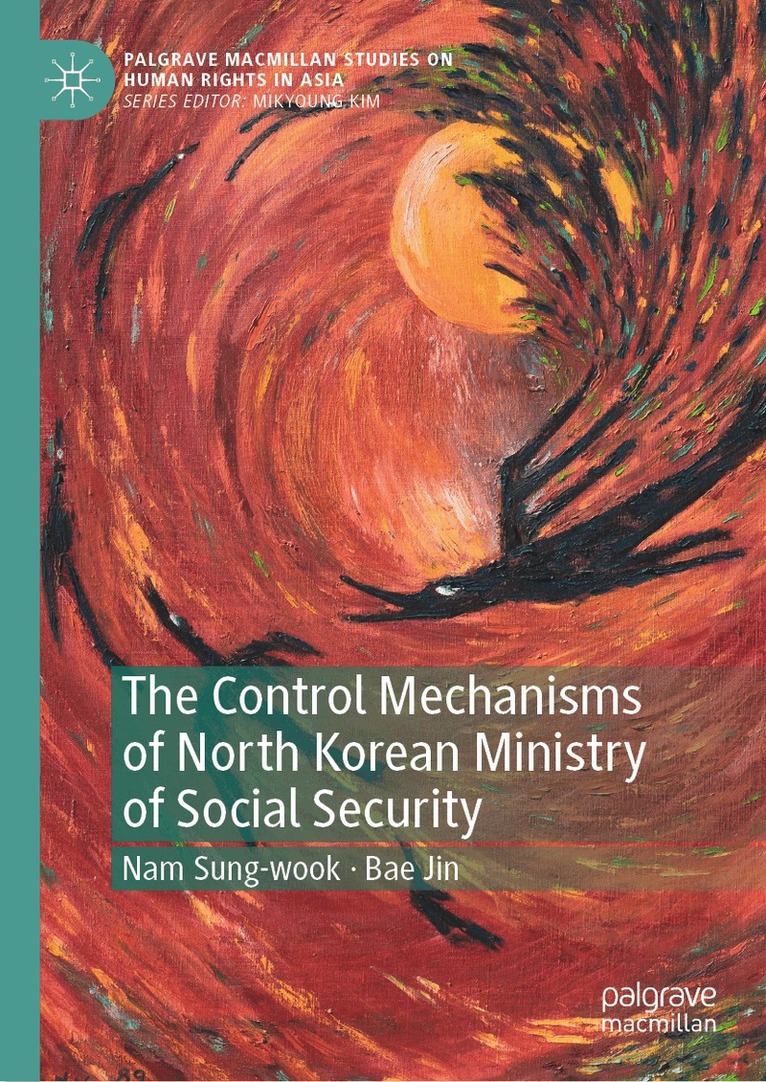
Control Mechanisms of North Korean Ministry of Social Security
Av Sung-wook Nam, Jin Bae
Inbunden, 2027
1781 kr
Kommande
This monograph provides the first systematic and comprehensive study of the Ministry of Social Security, the state institution most directly responsible for resident control in North Korea. Unlike previous works that examine North Korea’s regime resilience in general terms, this volume focuses …