Sungmoon Kim – författare
Visar alla böcker från författaren Sungmoon Kim. Handla med fri frakt och snabb leverans.
21 produkter
21 produkter
Inbunden, Engelska, 2018
1 028 kr
Skickas inom 5-8 vardagar
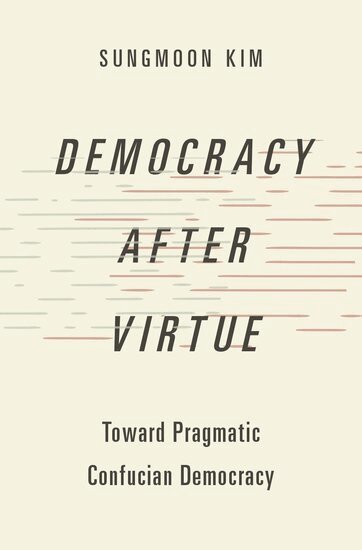
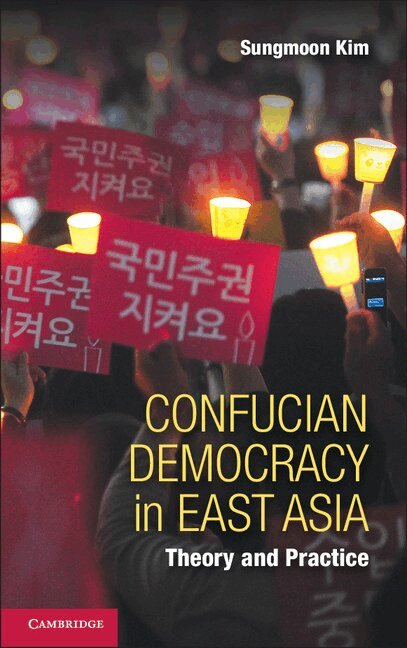
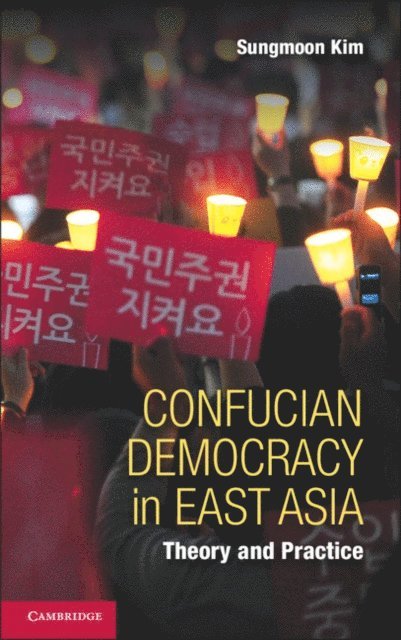
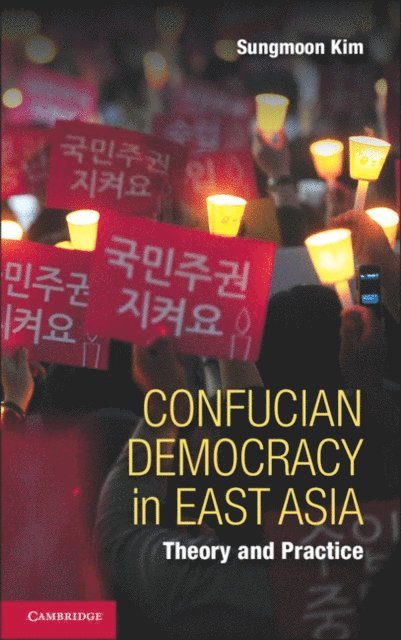
Is Confucianism compatible with democracy? Ongoing debates among political theorists revolve around the question of whether the overarching goal of Confucianism -- serving the people's moral and material well-being -- is attainable in modern day politics without broad democratic participation and without relying on a "one person, one vote" system. One side of the debate -- voiced by "traditional" Confucian meritocrats -- argues that only certain people are equipped with the moral character needed to lead and ensure broad public well-being. They emphasize moral virtue over civic virtue and the family over the state as the quintessential public institution. Moreover, they believe that a system of rule headed by meritorious elites can better handle complex modern public affairs than representative democracy. The other side -- voiced by Confucian democrats -- argues that unless all citizens participate equally in the public sphere, the kind of moral growth Confucianism emphasizes cannot be fully attained. Despite notable differences in political orientation, scholars of both positions acknowledge that democracy is largely of instrumental value for realizing Confucian moral ends in modern society. It would seem that Confucians of both types have largely dismissed democracy as a political system that can mediate clashing values and political views -- or even that Confucian democracy is a system marked by pluralism. In this book, Sungmoon Kim lays out a normative theory of Confucian democracy -- pragmatic Confucian democracy -- to address questions of the right to political participation, instrumental and intrinsic values of democracy, democratic procedure and substance, punishment and criminal justice, social and economic justice, and humanitarian intervention. As such, this project is not only relevant to the much debated topic of Confucian democracy as a cultural alternative to Western-style liberal democracy in East Asia, but it further investigates the philosophical implications of the idea and institution of Confucian democracy in normative democratic theory, criminal justice, distributive justice, and just war. Ultimately, Kim shows us that the question is not so much about the compatibility of Confucianism and democracy, but of how the two systems can benefit from each other.
Häftad, Engelska, 2020
728 kr
Skickas inom 3-6 vardagar
Is Confucianism compatible with democracy? Ongoing debates among political theorists revolve around the question of whether the overarching goal of Confucianism--serving the people's moral and material well-being--is attainable in modern day politics without broad democratic participation and without relying on a "one person, one vote" system. One side of the debate--voiced by "traditional" Confucian meritocrats--argues that only certain people are equipped with the moral character needed to lead and ensure broad public well-being. They emphasize moral virtue over civic virtue and the family over the state as the quintessential public institution. Moreover, they believe that a system of rule headed by meritorious elites can better handle complex modern public affairs than representative democracy. The other side--voiced by Confucian democrats--argues that unless all citizens participate equally in the public sphere, the kind of moral growth Confucianism emphasizes cannot be fully attained. Despite notable differences in political orientation, scholars of both positions acknowledge that democracy is largely of instrumental value for realizing Confucian moral ends in modern society. It would seem that Confucians of both types have largely dismissed democracy as a political system that can mediate clashing values and political views--or even that Confucian democracy is a system marked by pluralism. In this book, Sungmoon Kim lays out a normative theory of Confucian democracy--pragmatic Confucian democracy--to address questions of the right to political participation, instrumental and intrinsic values of democracy, democratic procedure and substance, punishment and criminal justice, social and economic justice, and humanitarian intervention. As such, this project is not only relevant to the much debated topic of Confucian democracy as a cultural alternative to Western-style liberal democracy in East Asia, but it further investigates the philosophical implications of the idea and institution of Confucian democracy in normative democratic theory, criminal justice, distributive justice, and just war. Ultimately, Kim shows us that the question is not so much about the compatibility of Confucianism and democracy, but of how the two systems can benefit from each other.
Inbunden, Engelska, 2023
809 kr
Skickas inom 5-8 vardagar
Ongoing debates among political theorists revolve around the question of whether the overarching goal of Confucianism--serving the people's moral and material wellbeing--is attainable in modern day politics without broad democratic participation. One side of the debate, voiced by Confucian meritocrats, argues that only certain people are equipped with the moral character needed to lead and ensure broad public wellbeing. The other side, voiced by Confucian democrats, argues that unless all citizens participate equally in the public sphere, a polity cannot attain the moral growth that Confucianism emphasizes. Written by one of the leading voices of Confucian political theory, Confucian Constitutionalism presents a constitutional theory of democratic self-government that is normatively appealing and politically practicable in East Asia's historically Confucian societies, which are increasingly pluralist, multicultural, and rights sensitive. While Confucian political theorists are preoccupied with how to build a Confucianism-inspired institution that would make a given polity more meritorious, Sungmoon Kim offers a robust normative theory of Confucian constitutionalism--what he calls "Confucian democratic constitutionalism"--with special attention to value pluralism and moral disagreement.Building on his previous theory of Confucian democracy, Kim establishes egalitarian human dignity as the underlying moral value of Confucian democratic constitutionalism and derives two foundational rights from Confucian egalitarian dignity--the equal right to political participation and the equal right to constitutional protection of civil and political rights. He then shows how each of these rights justifies the establishment of the legislature and the judiciary respectively as two independent constitutional institutions equally committed to the protection and promotion of the people's moral and material wellbeing, now reformulated in terms of rights. Aiming to contribute to both political theory and comparative law, Confucian Constitutionalism explains how Confucian democratic constitutionalism differs from and improves upon liberal legal constitutionalism, political constitutionalism, and Confucian meritocratic constitutionalism.
Häftad, Engelska, 2019
672 kr
Skickas inom 10-15 vardagar
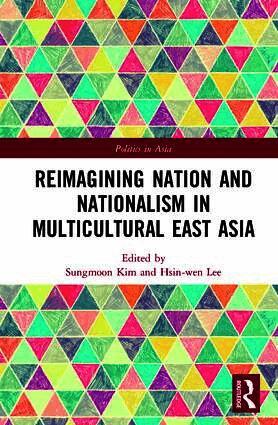
Since the late 1980s, many East Asian countries have become more multicultural, a process marked by increased democracy and pluralism despite the continuing influence of nationalism, which has forced these countries in the region to re-envision their nations. Many such countries have had to reconsider their constitutional make-up, their terms of citizenship and the ideal of social harmony. This has resulted in new immigration and border-control policies and the revisiting of laws regarding labor policies, sociopolitical discrimination, and socioeconomic welfare. This book explores new perspectives, concepts, and theories that are socially relevant, culturally suitable, and normatively attractive in the East Asia context. It not only outlines the particular experiences of nation, citizenship, and nationalism in East Asian countries but also places them within the wider theoretical context. The contributors look at how nationalism under the force of multiculturalism, or vice versa, affects East Asian societies including China, Japan, Korea, Taiwan, and Hong Kong differently. The key themes are: Democracy and equality; Confucianism’s relationship with nationalism, cosmopolitanism and multiculturalism; China’s use of its political institutions to initiate and sustain nationalism; the impact of globalization on nationalism in South Korea, Taiwan and Japan; the role of democracy in reinvigorating indigenous cultures in Taiwan.
Häftad, Engelska, 2022
230 kr
Skickas inom 7-10 vardagar
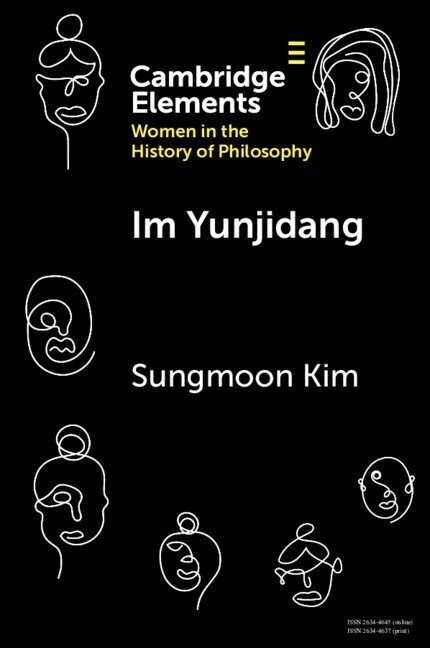
This Element aims to critically examine the philosophical thought of Im Yunjidang 任允摯堂 (1721-93), a female Korean Neo-Confucian philosopher from the Chosŏn 朝鮮 dynasty (1392-1910), and to present her as a feminist thinker. Unlike most Korean women of her time, Yunjidang had the exceptional opportunity to be introduced to a major philosophical debate among Korean Neo-Confucians, which was focused on two core questions-whether sages and commoners share the same heart-mind, and whether the natures of human beings and animals are identical. In the course of engaging in this debate, she was able to reformulate Neo-Confucian metaphysics and ethics of moral self-cultivation, culminating in her bold ideas of the moral equality between men and women and the possibility of female sagehood. By proposing a 'stage-approach' to feminism that is also sensitive to the cultural context, this Element shows that Yunjidang's philosophical thought could be best captured in terms of Confucian feminism.
Häftad, Engelska, 2026
541 kr
Kommande
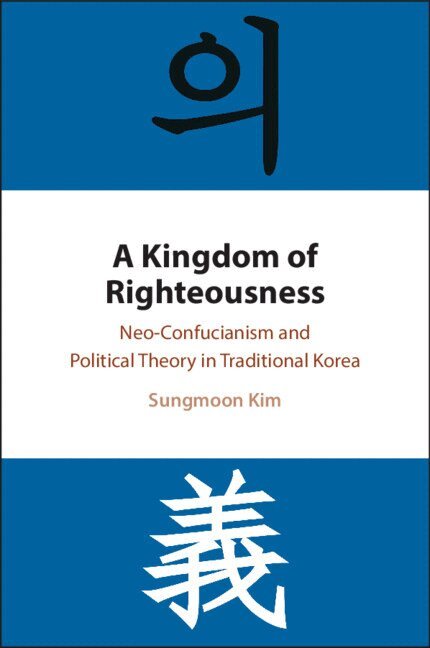
Through an examination of the unfolding of Neo-Confucian politics in traditional Korea, this book explores how the Confucian monarchs and scholar-officials during the Joseon dynasty (1392-1910) struggled to navigate themselves in the complex political terrains within the normative parameters set by Neo-Confucian moral principles and ritual norms. It begins with how Neo-Confucianism emerged as a revolutionary political ideology in late Goryeo (918-1392) through the creative reappropriation of righteousness, one of the cardinal Confucian virtues, from a personal moral virtue into a public moral principle that undergirds Joseon's Confucian constitutional structure. It then shows how later Korean Neo-Confucians labored to maintain Joseon's Confucian constitutionality (or the Public Way) against all sorts of contingencies, in both domestic and interstate contexts, often altering the very nature of Joseon's statehood and Confucian identity. Special attention is given to various visions of political realism developed by the Korean Neo-Confucian political actors, who actively used 'expediency'.
Inbunden, Engelska, 2026
1 490 kr
Kommande
Through an examination of the unfolding of Neo-Confucian politics in traditional Korea, this book explores how the Confucian monarchs and scholar-officials during the Joseon dynasty (1392-1910) struggled to navigate themselves in the complex political terrains within the normative parameters set by Neo-Confucian moral principles and ritual norms. It begins with how Neo-Confucianism emerged as a revolutionary political ideology in late Goryeo (918-1392) through the creative reappropriation of righteousness, one of the cardinal Confucian virtues, from a personal moral virtue into a public moral principle that undergirds Joseon's Confucian constitutional structure. It then shows how later Korean Neo-Confucians labored to maintain Joseon's Confucian constitutionality (or the Public Way) against all sorts of contingencies, in both domestic and interstate contexts, often altering the very nature of Joseon's statehood and Confucian identity. Special attention is given to various visions of political realism developed by the Korean Neo-Confucian political actors, who actively used 'expediency'.
Inbunden, Engelska, 2014
980 kr
Skickas inom 7-10 vardagar
This book explores a mode of democracy that is culturally relevant and socially practicable in the contemporary pluralistic context of historically Confucian East Asian societies, by critically engaging with the two most dominant theories of Confucian democracy - Confucian communitarianism and meritocratic elitism. The book constructs a mode of public reason (and reasoning) that is morally palatable to East Asians who are still saturated in Confucian customs by reappropriating Confucian familialism and using this perspective to theorize on Confucian democratic welfarism and political meritocracy. It then applies the theory of Confucian democracy to South Korea, arguably the most Confucianized society in East Asia, and examines the theory's practicality in Korea's increasingly individualized, pluralized, and multicultural society by looking at cases of freedom of expression, freedom of association, insult law, and immigration policy.
Inbunden, Engelska, 2016
1 240 kr
Skickas inom 7-10 vardagar
Recent proposals concerning Confucian meritocratic perfectionism have justified Confucian perfectionism in terms of political meritocracy. In contrast, 'Confucian democratic perfectionism' is a form of comprehensive Confucian perfectionism that can accommodate a plurality of values in civil society. It is also fully compatible with core values of democracy such as popular sovereignty, political equality, and the right to political participation. Sungmoon Kim presents 'public reason Confucianism' as the most attractive option for contemporary East Asian societies that are historically and culturally Confucian. Public reason Confucianism is a particular style of Confucian democratic perfectionism in which comprehensive Confucianism is connected with perfectionism via a distinctive form of public reason. It calls for an active role for the democratic state in promoting a Confucian conception of the good life, at the heart of which are such core Confucian values as filial piety and ritual propriety.
Häftad, Engelska, 2017
435 kr
Skickas inom 7-10 vardagar
Recent proposals concerning Confucian meritocratic perfectionism have justified Confucian perfectionism in terms of political meritocracy. In contrast, 'Confucian democratic perfectionism' is a form of comprehensive Confucian perfectionism that can accommodate a plurality of values in civil society. It is also fully compatible with core values of democracy such as popular sovereignty, political equality, and the right to political participation. Sungmoon Kim presents 'public reason Confucianism' as the most attractive option for contemporary East Asian societies that are historically and culturally Confucian. Public reason Confucianism is a particular style of Confucian democratic perfectionism in which comprehensive Confucianism is connected with perfectionism via a distinctive form of public reason. It calls for an active role for the democratic state in promoting a Confucian conception of the good life, at the heart of which are such core Confucian values as filial piety and ritual propriety.
Häftad, Engelska, 2014
404 kr
Skickas inom 7-10 vardagar
This book explores a mode of democracy that is culturally relevant and socially practicable in the contemporary pluralistic context of historically Confucian East Asian societies, by critically engaging with the two most dominant theories of Confucian democracy - Confucian communitarianism and meritocratic elitism. The book constructs a mode of public reason (and reasoning) that is morally palatable to East Asians who are still saturated in Confucian customs by reappropriating Confucian familialism and using this perspective to theorize on Confucian democratic welfarism and political meritocracy. It then applies the theory of Confucian democracy to South Korea, arguably the most Confucianized society in East Asia, and examines the theory's practicality in Korea's increasingly individualized, pluralized, and multicultural society by looking at cases of freedom of expression, freedom of association, insult law, and immigration policy.
Häftad, Engelska, 2021
448 kr
Skickas inom 7-10 vardagar
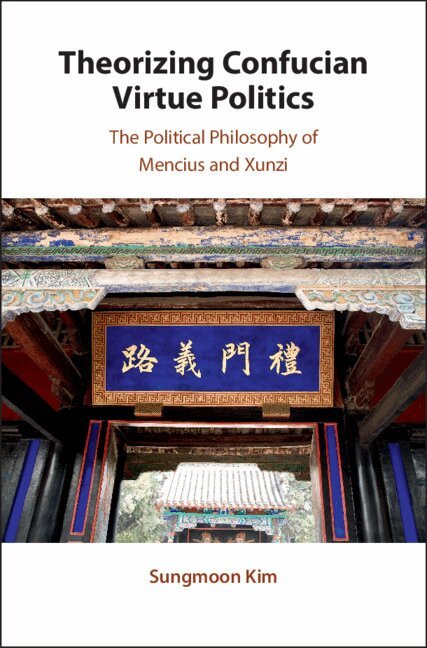
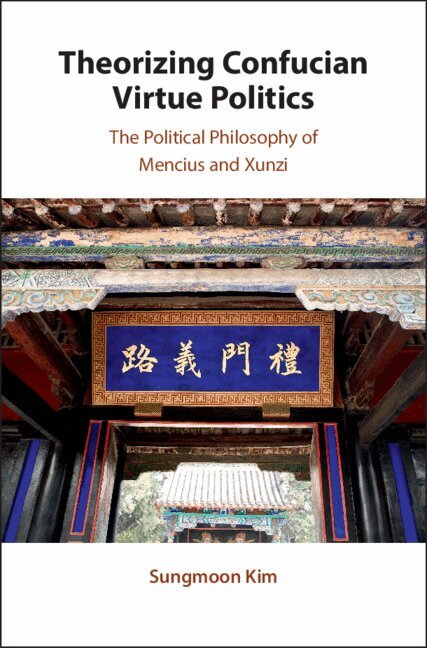
Surprisingly little is known about what ancient Confucian thinkers struggled with in their own social and political contexts and how these struggles contributed to the establishment and further development of classical Confucian political theory. Leading scholar of comparative political theory, Sungmoon Kim offers a systematic philosophical account of the political theories of Mencius and Xunzi, investigating both their agreements and disagreements as the champions of the Confucian Way against the backdrop of the prevailing realpolitik of the late Warring States period. Together, they contributed to the formation of Confucian virtue politics, in which concerns about political order and stability and concerns about moral character and moral enhancement are deeply intertwined. By presenting their political philosophies in terms of constitutionalism, Kim shows how they each developed the ability to authorize the ruler's legitimate use of power in domestic and interstate politics in ways consistent with their distinctive accounts of human nature.
Inbunden, Engelska, 2019
1 292 kr
Skickas inom 7-10 vardagar
Surprisingly little is known about what ancient Confucian thinkers struggled with in their own social and political contexts and how these struggles contributed to the establishment and further development of classical Confucian political theory. Leading scholar of comparative political theory, Sungmoon Kim offers a systematic philosophical account of the political theories of Mencius and Xunzi, investigating both their agreements and disagreements as the champions of the Confucian Way against the backdrop of the prevailing realpolitik of the late Warring States period. Together, they contributed to the formation of Confucian virtue politics, in which concerns about political order and stability and concerns about moral character and moral enhancement are deeply intertwined. By presenting their political philosophies in terms of constitutionalism, Kim shows how they each developed the ability to authorize the ruler's legitimate use of power in domestic and interstate politics in ways consistent with their distinctive accounts of human nature.
Inbunden, Engelska, 2017
2 137 kr
Skickas inom 10-15 vardagar
Since the late 1980s, many East Asian countries have become more multicultural, a process marked by increased democracy and pluralism despite the continuing influence of nationalism, which has forced these countries in the region to re-envision their nations. Many such countries have had to reconsider their constitutional make-up, their terms of citizenship and the ideal of social harmony. This has resulted in new immigration and border-control policies and the revisiting of laws regarding labor policies, sociopolitical discrimination, and socioeconomic welfare. This book explores new perspectives, concepts, and theories that are socially relevant, culturally suitable, and normatively attractive in the East Asia context. It not only outlines the particular experiences of nation, citizenship, and nationalism in East Asian countries but also places them within the wider theoretical context. The contributors look at how nationalism under the force of multiculturalism, or vice versa, affects East Asian societies including China, Japan, Korea, Taiwan, and Hong Kong differently. The key themes are: Democracy and equality; Confucianism’s relationship with nationalism, cosmopolitanism and multiculturalism; China’s use of its political institutions to initiate and sustain nationalism; the impact of globalization on nationalism in South Korea, Taiwan and Japan; the role of democracy in reinvigorating indigenous cultures in Taiwan.
Inbunden, Engelska, 2016
1 206 kr
Skickas inom 5-8 vardagar
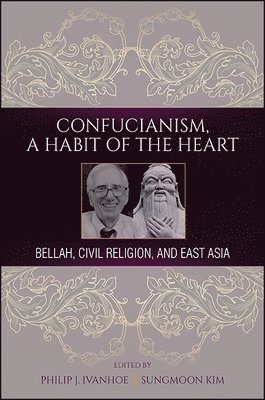
Employs Robert Bellah's notion of civil religion to explore East Asia's Confucian revival.Can Confucianism be regarded as a civil religion for East Asia? This book explores this question, bringing the insights of Robert Bellah to a consideration of various expressions of the contemporary Confucian revival. Bellah identified American civil religion as a religious dimension of life that can be found throughout US culture, but one without any formal institutional structure. Rather, this "civil" form of religion provides the ethical principles that command reverence and by which a nation judges itself. Extending Bellah's work, contributors from both the social sciences and the humanities conceive of East Asia's Confucian revival as a "habit of the heart," an underlying belief system that guides a society, and examine how Confucianism might function as a civil religion in China, Korea, and Japan. They discuss what aspects of Confucian tradition and thought are being embraced; some of the social movements, political factors, and opportunities connected with the revival of the tradition; and why Confucianism has not traveled much beyond East Asia. The late Robert Bellah's reflection on the possibility for a global civil religion concludes the volume.
Inbunden, Engelska, 2026
1 150 kr
Skickas inom 5-8 vardagar
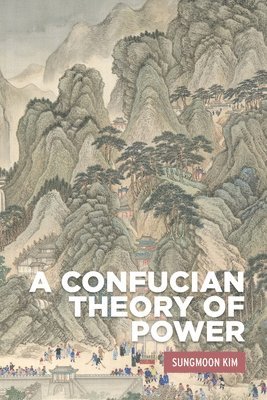
In the book's lead essay, Sungmoon Kim offers a comprehensive analysis of Confucian power. Through a blend of philosophical, political, and historical analysis, Kim challenges the dominant idea that Confucianism is primarily centred on virtue ethics. Instead, he argues that Confucianism perceives power through the prism of responsibility. Kim not only traces this perspective throughout history but also demonstrates its relevance to contemporary society. He contrasts this Confucian perspective with Western political theory's view of power as control.Political theorists and philosophers will offer essay responses to Sungmoon Kim’s provocation, offering a dialogue approach to provide a comprehensive analysis of the Confucian conception of power.
Inbunden, Engelska, 2015
1 900 kr
Skickas inom 10-15 vardagar
Comparative political theory has grown into a recognized discipline in its own right in the last two decades. Yet little has been done to explore how political theory engages with the actual social, legal, and political reality of a particular polity. East Asians are complexly conditioned by traditional Confucian norms and habits, despite significant social, economic, and political changes in their contemporary lives. This volume seeks to address this important issue by developing a specifically Confucian political and legal theory.The volume focuses on South Korea, whose traditional society was and remains the most Confucianized among pre-modern East Asian countries. It offers an interesting case for thinking about Confucian democracy and constitutionalism because its liberal-democratic institutions are compatible with and profoundly influenced by the Confucian habit of the heart. The book wrestles with the practical meaning of liberal rights under the Korean Confucian societal culture and illuminates a way in which traditional Confucianism can be transformed through legal and political processes into a new Confucianism relevant to democratic practices in contemporary Korea.
Häftad, Engelska, 2015
683 kr
Skickas inom 10-15 vardagar
Comparative political theory has grown into a recognized discipline in its own right in the last two decades. Yet little has been done to explore how political theory engages with the actual social, legal, and political reality of a particular polity. East Asians are complexly conditioned by traditional Confucian norms and habits, despite significant social, economic, and political changes in their contemporary lives. This volume seeks to address this important issue by developing a specifically Confucian political and legal theory.The volume focuses on South Korea, whose traditional society was and remains the most Confucianized among pre-modern East Asian countries. It offers an interesting case for thinking about Confucian democracy and constitutionalism because its liberal-democratic institutions are compatible with and profoundly influenced by the Confucian habit of the heart. The book wrestles with the practical meaning of liberal rights under the Korean Confucian societal culture and illuminates a way in which traditional Confucianism can be transformed through legal and political processes into a new Confucianism relevant to democratic practices in contemporary Korea.
Inbunden, Engelska, 2024
1 392 kr
Skickas inom 10-15 vardagar
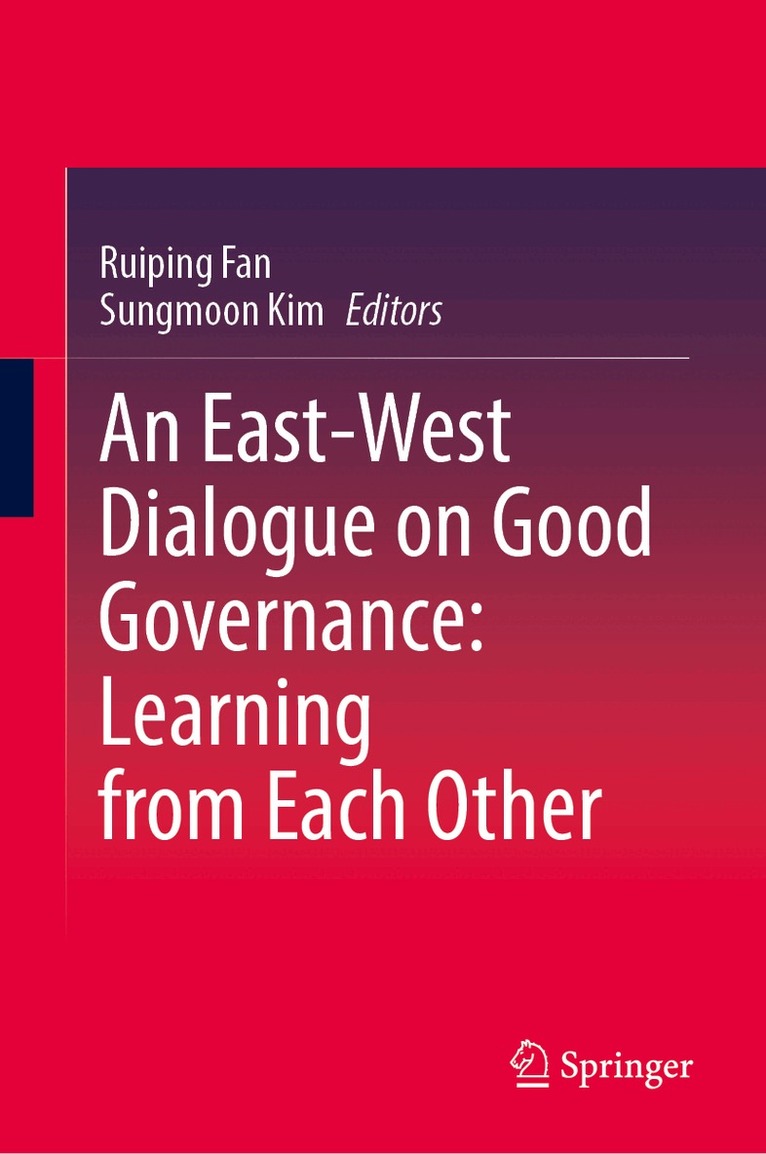
This book offers a unique and engaging exploration of the values essential for good governance, featuring thought-provoking dialogues between esteemed scholars from Eastern and Western backgrounds. Going beyond traditional scholarly papers, these scholars engage in sincere and enthusiastic conversations, sharing heuristic examples, captivating personal stories, and innovative ethical and cultural perspectives.What sets this book apart is the intriguing exchange between Western scholars delving into significant Confucian values such as "respect for relationship, the family, ritual, and harmony," and Eastern scholars exploring modern Western values like "individual rights and equality." By examining the implications of these deeply rooted values for contemporary society's governance, the book fosters a valuable learning experience between the East and West through engaged dialogues.This innovative approach serves as a bridge for cross-cultural understanding, promoting mutual learning and appreciation. The book not only appeals to scholars but also serves as an enlightening reader for individuals interested in human values, contemporary governance, and cross-cultural studies. It offers a rich tapestry of insights that provoke critical thinking and contribute to our understanding of the complexities surrounding governance and cultural values in today's world.
Häftad, Engelska, 2025
1 392 kr
Skickas inom 10-15 vardagar
This book offers a unique and engaging exploration of the values essential for good governance, featuring thought-provoking dialogues between esteemed scholars from Eastern and Western backgrounds. Going beyond traditional scholarly papers, these scholars engage in sincere and enthusiastic conversations, sharing heuristic examples, captivating personal stories, and innovative ethical and cultural perspectives.What sets this book apart is the intriguing exchange between Western scholars delving into significant Confucian values such as "respect for relationship, the family, ritual, and harmony," and Eastern scholars exploring modern Western values like "individual rights and equality." By examining the implications of these deeply rooted values for contemporary society's governance, the book fosters a valuable learning experience between the East and West through engaged dialogues.This innovative approach serves as a bridge for cross-cultural understanding, promoting mutual learning and appreciation. The book not only appeals to scholars but also serves as an enlightening reader for individuals interested in human values, contemporary governance, and cross-cultural studies. It offers a rich tapestry of insights that provoke critical thinking and contribute to our understanding of the complexities surrounding governance and cultural values in today's world.
Häftad, Engelska, 2017
377 kr
Tillfälligt slut
Employs Robert Bellah's notion of civil religion to explore East Asia's Confucian revival.Can Confucianism be regarded as a civil religion for East Asia? This book explores this question, bringing the insights of Robert Bellah to a consideration of various expressions of the contemporary Confucian revival. Bellah identified American civil religion as a religious dimension of life that can be found throughout US culture, but one without any formal institutional structure. Rather, this "civil" form of religion provides the ethical principles that command reverence and by which a nation judges itself. Extending Bellah's work, contributors from both the social sciences and the humanities conceive of East Asia's Confucian revival as a "habit of the heart," an underlying belief system that guides a society, and examine how Confucianism might function as a civil religion in China, Korea, and Japan. They discuss what aspects of Confucian tradition and thought are being embraced; some of the social movements, political factors, and opportunities connected with the revival of the tradition; and why Confucianism has not traveled much beyond East Asia. The late Robert Bellah's reflection on the possibility for a global civil religion concludes the volume.