• Fri frakt över 249 kr
  • •
  • Snabba leveranser
  • •
  • Billiga böcker
Kundservice

Du är på sajten för privatpersoner.

Företag, bibliotek eller offentlig verksamhet?

Du handlar på classic.bokus.com, där alla dina funktioner finns intakta.
Till classic.bokus.com
Bokus logotyp. Gå till startsidan.
  • Erbjudanden
  • Nyheter
  • Student
  • Topplistor
  • Barn & ungdom
  • Bokus Play
  • E-böcker
  • Pocketböcker
  • Spel & pussel

10% rabatt på allt med kod: NYSTART10 →

Sidfot

Mina sidor

    Hjälp

    • Kundservice
    • Vanliga frågor och svar
    • Frakt och leverans
    • Retur vid ångerrätt
    • Reklamera vara
    • Betalning
    • Köpvillkor
    • Allmänna villkor
    • Information om webbplatsens tillgänglighet

    Om Bokus

    • Om oss
    • Pressrum
    • För studenter
    • För företag
    • För bibliotek och offentlig verksamhet
    • För leverantörer
    • Hållbarhet

    Populärt

    • Aktuella erbjudanden
    • Presentkort
    • Studentlitteratur
    • Nya böcker
    • Topplistor
    • Signerade böcker
    • Engelska böcker

    Inspiration

    • Boktips
    • BookTok
    • Populära bokserier
    • Barnbokskaraktärer
    • Populära författare
    Logotyp för Bokus
    Följ oss på Facebook (extern länk)Följ oss på Instagram (extern länk)Följ oss på YouTube (extern länk)Följ oss på TikTok (extern länk)
    bokus @ CookiesAnpassa cookiesIntegritetspolicyKöpvillkor
    Till Citymail hemsida (extern länk)Till Budbee hemsida (extern länk)Till Postnord hemsida (extern länk)Till Schenker hemsida (extern länk)Till Early Bird hemsida (extern länk)Till Walleys hemsida (extern länk)
    1. Samhälle och politik
    2. Politik och statsskick
    3. Statsvetenskap och politisk teori

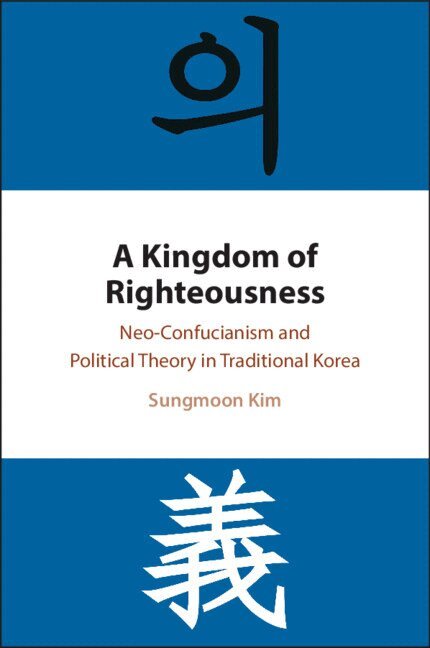
    A Kingdom of Righteousness

    Neo-Confucianism and Political Theory in Traditional Korea

    AvSungmoon Kim

    Häftad, Engelska, 2026

    559 kr

    Kommande

    Fler format och utgåvor

    Inbunden

    Kommande

    Beskrivning

    Through an examination of the unfolding of Neo-Confucian politics in traditional Korea, this book explores how the Confucian monarchs and scholar-officials during the Joseon dynasty (1392-1910) struggled to navigate the complex political terrains within the normative parameters set by Neo-Confucian moral principles and ritual norms. It begins with how Neo-Confucianism emerged as a revolutionary political ideology in late Goryeo (918-1392) through the creative reappropriation of righteousness, one of the cardinal Confucian virtues, from a personal moral virtue into a public moral principle that undergirds Joseon's Confucian constitutional structure. It then shows how later Korean Neo-Confucians labored to maintain Joseon's Confucian constitutionality (or the Public Way) against all sorts of contingencies, in both domestic and interstate contexts, often altering the very nature of Joseon's statehood and Confucian identity. Special attention is given to various visions of political realism developed by the Korean Neo-Confucian political actors, who actively used 'expediency.'

    Produktinformation

    • Utgivningsdatum:2026-09-30
    • Vikt:250 g
    • Format:Häftad
    • Språk:Engelska
    • Antal sidor:310
    • Förlag:Cambridge University Press
    • ISBN:9781009740937

    Utforska kategorier

    • Statsvetenskap och politisk teori inom Samhälle och politik
    • Asiens historia inom Historia och arkeologi
    • Filosofiska discipliner inom Filosofi och religion

    Mer om författaren

    Sungmoon Kim is Chair Professor of Political Philosophy at City University of Hong Kong, where he also serves as Director of the Center for East Asian and Comparative Philosophy. He is the author of seven books, including Theorizing Confucian Virtue Politics (2019), Public Reason Confucianism (2016), and Confucian Democracy in East Asia (2014), all published by Cambridge University Press.

    Recensioner i media

    'Analyzing how generations of Chosŏn rulers and scholars wrestled with the dilemma of upholding Neo-Confucian ideals while operating within the real world, Kim unveils one of the sources of the creativity which allowed Chosŏn to survive for centuries. In doing so, he highlights diversity within Korean Neo-Confucian political thought.' Don Baker, University of British Columbia

    Innehållsförteckning

    • Acknowledgements; Conventions; Introduction: contingency and the public way; 1. The rise of revolutionary neo-Confucianism: Jeong Dojeon's Xunzian moment; 2. The way of the foreign vassal state: Byeon Gyeryang on heavenly rituals and Korean statehood; 3. Contingency and neo-Confucian constitutionality: the case of King Sejo; 4. The utmost order, here and now: Jo Gwangjo's radical Confucianism; 5. The way of the hegemon toward the kingly way: Yi I's Xunzian turn; 6. Making peace with the barbarians: Choe Myeonggil's pro-peace argument; 7. Remaking the center: King Jeongjo's enactment of sage-kingship; Conclusion: the expedient and varieties of Confucian realism; Bibliography; Index.