Sunil Dasgupta – författare
Visar alla böcker från författaren Sunil Dasgupta. Handla med fri frakt och snabb leverans.
3 produkter
3 produkter
E-bok
Engelska, 2010401 kr
Läs direkt efter köp
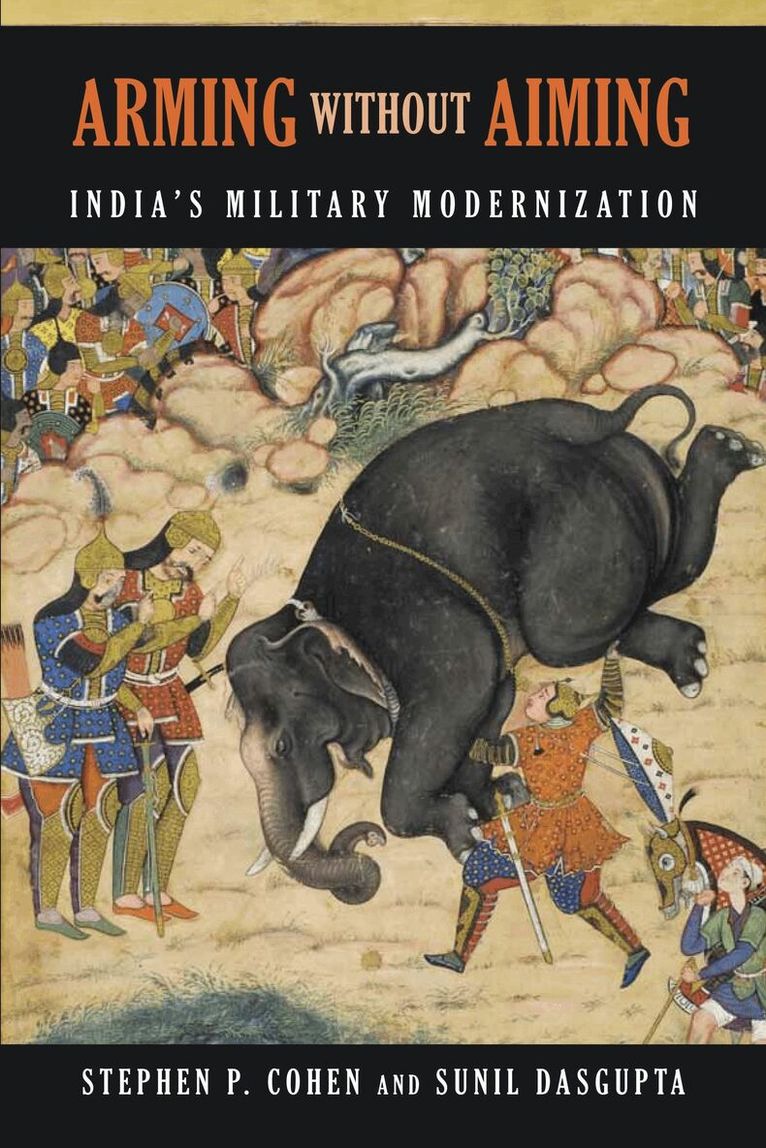
India's growing affluence has led experts to predict a major rearmament effort. The second-most populous nation in the world is beginning to wield the economic power expected of such a behemoth. Its border with Pakistan is a tinderbox, the subcontinent remains vulnerable to religious extremism, and a military rivalry between India and China could erupt in the future. India has long had the motivation for modernizing its militaryit now has the resources as well. What should we expect to see in the future, and what will be the likely ramifications? In Arming without Aiming, Stephen Cohen and Sunil Dasgupta answer those crucial questions.India's armed forces want new weapons worth more than $100 billion. But most of these weapons must come from foreign suppliers due to the failures of India's indigenous research and development. Weapons suppliers from other nations are queuing up in New Delhi. A long relationship between India and Russian manufacturers goes back to the cold war. More recently, India and Israel have developed strong military trade ties. Now, a new military relationship with the United States has generated the greatest hope for military transformation in India.Against this backdrop of new affluence and newfound access to foreign military technology, Cohen and Dasgupta investigate India's military modernization to find haphazard military change that lacks political direction, suffers from balkanization of military organization and doctrine, remains limited by narrow prospective planning, and is driven by the pursuit of technology free from military-strategic objectives. The character of military change in India, especially the dysfunction in the political-military establishment with regard to procurement, is ultimately the result of a historical doctrine of strategic restraint in place since Nehru. In that context, its approach of arming without strategic purpose remains viable as India seeks great-power accommodation of its
Häftad, Engelska, 2012
365 kr
Skickas inom 10-15 vardagar
India has long been motivated to modernize its military, and it now has the resources. But so far, the drive to rebuild has lacked a critical componentstrategic military planning. India's approach of arming without strategic purpose remains viable, however, as it seeks great-power accommodation of its rise and does not want to appear threatening. What should we anticipate from this effort in the future, and what are the likely ramifications? Stephen Cohen and Sunil Dasgupta answer those crucial questions in a book so timely that it reached number two on the nonfiction bestseller list in India.""Two years after the publication of Arming without Aiming, our view is that India's strategic restraint and its consequent institutional arrangement remain in place. We do not want to predict that India's military-strategic restraint will last forever, but we do expect that the deeper problems in Indian defense policy will continue to slow down military modernization.""from the preface to the paperback edition
E-bok
Engelska, 2013380 kr
Läs direkt efter köp
India has long been motivated to modernize its military, and it now has the resources. But so far, the drive to rebuild has lacked a critical componentstrategic military planning. India's approach of arming without strategic purpose remains viable, however, as it seeks great-power accommodation of its rise and does not want to appear threatening. What should we anticipate from this effort in the future, and what are the likely ramifications? Stephen Cohen and Sunil Dasgupta answer those crucial questions in a book so timely that it reached number two on the nonfiction bestseller list in India.""Two years after the publication of Arming without Aiming, our view is that India's strategic restraint and its consequent institutional arrangement remain in place. We do not want to predict that India's military-strategic restraint will last forever, but we do expect that the deeper problems in Indian defense policy will continue to slow down military modernization.""from the preface to the paperback edition