Susan C. Boyd – författare
Visar alla böcker från författaren Susan C. Boyd. Handla med fri frakt och snabb leverans.
14 produkter
Hooked: Drug War Films in Britain, Canada, and the U.S.
Inbunden, 2007
1826 kr
Lägg i varukorg
Drug prohibition emerged at the same time as the discovery of film, and their histories intersect in interesting ways. This book examines the ideological assumptions embedded in the narrative and imagery of one hundred fictional drug films produced in Britain, Canada, and the U.S. from 1912 to …
Hooked: Drug War Films in Britain, Canada, and the U.S.
E-bok, 2010
857 kr
Lägg i varukorg
Drug prohibition emerged at the same time as the discovery of film, and their histories intersect in interesting ways. This book examines the ideological assumptions embedded in the narrative and imagery of one hundred fictional drug films produced in Britain, Canada, and the U.S. from 1912 to …
Hooked: Drug War Films in Britain, Canada, and the U.S.
E-bok, 2010
882 kr
Lägg i varukorg
Drug prohibition emerged at the same time as the discovery of film, and their histories intersect in interesting ways. This book examines the ideological assumptions embedded in the narrative and imagery of one hundred fictional drug films produced in Britain, Canada, and the U.S. from 1912 to …
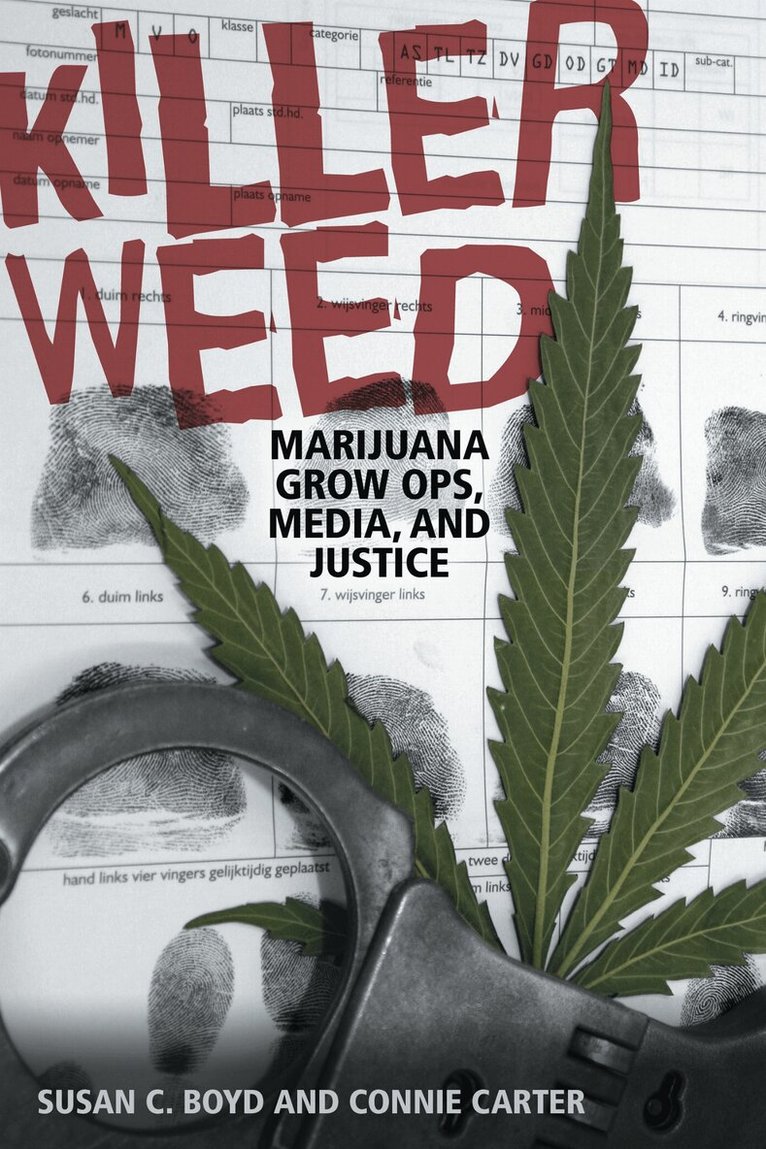
Killer Weed
Marijuana Grow Ops, Media, and Justice
Av Susan C. Boyd, Connie Carter
Häftad, 2014
385 kr
Lägg i varukorg
Since the late 1990s, marijuana grow operations have been identified by media and others as a new and dangerous criminal activity of “epidemic” proportions. With Killer Weed, Susan C. Boyd and Connie Carter use their analysis of fifteen years of newspaper coverage to show how consensus about the …
Killer Weed
Marijuana Grow Ops, Media, and Justice
Av Susan C. Boyd, Connie Carter
Inbunden, 2014
804 kr
Lägg i varukorg
Since the late 1990s, marijuana grow operations have been identified by media and others as a new and dangerous criminal activity of “epidemic” proportions. With Killer Weed, Susan C. Boyd and Connie Carter use their analysis of fifteen years of newspaper coverage to show how consensus about the …
Mothers and Illicit Drugs
Transcending the Myths
E-bok, 1999
1027 kr
Lägg i varukorg
During the past decade, media and medical forces have combined to create an alarming view of pregnant mothers who use illicit drugs. The result has been increased state control of these women and their infants. This in-depth study is the first in Canada to look at how mothers who use illicit drugs …
Killer Weed
Marijuana Grow Ops, Media, and Justice
Av Susan C. Boyd, Connie Carter
E-bok, 2014
463 kr
Lägg i varukorg
Since the late 1990s, marijuana grow operations have been identified by media and others as a new and dangerous criminal activity of “epidemic” proportions. With Killer Weed, Susan C. Boyd and Connie Carter use their analysis of fifteen years of newspaper coverage to show how consensus about the …
Killer Weed
Marijuana Grow Ops, Media, and Justice
Av Susan C. Boyd, Connie Carter
E-bok, 2014
473 kr
Lägg i varukorg
Since the late 1990s, marijuana grow operations have been identified by media and others as a new and dangerous criminal activity of “epidemic” proportions. With Killer Weed, Susan C. Boyd and Connie Carter use their analysis of fifteen years of newspaper coverage to show how consensus about the …
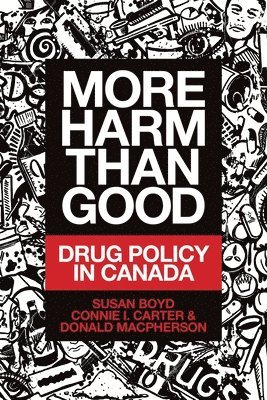
More Harm Than Good
Drug Policy in Canada
Av Susan C. Boyd, Connie I. Carter m. fl.
Häftad, 2016
275 kr
Lägg i varukorg
In More Harm Than Good, Carter, Boyd and MacPherson take a critical look at the current state of Canadian drug policy and raise key questions about the effects of Canada’s increasing involvement in and commitment to the “war on drugs.” A primer on Canadian drug policy, the analysis in More Harm …
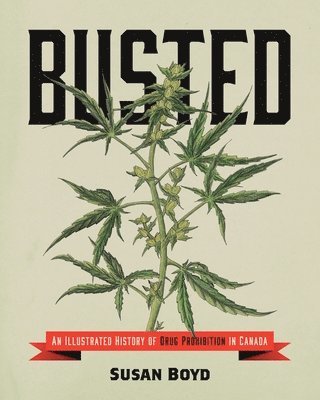
Busted
An Illustrated History of Drug Prohibition in Canada
Häftad, 2017
321 kr
Lägg i varukorg
Long-listed for the George Ryga Award. Canada’s drug laws are constantly changing. But what does Canada’s history of drug prohibition say about its future? Busted is an illustrated history of Canadian drug prohibition and resistance to that prohibition. Reproducing over 170 archival and …
Mothers and Illicit Drugs
Transcending the Myths
Häftad, 1999
412 kr
Tillfälligt slut
During the past decade, media and medical forces have combined to create an alarming view of pregnant mothers who use illicit drugs. The result has been increased state control of these women and their infants. This in-depth study is the first in Canada to look at how mothers who use illicit drugs …
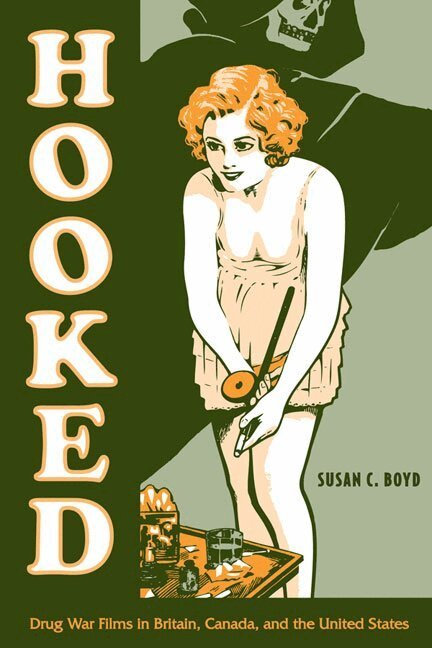
Hooked
Drug War Films in Britain, Canada, and the U.S.
Häftad, 2009
396 kr
Tillfälligt slut
Drug prohibition laws began to emerge in the United States, Canada, and Britain during the same era that saw the discovery of film. In Hooked, Susan C. Boyd explores over a century of American, British, and Canadian films containing fictional representations of drug use, the drug trade, and the war …
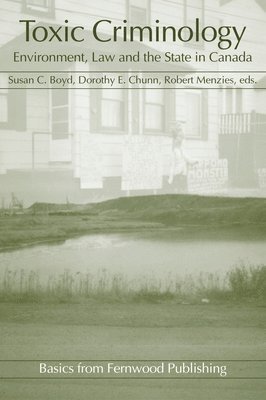
Toxic Criminology
Environment, Law and the State in Canada
Av Susan C. Boyd, Dorothy E. Chunn m. fl.
Häftad, 2002
227 kr
Tillfälligt slut
Critical research, writing and advocacy by legal academics and practitioners, NGOs, indigenous peoples and eco-feminists has existed on a global scale since the 1960s, but not until the 1990s did criminologists begin to examine environmental crime in a more concerted way. This late entrance by …
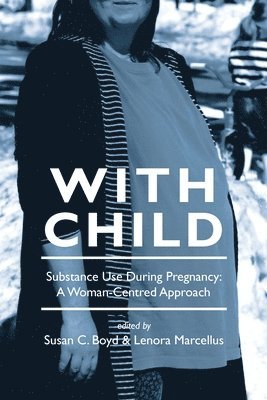
With Child
Substance Use During Pregnancy: A Woman-Centred Approach
Av Susan C. Boyd, Lenora Marcellus
Häftad, 2006
265 kr
Tillfälligt slut
Drug use is among the behaviours that are associated with or a consequence of poverty. The contributors to this volume propose that those who provide services for pregnant drugusing women must recognize that care of women with social problems that affect pregnancy outcome should be approached in …