Susan L. Shirk – författare
Visar alla böcker från författaren Susan L. Shirk. Handla med fri frakt och snabb leverans.
14 produkter
14 produkter
Inbunden, Engelska, 2022
358 kr
Skickas inom 5-8 vardagar
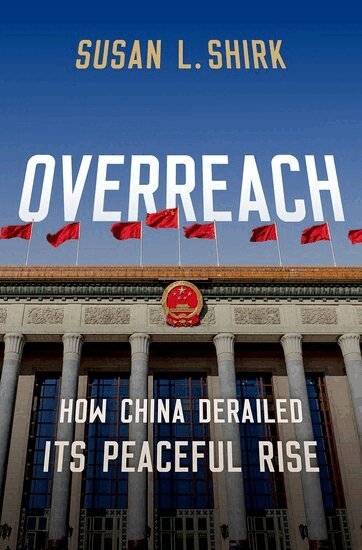
For decades, China's rise to power was characterized by its reassurance that this rise would be peaceful. Then, as Susan L. Shirk, shows in this sobering, clear-eyed account of China today, something changed.For three decades after Mao's death in 1976, China's leaders adopted a restrained approach to foreign policy. They determined that any threat to their power, and that of the Chinese Communist Party, came not from abroad but from within—a conclusion cemented by the 1989 Tiananmen crisis. To facilitate the country's inexorable economic ascendence, and to prevent a backlash, they reassured the outside world of China's peaceful intentions.Then, as Susan Shirk shows in this illuminating, disturbing, and utterly persuasive new book, something changed. China went from fragile superpower to global heavyweight, threatening Taiwan as well as its neighbors in the South China Sea, tightening its grip on Hong Kong, and openly challenging the United States for preeminence not just economically and technologically but militarily. China began to overreach. Combining her decades of research and experience, Shirk, one of the world's most respected experts on Chinese politics, argues that we are now fully embroiled in a new cold war.To explain what happened, Shirk pries open the "black box" of China's political system and looks at what derailed its peaceful rise. As she shows, the shift toward confrontation began in the mid-2000s under the mild-mannered Hu Jintao, first among equals in a collective leadership. As China's economy boomed, especially after the Global Financial Crisis of 2008, Hu and the other leaders lost restraint, abetting aggression toward the outside world and unchecked domestic social control. When Xi Jinping took power in 2012, he capitalized on widespread official corruption and open splits in the leadership to make the case for more concentrated power at the top. In the decade following, and to the present day—the eve of the 20th CCP Congress when he intends to claim a third term—he has accumulated greater power than any leader since Mao. Those who implement Xi's directives compete to outdo one another, provoking an even greater global backlash and stoking jingoism within China on a scale not seen since the Cultural Revolution.Here is a devastatingly lucid portrait of China today. Shirk's extensive interviews and meticulous analysis reveal the dynamics driving overreach. To counter it, she argues, the worst mistake the rest of the world, and the United States in particular, can make is to overreact. Understanding the domestic roots of China's actions will enable us to avoid the mistakes that could lead to war.
E-bok
PDF, Engelska, 2022245 kr
Läs direkt efter köp
Winner, The Lionel Gelber PrizeSilver Medal, Arthur Ross Book AwardFor decades, China''s rise to power was characterized by its reassurance that this rise would be peaceful. Then, as Susan L. Shirk, shows in this sobering, clear-eyed account of China today, something changed.For three decades after Mao''s death in 1976, China''s leaders adopted a restrained approach to foreign policy. They determined that any threat to their power, and that of the Chinese Communist Party, came not from abroad but from within?a conclusion cemented by the 1989 Tiananmen crisis. To facilitate the country''s inexorable economic ascendence, and to prevent a backlash, they reassured the outside world of China''s peaceful intentions.Then, as Susan Shirk shows in this illuminating, disturbing, and utterly persuasive new book, something changed. China went from fragile superpower to global heavyweight, threatening Taiwan as well as its neighbors in the South China Sea, tightening its grip on Hong Kong, and openly challenging the United States for preeminence not just economically and technologically but militarily. China began to overreach. Combining her decades of research and experience, Shirk, one of the world''s most respected experts on Chinese politics, argues that we are now fully embroiled in a new cold war.To explain what happened, Shirk pries open the "black box" of China''s political system and looks at what derailed its peaceful rise. As she shows, the shift toward confrontation began in the mid-2000s under the mild-mannered Hu Jintao, first among equals in a collective leadership. As China''s economy boomed, especially after the Global Financial Crisis of 2008, Hu and the other leaders lost restraint, abetting aggression toward the outside world and unchecked domestic social control. When Xi Jinping took power in 2012, he capitalized on widespread official corruption and open splits in the leadership to make the case for more concentrated power at the top. In the decade following, and to the present day?the eve of the 20th CCP Congress when he intends to claim a third term?he has accumulated greater power than any leader since Mao. Those who implement Xi''s directives compete to outdo one another, provoking an even greater global backlash and stoking jingoism within China on a scale not seen since the Cultural Revolution.Here is a devastatingly lucid portrait of China today. Shirk''s extensive interviews and meticulous analysis reveal the dynamics driving overreach. To counter it, she argues, the worst mistake the rest of the world, and the United States in particular, can make is to overreact. Understanding the domestic roots of China''s actions will enable us to avoid the mistakes that could lead to war.
E-bok
Engelska, 2022245 kr
Läs direkt efter köp
Winner, The Lionel Gelber PrizeSilver Medal, Arthur Ross Book AwardFor decades, China''s rise to power was characterized by its reassurance that this rise would be peaceful. Then, as Susan L. Shirk, shows in this sobering, clear-eyed account of China today, something changed.For three decades after Mao''s death in 1976, China''s leaders adopted a restrained approach to foreign policy. They determined that any threat to their power, and that of the Chinese Communist Party, came not from abroad but from within?a conclusion cemented by the 1989 Tiananmen crisis. To facilitate the country''s inexorable economic ascendence, and to prevent a backlash, they reassured the outside world of China''s peaceful intentions.Then, as Susan Shirk shows in this illuminating, disturbing, and utterly persuasive new book, something changed. China went from fragile superpower to global heavyweight, threatening Taiwan as well as its neighbors in the South China Sea, tightening its grip on Hong Kong, and openly challenging the United States for preeminence not just economically and technologically but militarily. China began to overreach. Combining her decades of research and experience, Shirk, one of the world''s most respected experts on Chinese politics, argues that we are now fully embroiled in a new cold war.To explain what happened, Shirk pries open the "black box" of China''s political system and looks at what derailed its peaceful rise. As she shows, the shift toward confrontation began in the mid-2000s under the mild-mannered Hu Jintao, first among equals in a collective leadership. As China''s economy boomed, especially after the Global Financial Crisis of 2008, Hu and the other leaders lost restraint, abetting aggression toward the outside world and unchecked domestic social control. When Xi Jinping took power in 2012, he capitalized on widespread official corruption and open splits in the leadership to make the case for more concentrated power at the top. In the decade following, and to the present day?the eve of the 20th CCP Congress when he intends to claim a third term?he has accumulated greater power than any leader since Mao. Those who implement Xi''s directives compete to outdo one another, provoking an even greater global backlash and stoking jingoism within China on a scale not seen since the Cultural Revolution.Here is a devastatingly lucid portrait of China today. Shirk''s extensive interviews and meticulous analysis reveal the dynamics driving overreach. To counter it, she argues, the worst mistake the rest of the world, and the United States in particular, can make is to overreact. Understanding the domestic roots of China''s actions will enable us to avoid the mistakes that could lead to war.
E-bok
PDF, Engelska, 2007110 kr
Läs direkt efter köp
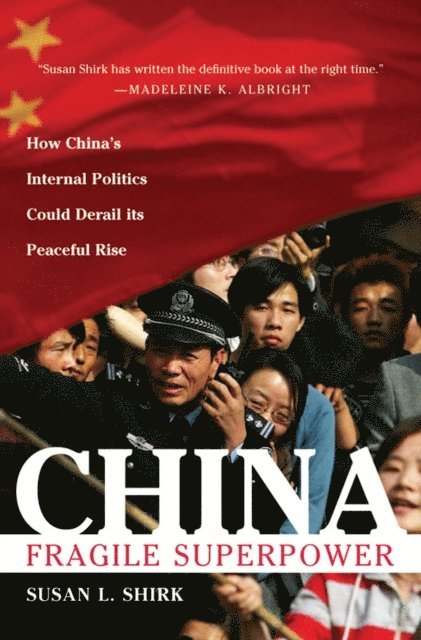
Once a sleeping giant, China today is the world''s fastest growing economy--the leading manufacturer of cell phones, laptop computers, and digital cameras--a dramatic turn-around that alarms many Westerners. But in China: The Fragile Superpower, Susan L. Shirk opens up the black box of Chinese politics and finds that the real danger lies elsewhere--not in China''s astonishing growth, but in the deep insecurity of its leaders. China''s leaders face a troubling paradox: the more developed and prosperous the country becomes, the more insecure and threatened they feel. Shirk, a former Deputy Assistant Secretary of State responsible for China, knows many of today''s Chinese rulers personally and has studied them for three decades. She offers invaluable insight into how they think--and what they fear. In this revealing book, readers see the world through the eyes of men like President Hu Jintao and former President Jiang Zemin. We discover a fragile communist regime desperate to survive in a society turned upside down by miraculous economic growth and a stunning new openness to the greater world. Indeed, ever since the 1989 pro-democracy protests in Tiananmen Square and the fall of communism in the Soviet Union, Chinese leaders have been haunted by the fear that their days in power are numbered. Theirs is a regime afraid of its own citizens, and this fear motivates many of their decisions when dealing with the U.S. and other foreign nations. In particular, the fervent nationalism of the Chinese people, combined with their passionate resentment of Japan and attachment to Taiwan, have made relations with these two regions a minefield. It is here, Shirk concludes, in the tangled interactions between Japan, Taiwan, China, and the United States, that the greatest danger lies. Shirk argues that rising powers such as China tend to provoke wars in large part because other countries mishandle them. Unless we understand China''s brittle internal politics and the fears that motivate its leaders, we face the very real possibility of avoidable conflict with China. This book provides that understanding.
Häftad, Engelska, 2011
331 kr
Skickas inom 5-8 vardagar
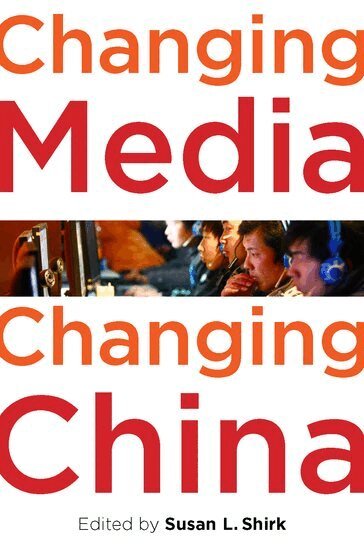
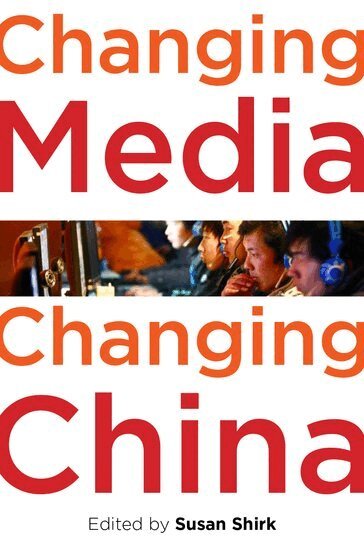
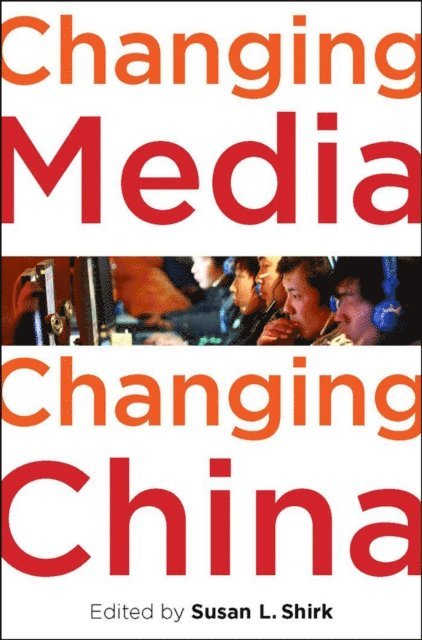
Thirty years ago, the Chinese Communist Party (CCP) made a fateful decision: to allow newspapers, magazines, television, and radio stations to compete in the marketplace instead of being financed exclusively by the government. The political and social implications of that decision are still unfolding as the Chinese government, media, and public adapt to the new information environment.Edited by Susan Shirk, one of America's leading experts on contemporary China, this collection of essays brings together a who's who of experts--Chinese and American--writing about all aspects of the changing media landscape in China. In detailed case studies, the authors describe how the media is reshaping itself from a propaganda mouthpiece into an agent of watchdog journalism, how politicians are reacting to increased scrutiny from the media, and how television, newspapers, magazines, and Web-based news sites navigate the cross-currents between the open marketplace and the CCP censors. China has over 360 million Internet users, more than any other country, and an astounding 162 million bloggers. The growth of Internet access has dramatically increased the information available, the variety and timeliness of the news, and its national and international reach. But China is still far from having a free press. As of 2008, the international NGO Freedom House ranked China 181 worst out of 195 countries in terms of press restrictions, and Chinese journalists have been aptly described as "dancing in shackles." The recent controversy over China's censorship of Google highlights the CCP's deep ambivalence toward information freedom. Covering everything from the rise of business media and online public opinion polling to environmental journalism and the effect of media on foreign policy, Changing Media, Changing China reveals how the most populous nation on the planet is reacting to demands for real news.
Inbunden, Engelska, 2011
896 kr
Skickas inom 5-8 vardagar
Thirty years ago, the Chinese Communist Party (CCP) made a fateful decision: to allow newspapers, magazines, television, and radio stations to compete in the marketplace instead of being financed exclusively by the government. The political and social implications of that decision are still unfolding as the Chinese government, media, and public adapt to the new information environment.Edited by Susan Shirk, one of America's leading experts on contemporary China, this collection of essays brings together a who's who of experts--Chinese and American--writing about all aspects of the changing media landscape in China. In detailed case studies, the authors describe how the media is reshaping itself from a propaganda mouthpiece into an agent of watchdog journalism, how politicians are reacting to increased scrutiny from the media, and how television, newspapers, magazines, and Web-based news sites navigate the cross-currents between the open marketplace and the CCP censors. China has over 360 million Internet users, more than any other country, and an astounding 162 million bloggers. The growth of Internet access has dramatically increased the information available, the variety and timeliness of the news, and its national and international reach. But China is still far from having a free press. As of 2008, the international NGO Freedom House ranked China 181 worst out of 195 countries in terms of press restrictions, and Chinese journalists have been aptly described as "dancing in shackles." The recent controversy over China's censorship of Google highlights the CCP's deep ambivalence toward information freedom. Covering everything from the rise of business media and online public opinion polling to environmental journalism and the effect of media on foreign policy, Changing Media, Changing China reveals how the most populous nation on the planet is reacting to demands for real news.
E-bok
Engelska, 2010253 kr
Läs direkt efter köp
Thirty years ago, the Chinese Communist Party (CCP) made a fateful decision: to allow newspapers, magazines, television, and radio stations to compete in the marketplace instead of being financed exclusively by the government. The political and social implications of that decision are still unfolding as the Chinese government, media, and public adapt to the new information environment.Edited by Susan Shirk, one of America''s leading experts on contemporary China, this collection of essays brings together a who''s who of experts--Chinese and American--writing about all aspects of the changing media landscape in China. In detailed case studies, the authors describe how the media is reshaping itself from a propaganda mouthpiece into an agent of watchdog journalism, how politicians are reacting to increased scrutiny from the media, and how television, newspapers, magazines, and Web-based news sites navigate the cross-currents between the open marketplace and the CCP censors. China has over 360 million Internet users, more than any other country, and an astounding 162 million bloggers. The growth of Internet access has dramatically increased the information available, the variety and timeliness of the news, and its national and international reach. But China is still far from having a free press. As of 2008, the international NGO Freedom House ranked China 181 worst out of 195 countries in terms of press restrictions, and Chinese journalists have been aptly described as "dancing in shackles." The recent controversy over China''s censorship of Google highlights the CCP''s deep ambivalence toward information freedom. Covering everything from the rise of business media and online public opinion polling to environmental journalism and the effect of media on foreign policy, Changing Media, Changing China reveals how the most populous nation on the planet is reacting to demands for real news.
E-bok
PDF, Engelska, 2010245 kr
Läs direkt efter köp
Thirty years ago, the Chinese Communist Party (CCP) made a fateful decision: to allow newspapers, magazines, television, and radio stations to compete in the marketplace instead of being financed exclusively by the government. The political and social implications of that decision are still unfolding as the Chinese government, media, and public adapt to the new information environment.Edited by Susan Shirk, one of America''s leading experts on contemporary China, this collection of essays brings together a who''s who of experts--Chinese and American--writing about all aspects of the changing media landscape in China. In detailed case studies, the authors describe how the media is reshaping itself from a propaganda mouthpiece into an agent of watchdog journalism, how politicians are reacting to increased scrutiny from the media, and how television, newspapers, magazines, and Web-based news sites navigate the cross-currents between the open marketplace and the CCP censors. China has over 360 million Internet users, more than any other country, and an astounding 162 million bloggers. The growth of Internet access has dramatically increased the information available, the variety and timeliness of the news, and its national and international reach. But China is still far from having a free press. As of 2008, the international NGO Freedom House ranked China 181 worst out of 195 countries in terms of press restrictions, and Chinese journalists have been aptly described as "dancing in shackles." The recent controversy over China''s censorship of Google highlights the CCP''s deep ambivalence toward information freedom. Covering everything from the rise of business media and online public opinion polling to environmental journalism and the effect of media on foreign policy, Changing Media, Changing China reveals how the most populous nation on the planet is reacting to demands for real news.
E-bok
Engelska, 2007110 kr
Läs direkt efter köp
Once a sleeping giant, China today is the world''s fastest growing economy--the leading manufacturer of cell phones, laptop computers, and digital cameras--a dramatic turn-around that alarms many Westerners. But in China: The Fragile Superpower, Susan L. Shirk opens up the black box of Chinese politics and finds that the real danger lies elsewhere--not in China''s astonishing growth, but in the deep insecurity of its leaders. China''s leaders face a troubling paradox: the more developed and prosperous the country becomes, the more insecure and threatened they feel. Shirk, a former Deputy Assistant Secretary of State responsible for China, knows many of today''s Chinese rulers personally and has studied them for three decades. She offers invaluable insight into how they think--and what they fear. In this revealing book, readers see the world through the eyes of men like President Hu Jintao and former President Jiang Zemin. We discover a fragile communist regime desperate to survive in a society turned upside down by miraculous economic growth and a stunning new openness to the greater world. Indeed, ever since the 1989 pro-democracy protests in Tiananmen Square and the fall of communism in the Soviet Union, Chinese leaders have been haunted by the fear that their days in power are numbered. Theirs is a regime afraid of its own citizens, and this fear motivates many of their decisions when dealing with the U.S. and other foreign nations. In particular, the fervent nationalism of the Chinese people, combined with their passionate resentment of Japan and attachment to Taiwan, have made relations with these two regions a minefield. It is here, Shirk concludes, in the tangled interactions between Japan, Taiwan, China, and the United States, that the greatest danger lies. Shirk argues that rising powers such as China tend to provoke wars in large part because other countries mishandle them. Unless we understand China''s brittle internal politics and the fears that motivate its leaders, we face the very real possibility of avoidable conflict with China. This book provides that understanding.
Del 24 - California Series on Social Choice and Political Economy
Political Logic of Economic Reform in China
Häftad, Engelska, 1993
330 kr
Skickas inom 5-8 vardagar
In the past decade, China was able to carry out economic reform without political reform, while the Soviet Union attempted the opposite strategy. How did China succeed at economic market reform without changing communist rule? Susan Shirk shows that Chinese communist political institutions are more flexible and less centralized than their Soviet counterparts were. Shirk pioneers a rational choice institutional approach to analyze policy-making in a non-democratic authoritarian country and to explain the history of Chinese market reforms from 1979 to the present. Drawing on extensive interviews with high-level Chinese officials, she pieces together detailed histories of economic reform policy decisions and shows how the political logic of Chinese communist institutions shaped those decisions. Combining theoretical ambition with the flavor of on-the-ground policy-making in Beijing, this book is a major contribution to the study of reform in China and other communist countries.
E-bok
Engelska, 2023327 kr
Läs direkt efter köp
Competitive Comrades: Career Incentives and Student Strategies in China provides a nuanced analysis of the complexities within China''s educational institutions and examines the evolution of student behavior in response to political pressures and career incentives. Focusing on the period between 1960 and 1966, the book delves into the high-stakes world of Chinese high schools, where the distribution of opportunities—especially under Mao''s virtuocratic policies—produced a unique blend of ambition and moral posturing. The book argues that Maoist policies, which sought to fuse political virtue with academic performance, created an intense atmosphere of competition that encouraged students to balance their academic and political ambitions with social strategies that would ensure their success. Unlike meritocracies or traditional hierarchies, this "virtuocratic" system intensified the stakes of student relationships and loyalty while paradoxically fostering political cynicism and alienation from the state—a contradiction at the heart of the Maoist vision of "revolutionary successors." Through detailed interviews with former students, Competitive Comrades reveals how students navigated these pressures, showing that, rather than fostering cooperation and ideological alignment, Mao''s policies often drove students toward strategic adaptations aimed at self-preservation and advancement. This exploration of the social and behavioral implications of virtuocracy provides critical insights into post-revolutionary Chinese society and presents a comparative framework relevant to other regimes governed by similar principles of moral-based selection. Ideal for scholars of Chinese history, political sociology, and education studies, Competitive Comrades sheds light on the unintended consequences of revolutionary moral ambitions on youth culture and social cohesion in Communist China. This title was originally published in 1982. Competitive Comrades: Career Incentives and Student Strategies in China provides a nuanced analysis of the complexities within China''s educational institutions and examines the evolution of student behavior in response to political pressures and career in
E-bok
Engelska, 2023572 kr
Läs direkt efter köp
In the past decade, China was able to carry out economic reform without political reform, while the Soviet Union attempted the opposite strategy. How did China succeed at economic market reform without changing communist rule? Susan Shirk shows that Chinese communist political institutions are more flexible and less centralized than their Soviet counterparts were.Shirk pioneers a rational choice institutional approach to analyze policy-making in a non-democratic authoritarian country and to explain the history of Chinese market reforms from 1979 to the present. Drawing on extensive interviews with high-level Chinese officials, she pieces together detailed histories of economic reform policy decisions and shows how the political logic of Chinese communist institutions shaped those decisions.Combining theoretical ambition with the flavor of on-the-ground policy-making in Beijing, this book is a major contribution to the study of reform in China and other communist countries.In the past decade, China was able to carry out economic reform without political reform, while the Soviet Union attempted the opposite strategy. How did China succeed at economic market reform without changing communist rule? Susan Shirk shows that Chine
Häftad, Engelska, 1994
271 kr
Skickas inom 10-15 vardagar
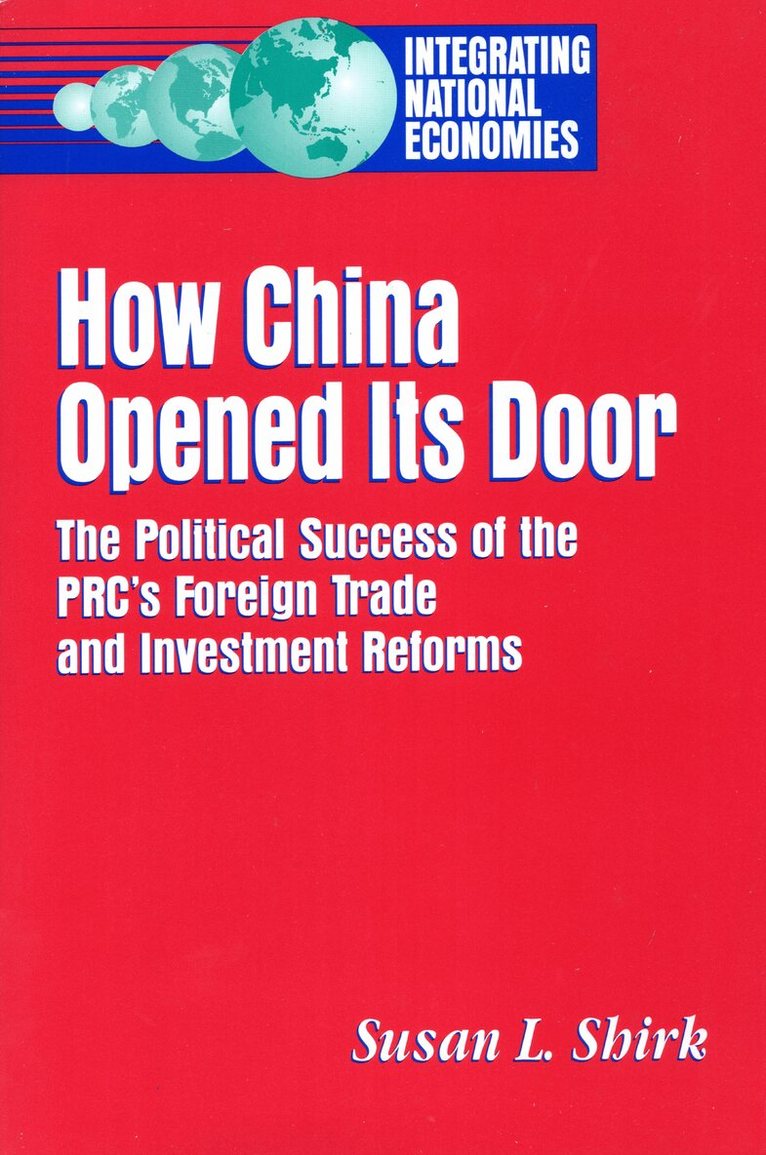
China's transformation from a virtually closed economy to a major trading nation is an incredible success story. Since 1979 the country has changed it's policies to promote increased foreign trade and investment, thereby attracting more direct investment to China than to any other developing country in recent years. What brought about this change? How, after thirty years of being walled off form the world economy, did China open its door?This book part of the Integrating National Economies series, tells the story of how China ended it long-held policies of economic isolationism and rejoined the world economy in the decade and a half between 1979 and 1994. It shows how China's transformation into a world trading power was achieved remarkably without any major alteration in the country's communist political system. Susan L. Shirk describes the reform strategy and explains why such a turn-around was possible in China but not in the Soviet Union.Shirk's analysis details the political logic behind the economic reform, illustrating how China's leaders were able to win support for reform politics among Communist Party and government officials. Despite strong vested interest in the status quo, the communist government successfully adopted reforms through gradualism, administrative decentralization, and ad hoc particularistic negotiating with individual subordinates. Shirk explains these distinctive features of China's path to reform.China has achieved shallow integration with great success. Whether deeper integration with the world economy will automatically follow remains unclear. Shirk concludes that China will not be able to achieve reform in the areas of deep integrationintellectual property rights, environmental protection, and labor treatmentin the same way it achieved shallow integration. She argues that imposing international standards will require rapid enforcement, central regulation, and uniform rules. If China can meet these challe
E-bok
Engelska, 1994288 kr
Läs direkt efter köp
China's transformation from a virtually closed economy to a major trading nation is an incredible success story. Since 1979 the country has changed it's policies to promote increased foreign trade and investment, thereby attracting more direct investment to China than to any other developing country in recent years. What brought about this change? How, after thirty years of being walled off form the world economy, did China open its door?This book part of the Integrating National Economies series, tells the story of how China ended it long-held policies of economic isolationism and rejoined the world economy in the decade and a half between 1979 and 1994. It shows how China's transformation into a world trading power was achieved remarkably without any major alteration in the country's communist political system. Susan L. Shirk describes the reform strategy and explains why such a turn-around was possible in China but not in the Soviet Union.Shirk's analysis details the political logic behind the economic reform, illustrating how China's leaders were able to win support for reform politics among Communist Party and government officials. Despite strong vested interest in the status quo, the communist government successfully adopted reforms through gradualism, administrative decentralization, and ad hoc particularistic negotiating with individual subordinates. Shirk explains these distinctive features of China's path to reform.China has achieved shallow integration with great success. Whether deeper integration with the world economy will automatically follow remains unclear. Shirk concludes that China will not be able to achieve reform in the areas of deep integrationintellectual property rights, environmental protection, and labor treatmentin the same way it achieved shallow integration. She argues that imposing international standards will require rapid enforcement, central regulation, and uniform rules. If China can meet these challe