Susan Ossman - Böcker
Visar alla böcker från författaren Susan Ossman. Handla med fri frakt och snabb leverans.
7 produkter
7 produkter
577 kr
Skickas inom 3-6 vardagar
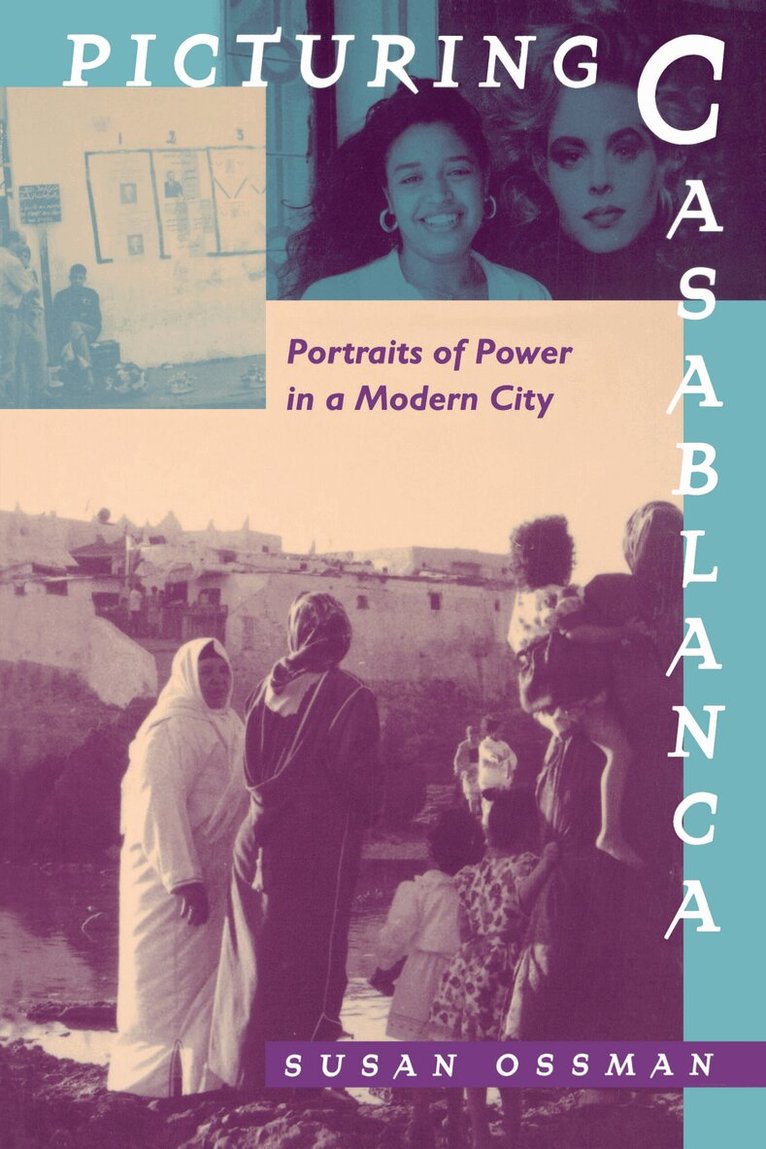
In Picturing Casablanca, Susan Ossman probes the shape and texture of mass images in Casablanca, from posters, films, and videotapes to elections, staged political spectacles, and changing rituals. In a fluid style that blends ethnographic narrative, cultural reportage, and the author's firsthand experiences, Ossman sketches a radically new vision of Casablanca as a place where social practices, traditions, and structures of power are in flux. Ossman guides the reader through the labyrinthine byways of the city, where state bureaucracy and state power, the media and its portrayal of the outside world, and people's everyday lives are all on view. She demonstrates how images not only reflect but inform and alter daily experience. In the Arab League Park, teenagers use fashion and flirting to attract potential mates, defying traditional rules of conduct. Wedding ceremonies are transformed by the ubiquitous video camera, which becomes the event's most important spectator. Political leaders are molded by the state's adept manipulation of visual media.From Madonna videos and the TV's transformation of social time, to changing gender roles and new ways of producing and disseminating information, the Morocco that Ossman reveals is a telling commentary on the consequences of colonial planning, the influence of modern media, and the rituals of power and representation enacted by the state.
675 kr
Skickas inom 10-15 vardagar
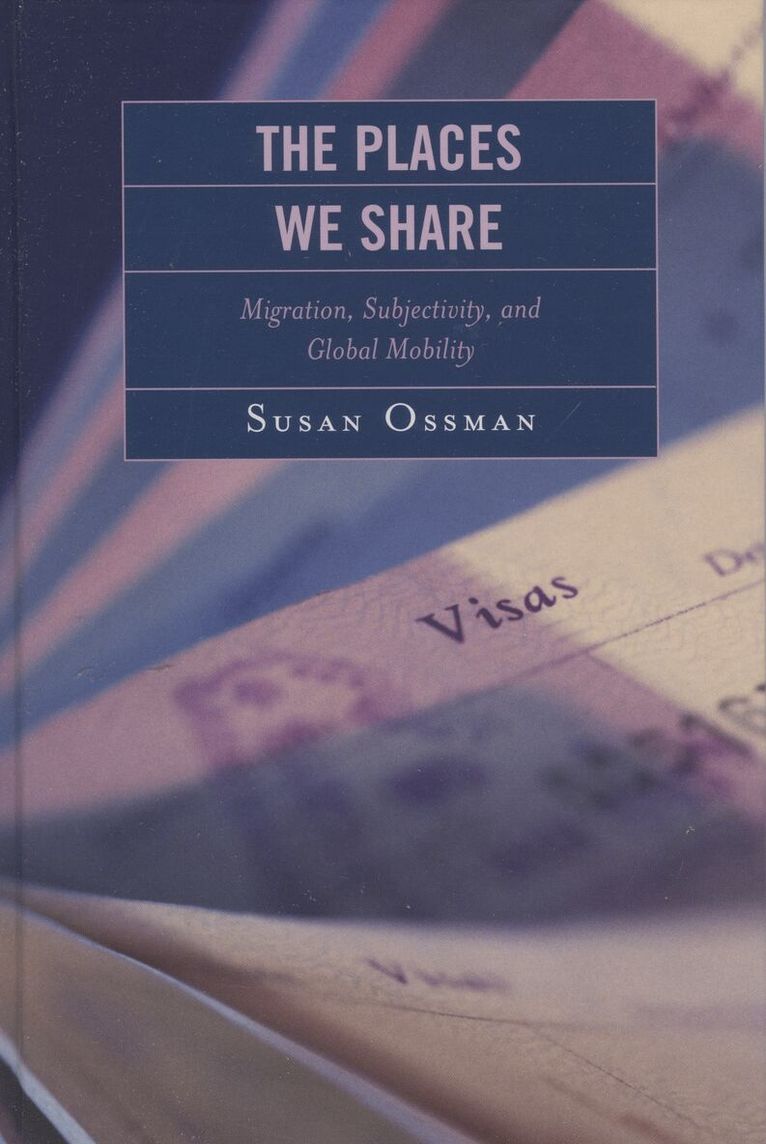
While some people study globalization, others live their lives as global experiments. This book brings together people who do both. The authors or subjects of these studies are of diverse national, religious, and ethnic backgrounds. What they have in common is a connection to Morocco. It is from this shared space that they draw on personal stories, fieldwork, and literary and linguistic analysis to provide a critical, socially reflexive response to the conceptions of culture, identity, and mobility that animate debates on migration and cosmopolitanism. On the trail of the Bedouin or Europe's new nomads and of Zaccarias Moussaoui Places We Share explores the relationship of mobility to subjectivity, and how physically moving can be a way of escaping the stigma of being an immigrant. Reading Rushdie, listening to Moroccan women converse in the UAE, or examining how the experience of serial migration can shape comparative ethnography we become more aware of how moving pushes us up against the limits of global experience. These limits must be recognized. They can be positively embraced to develop new ways of conceiving of ourselves, the world and our connections to others.
1 164 kr
Skickas inom 7-10 vardagar
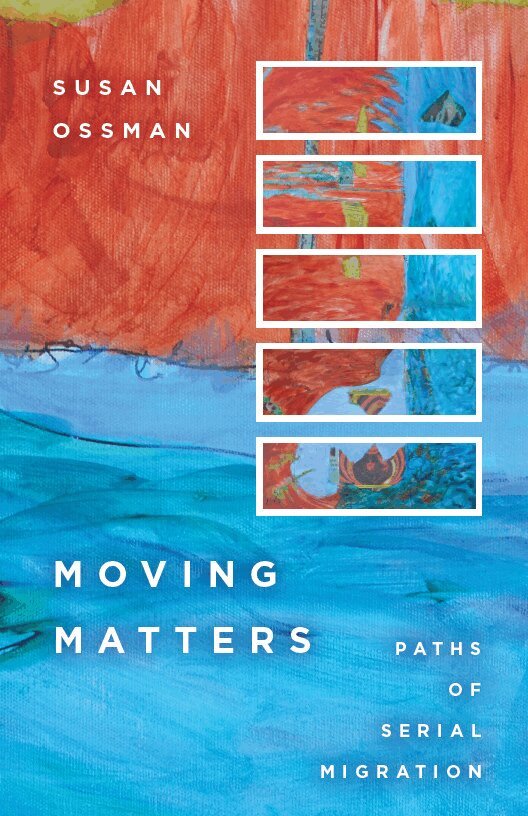
Moving Matters is a richly nuanced portrait of the serial migrant: a person who has lived in several countries, calling each one at some point "home." The stories told here are both extraordinary and increasingly common. Serial migrants rarely travel freely—they must negotiate a world of territorial borders and legal restrictions—yet as they move from one country to another, they can use border-crossings as moments of self-clarification. They often become masters of settlement as they turn each country into a life chapter. Susan Ossman follows this diverse and growing population not only to understand how paths of serial movement produce certain ways of life, but also to illuminate an ongoing tension between global fluidity and the power of nation-states. Ultimately, her lyrical reflection on migration and social diversity offers an illustration of how taking mobility as a starting point fundamentally alters our understanding of subjectivity, politics, and social life.
287 kr
Skickas inom 10-15 vardagar
Moving Matters is a richly nuanced portrait of the serial migrant: a person who has lived in several countries, calling each one at some point "home." The stories told here are both extraordinary and increasingly common. Serial migrants rarely travel freely—they must negotiate a world of territorial borders and legal restrictions—yet as they move from one country to another, they can use border-crossings as moments of self-clarification. They often become masters of settlement as they turn each country into a life chapter. Susan Ossman follows this diverse and growing population not only to understand how paths of serial movement produce certain ways of life, but also to illuminate an ongoing tension between global fluidity and the power of nation-states. Ultimately, her lyrical reflection on migration and social diversity offers an illustration of how taking mobility as a starting point fundamentally alters our understanding of subjectivity, politics, and social life.
488 kr
Skickas inom 3-6 vardagar
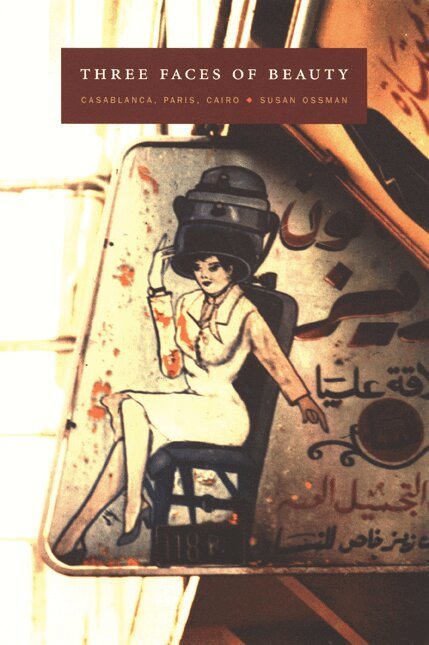
Three Faces of Beauty offers a unique approach to understanding globalization and cultural change based on a comparative, ethnographic study of a nearly universal institution: the beauty salon. Susan Ossman traces the images and words of the beauty industry as they developed historically between Paris, Cairo, and Casablanca and then vividly demonstrates how such images are embodied today in salons located in each city.By examining how images from fashion magazines, film, and advertising are enacted in beauty salons, Ossman demonstrates how embodiment is able to display and rework certain hierarchies. While offering the possibility of freedom from the tethers of status, nation, religion, and nature, beauty is created by these very categories and values, Ossman shows. Drawing on hundreds of interviews, she documents the various rituals of welcome, choice-making, pricing practices, and spatial arrangements in multiple salons . She also reveals ways in which patrons in all three cities imagine and co-opt looks they believe are fashionable in the other cities. By observing salons as scenes of instruction, Ossman reveals that beautiful bodies evolve within the intertwining contexts of media, modernity, location, time, postcolonialism, and male expectation.
443 kr
Skickas inom 10-15 vardagar
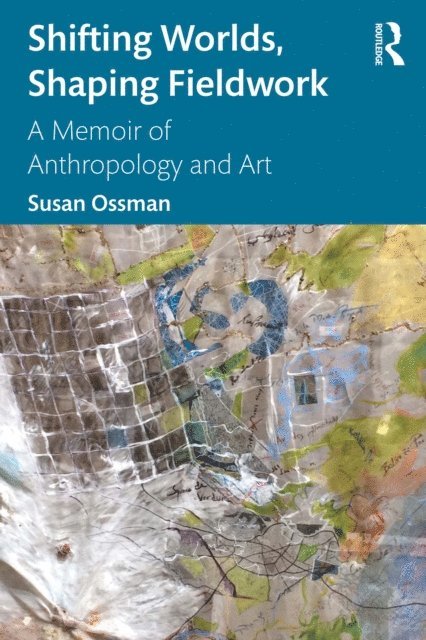
Reflecting on fieldwork for the twenty-first century, anthropologist and artist Susan Ossman invites readers on a journey across North Africa, Europe, the Middle East, and North America. She reveals that fieldwork today is not only about being immersed in a place or culture; instead, it is an active way of focusing attention and engendering encounters and experiences. She conceives a new kind of autoethnography, making art and ethnography equal partners to follow three "waves" of her research on media, globalization, and migration.Ossman guides the reader through diverse settings, including a colonial villa in Casablanca, a Cairo beauty salon, a California mall-turned-gallery, the Berlin Wall, and Amsterdam’s Hermitage museum. She delves into the entanglements of solitary research and collective action. This book is a primer for current anthropology and an invitation to artists and scholars to work across boundaries. It vividly shows how fieldwork can shape scenes for experiments with multiple outcomes, from conceptual advances to artworks, performances to dialogue and community making.
2 098 kr
Skickas inom 10-15 vardagar
Reflecting on fieldwork for the twenty-first century, anthropologist and artist Susan Ossman invites readers on a journey across North Africa, Europe, the Middle East, and North America. She reveals that fieldwork today is not only about being immersed in a place or culture; instead, it is an active way of focusing attention and engendering encounters and experiences. She conceives a new kind of autoethnography, making art and ethnography equal partners to follow three "waves" of her research on media, globalization, and migration.Ossman guides the reader through diverse settings, including a colonial villa in Casablanca, a Cairo beauty salon, a California mall-turned-gallery, the Berlin Wall, and Amsterdam’s Hermitage museum. She delves into the entanglements of solitary research and collective action. This book is a primer for current anthropology and an invitation to artists and scholars to work across boundaries. It vividly shows how fieldwork can shape scenes for experiments with multiple outcomes, from conceptual advances to artworks, performances to dialogue and community making.