Susanna Trnka - Böcker
Visar alla böcker från författaren Susanna Trnka. Handla med fri frakt och snabb leverans.
15 produkter
15 produkter
2 155 kr
Skickas inom 10-15 vardagar
What does disgust have to do with citizenship? How might pain and pleasure, movement, taste, sound and smell be configured as aspects of national belonging? Senses and Citizenships: Embodying Political Life examines the intersections between sensory phenomena and national and supra-national forms of belonging, introducing the new concept of sensory citizenship. Expanding upon contemporary understandings of the rights and duties of citizens, the volume presents anthropological investigations of the sensory aspects of participation in collectivities such as face-to-face communities, ethnic groups, nations and transnational entities. Rethinking relationships between ideology, aesthetics, affect and bodily experience, the authors reveal the multiple political effects of the senses. The book demonstrates how various elements of political life, including some of the most fundamental aspects of citizenship, rest not only upon our senses, but on their perceived naturalization. Vivid ethnographic examples of sensory citizenship in Europe, the United States, the Pacific, Asia and the Middle East explore themes such as sight in political constructions; smell and ethnic conflict; pain in the constitution of communities; national soundscapes; taste in national identities; movement, memory and emplacement.
1 518 kr
Skickas inom 10-15 vardagar
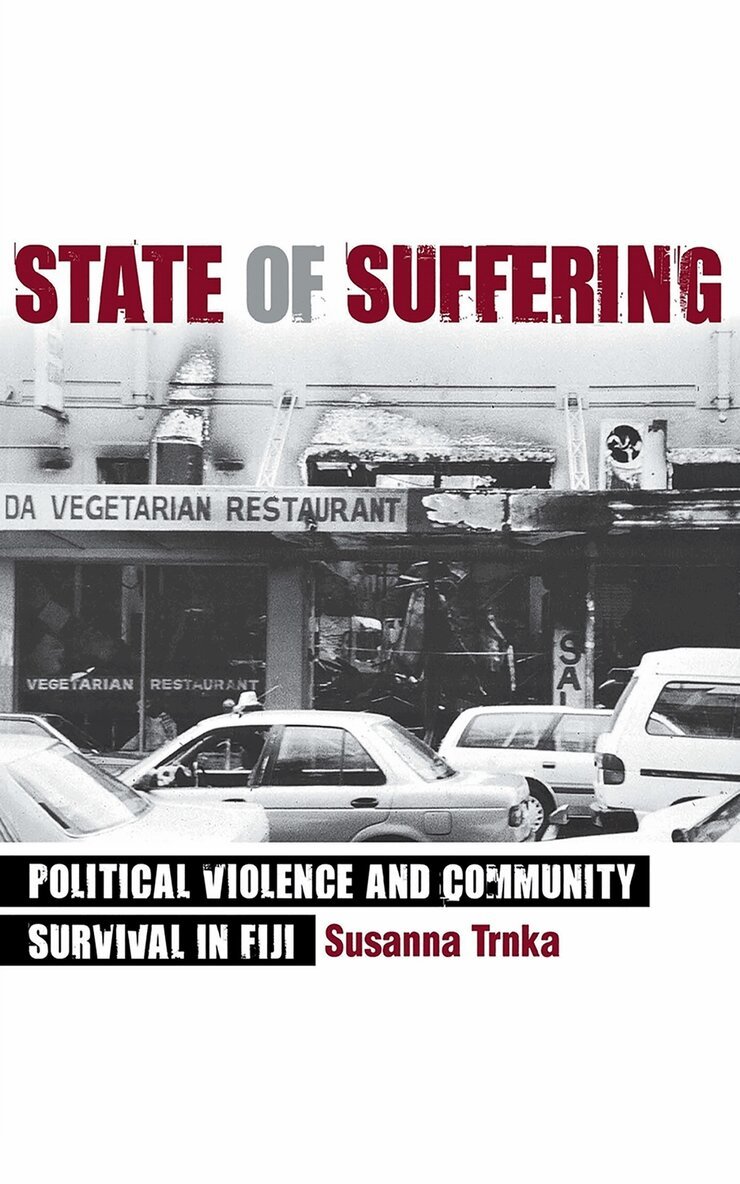
How do ordinary people respond when their lives are irrevocably altered by terror and violence? Susanna Trnka was residing in an Indo-Fijian village in the year 2000 during the Fijian nationalist coup. The overthrow of the elected multiethnic party led to six months of nationalist aggression, much of which was directed toward Indo-Fijians. In State of Suffering, Trnka shows how Indo-Fijians' lives were overturned as waves of turmoil and destruction swept across Fiji.Describing the myriad social processes through which violence is articulated and ascribed meaning-including expressions of incredulity, circulation of rumors, narratives, and exchanges of laughter and jokes-Trnka reveals the ways in which the community engages in these practices as individuals experience, and try to understand, the consequences of the coup. She then considers different kinds of pain caused by political chaos and social turbulence, including pain resulting from bodily harm, shared terror, and the distress precipitated by economic crisis and social dislocation.Throughout this book, Trnka focuses on the collective social process through which violence is embodied, articulated, and silenced by those it targets. Her sensitive ethnography is a valuable addition to the global conversation about the impact of political violence on community life.
447 kr
Skickas inom 10-15 vardagar
How do ordinary people respond when their lives are irrevocably altered by terror and violence? Susanna Trnka was residing in an Indo-Fijian village in the year 2000 during the Fijian nationalist coup. The overthrow of the elected multiethnic party led to six months of nationalist aggression, much of which was directed toward Indo-Fijians. In State of Suffering, Trnka shows how Indo-Fijians' lives were overturned as waves of turmoil and destruction swept across Fiji.Describing the myriad social processes through which violence is articulated and ascribed meaning-including expressions of incredulity, circulation of rumors, narratives, and exchanges of laughter and jokes-Trnka reveals the ways in which the community engages in these practices as individuals experience, and try to understand, the consequences of the coup. She then considers different kinds of pain caused by political chaos and social turbulence, including pain resulting from bodily harm, shared terror, and the distress precipitated by economic crisis and social dislocation.Throughout this book, Trnka focuses on the collective social process through which violence is embodied, articulated, and silenced by those it targets. Her sensitive ethnography is a valuable addition to the global conversation about the impact of political violence on community life.
1 473 kr
Skickas inom 7-10 vardagar
Noting the pervasiveness of the adoption of "responsibility" as a core ideal of neoliberal governance, the contributors to Competing Responsibilities challenge contemporary understandings and critiques of that concept in political, social, and ethical life. They reveal that neoliberalism's reification of the responsible subject masks the myriad forms of individual and collective responsibility that people engage with in their everyday lives, from accountability, self-sufficiency, and prudence to care, obligation, and culpability. The essays-which combine social theory with ethnographic research from Europe, North America, Africa, and New Zealand-address a wide range of topics, including critiques of corporate social responsibility practices; the relationships between public and private responsibilities in the context of state violence; the tension between calls on individuals and imperatives to groups to prevent the transmission of HIV; audit culture; and how health is cast as a citizenship issue. Competing Responsibilities allows for the examination of modes of responsibility that extend, challenge, or coexist with the neoliberal focus on the individual cultivation of the self. ContributorsBarry D. Adam, Elizabeth Anne Davis, Filippa Lentzos, Jessica Robbins-Ruszkowski, Nikolas Rose, Rosalind Shaw, Cris Shore, Jessica M. Smith, Susanna Trnka, Catherine Trundle, Jarrett Zigon
364 kr
Skickas inom 7-10 vardagar
Noting the pervasiveness of the adoption of "responsibility" as a core ideal of neoliberal governance, the contributors to Competing Responsibilities challenge contemporary understandings and critiques of that concept in political, social, and ethical life. They reveal that neoliberalism's reification of the responsible subject masks the myriad forms of individual and collective responsibility that people engage with in their everyday lives, from accountability, self-sufficiency, and prudence to care, obligation, and culpability. The essays-which combine social theory with ethnographic research from Europe, North America, Africa, and New Zealand-address a wide range of topics, including critiques of corporate social responsibility practices; the relationships between public and private responsibilities in the context of state violence; the tension between calls on individuals and imperatives to groups to prevent the transmission of HIV; audit culture; and how health is cast as a citizenship issue. Competing Responsibilities allows for the examination of modes of responsibility that extend, challenge, or coexist with the neoliberal focus on the individual cultivation of the self. ContributorsBarry D. Adam, Elizabeth Anne Davis, Filippa Lentzos, Jessica Robbins-Ruszkowski, Nikolas Rose, Rosalind Shaw, Cris Shore, Jessica M. Smith, Susanna Trnka, Catherine Trundle, Jarrett Zigon
Up Close and Personal
On Peripheral Perspectives and the Production of Anthropological Knowledge
Inbunden, Engelska, 2013
1 956 kr
Skickas inom 3-6 vardagar
Combining rich personal accounts from twelve veteran anthropologists with reflexive analyses of the state of anthropology today, this book is a treatise on theory and method offering fresh insights into the production of anthropological knowledge, from the creation of key concepts to major paradigm shifts. Particular focus is given to how ‘peripheral perspectives’ can help re-shape the discipline and the ways that anthropologists think about contemporary culture and society. From urban Maori communities in Aotearoa/New Zealand to the Highlands of Papua New Guinea, from Arnhem Land in Australia to the villages of Yorkshire, these accounts take us to the heart of the anthropological endeavour, decentring mainstream perspectives, and revealing the intimate relationships and processes that create anthropological knowledge.
2 098 kr
Skickas inom 10-15 vardagar
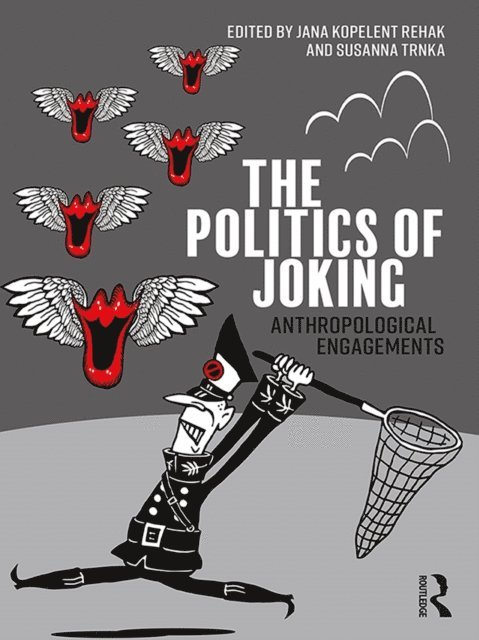
This book engages anthropologically with humor as political expression. It reveals how humor is in many instances central to human efforts to cope with political struggle and significant to understanding power dynamics in socio-political life. The chapters examine humor and joking activities across a diverse range of geographic areas and cultural contexts. The contributors consider humor as it is constituted in political anxiety, aggression and power, and when it becomes a tool to resist, repair, reconcile or make a moral claim. Collectively they demonstrate that humor can provide a powerful critique, a non-violent form of political protest and the space for restoration of human dignity.
579 kr
Skickas inom 10-15 vardagar
This book engages anthropologically with humor as political expression. It reveals how humor is in many instances central to human efforts to cope with political struggle and significant to understanding power dynamics in socio-political life. The chapters examine humor and joking activities across a diverse range of geographic areas and cultural contexts. The contributors consider humor as it is constituted in political anxiety, aggression and power, and when it becomes a tool to resist, repair, reconcile or make a moral claim. Collectively they demonstrate that humor can provide a powerful critique, a non-violent form of political protest and the space for restoration of human dignity.
688 kr
Skickas inom 10-15 vardagar
What does disgust have to do with citizenship? How might pain and pleasure, movement, taste, sound and smell be configured as aspects of national belonging? Senses and Citizenships: Embodying Political Life examines the intersections between sensory phenomena and national and supra-national forms of belonging, introducing the new concept of sensory citizenship. Expanding upon contemporary understandings of the rights and duties of citizens, the volume presents anthropological investigations of the sensory aspects of participation in collectivities such as face-to-face communities, ethnic groups, nations and transnational entities. Rethinking relationships between ideology, aesthetics, affect and bodily experience, the authors reveal the multiple political effects of the senses. The book demonstrates how various elements of political life, including some of the most fundamental aspects of citizenship, rest not only upon our senses, but on their perceived naturalization. Vivid ethnographic examples of sensory citizenship in Europe, the United States, the Pacific, Asia and the Middle East explore themes such as sight in political constructions; smell and ethnic conflict; pain in the constitution of communities; national soundscapes; taste in national identities; movement, memory and emplacement.
538 kr
Skickas inom 10-15 vardagar
This book is about the lives of young 'ordinary' Czech women who came of age in the aftermath of the 1989 Velvet Revolution.
573 kr
Skickas inom 10-15 vardagar
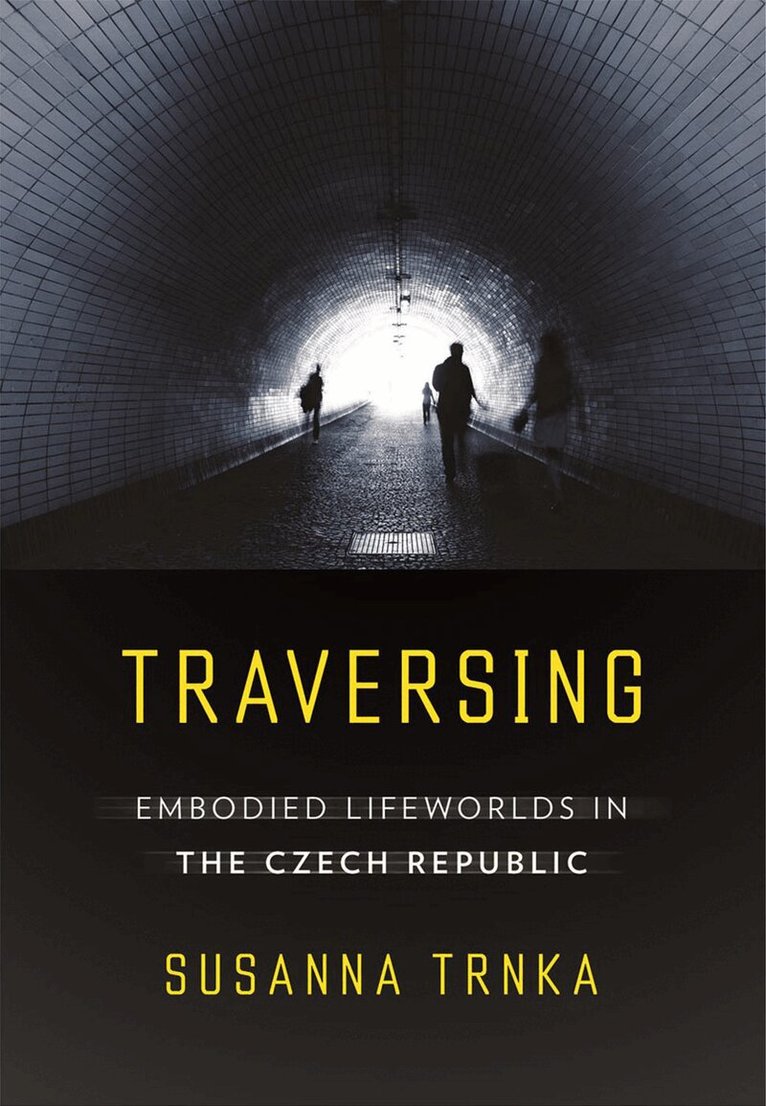
Traversing is about our ways of seeing, experiencing, and moving through the world and how they shape the kinds of people we become. Drawing from concepts developed by two phenomenological philosophers, Martin Heidegger and Jan Patočka, and putting them in conversation with ethnographic analysis of the lives of contemporary Czechs, Susanna Trnka examines how embodiment is crucial for understanding our being-in-the-world.In particular, Traversing scrutinizes three kinds of movements we make as embodied actors in the world: how we move through time and space, be it by walking along city streets, gliding across the dance floor, or clicking our way through digital landscapes; how we move toward and away from one another, as erotic partners, family members, or fearful, ethnic "others"; and how we move toward ourselves and the earth we live on.Above all, Traversing focuses on tracing the ways in which the body and motion are fundamental to our lived experience of the world, so we can develop a better understanding of the empirical details of Czech society and what they can reveal to us about the human condition.
1 381 kr
Skickas inom 7-10 vardagar
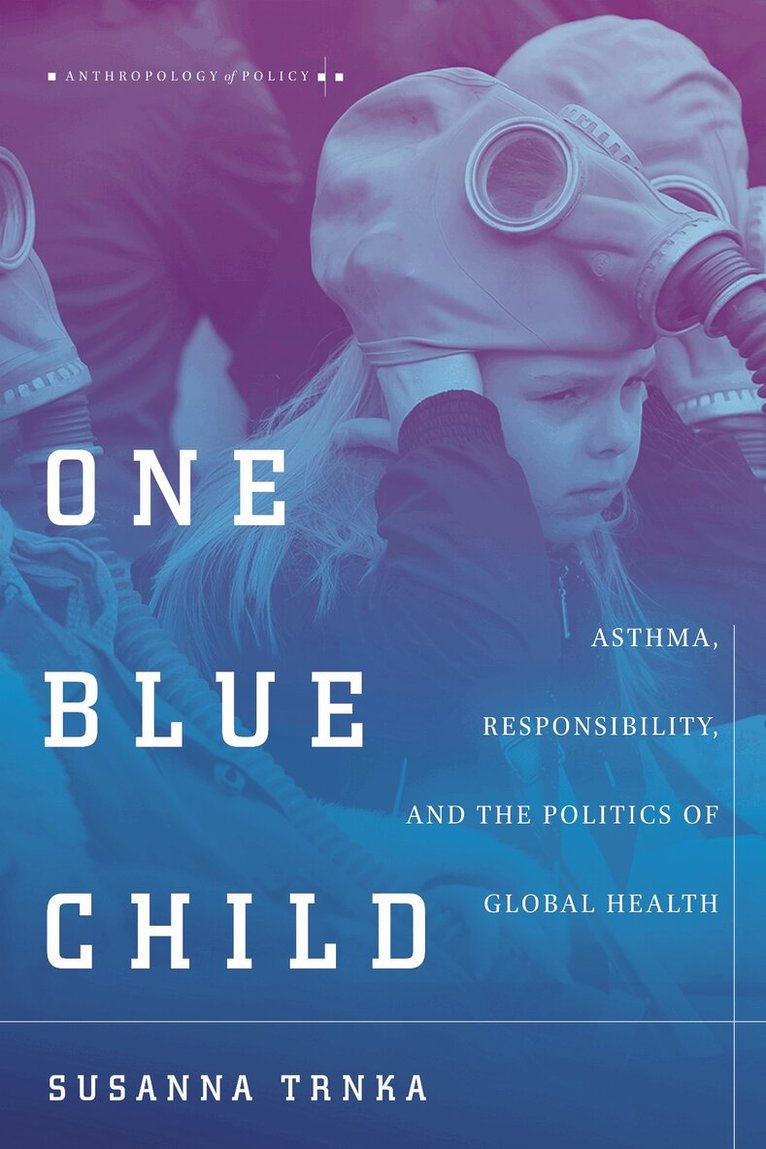
Radical changes in our understanding of health and healthcare are reshaping twenty-first-century personhood. In the last few years, there has been a great influx of public policy and biometric technologies targeted at engaging individuals in their own health, increasing personal responsibility, and encouraging people to "self-manage" their own care. One Blue Child examines the emergence of self-management as a global policy standard, focusing on how healthcare is reshaping our relationships with ourselves and our bodies, our families and our doctors, companies, and the government. Comparing responses to childhood asthma in New Zealand and the Czech Republic, Susanna Trnka traces how ideas about self-management, as well as policies inculcating self-reliance and self-responsibility more broadly, are assumed, reshaped, and ignored altogether by medical professionals, asthma sufferers and parents, environmental activists, and policymakers. By studying nations that share a commitment to the ideals of neoliberalism but approach children's health according to very different cultural, political, and economic priorities, Trnka illuminates how responsibility is reformulated with sometimes surprising results.
324 kr
Skickas inom 7-10 vardagar
Radical changes in our understanding of health and healthcare are reshaping twenty-first-century personhood. In the last few years, there has been a great influx of public policy and biometric technologies targeted at engaging individuals in their own health, increasing personal responsibility, and encouraging people to "self-manage" their own care. One Blue Child examines the emergence of self-management as a global policy standard, focusing on how healthcare is reshaping our relationships with ourselves and our bodies, our families and our doctors, companies, and the government. Comparing responses to childhood asthma in New Zealand and the Czech Republic, Susanna Trnka traces how ideas about self-management, as well as policies inculcating self-reliance and self-responsibility more broadly, are assumed, reshaped, and ignored altogether by medical professionals, asthma sufferers and parents, environmental activists, and policymakers. By studying nations that share a commitment to the ideals of neoliberalism but approach children's health according to very different cultural, political, and economic priorities, Trnka illuminates how responsibility is reformulated with sometimes surprising results.
704 kr
Skickas inom 10-15 vardagar
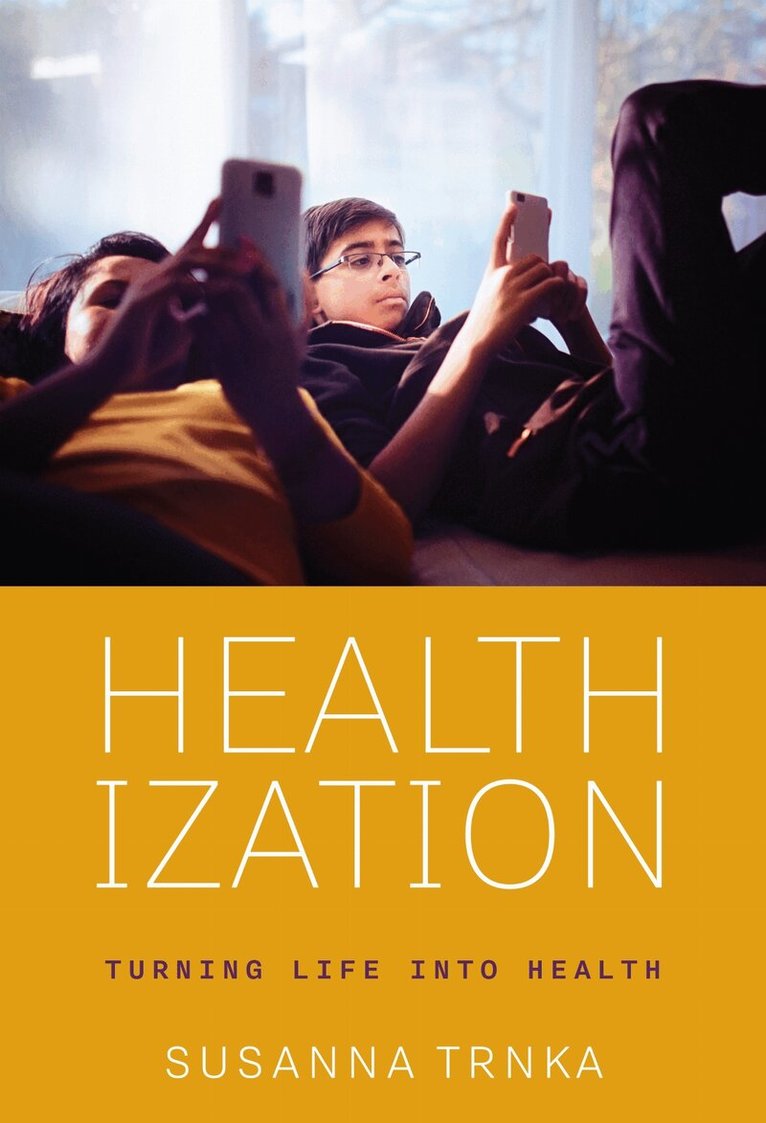
What does it mean to be healthy? Is it a measure of physical illness, of a mental health condition, or of emotional control? In twenty-first-century Aotearoa/New Zealand, it is all of the above. Being healthy in this country requires an investment of extensive work, resources, and time. Because while it encompasses the above categories, for many young people in Aotearoa/New Zealand, health also extends to having strong, trusted friendships—to feeling that one's emotions are being recognized while recognizing the emotions of others. Health for these youth may also consist of creating a daily space for mindfulness while maintaining productivity; working up the motivation to work out; quantifying and graphing nutrition stats; being able to talk openly about one's mental health; and maybe even wearing the right lipstick.These activities are particularly salient in Aotearoa/New Zealand where the past forty years have witnessed a growing emphasis on the importance of patient "self-responsibility" and where the state has invested heavily in health, even introducing a "wellbeing budget" that tracks the economy via wellbeing measures. All of these activities add up to a concept—and a worldview—that anthropologist Susanna Trnka conceptualizes as healthization. Through this framework, managing one's emotions, keeping one's sense of "balance," and tracking the number of miles run, swum, or bicycled, become overlapping, all-consuming activities, to the point of almost encompassing life itself. By analyzing ethnographic interviews with young people, Trnka reveals the emotional, financial, and deeply personal ideas at stake as understandings of health shift in the minds of young people. Often at the vanguard of new trends in mental health, physical fitness, and digital health technologies, the youth in Aotearoa/New Zealand enact what it means to be well in the twenty-first century.
Del 25 - Methodology & History in Anthropology
Up Close and Personal
On Peripheral Perspectives and the Production of Anthropological Knowledge
Häftad, Engelska, 2015
566 kr
Skickas inom 3-6 vardagar
Combining rich personal accounts from twelve veteran anthropologists with reflexive analyses of the state of anthropology today, this book is a treatise on theory and method offering fresh insights into the production of anthropological knowledge, from the creation of key concepts to major paradigm shifts. Particular focus is given to how 'peripheral perspectives' can help re-shape the discipline and the ways that anthropologists think about contemporary culture and society. From urban Maori communities in Aotearoa/New Zealand to the Highlands of Papua New Guinea, from Arnhem Land in Australia to the villages of Yorkshire, these accounts take us to the heart of the anthropological endeavour, decentring mainstream perspectives, and revealing the intimate relationships and processes that create anthropological knowledge.