Susannah Eckersley - Böcker
Visar alla böcker från författaren Susannah Eckersley. Handla med fri frakt och snabb leverans.
6 produkter
6 produkter
652 kr
Skickas inom 10-15 vardagar
Dimensions of Heritage and Memory is a landmark contribution on the politics of the past in Europe today. The book explores the meanings of heritage in a time of crisis, when the past permeates social and political divisions, identity contests and official projects to forge a European community. Providing an overview of the literature and an analysis of the assumptions, values and philosophies embedded within European-level policy, the book explores different dimensions of heritage and memory, from official sites, museums and policy, to party politics, historical re-enactments and the everyday ways in which people use the past to make sense of who they are. The volume explores how different understandings of and attachments to the European past produce different ‘Europes’ in the present, accounting for today’s tense social and political relations. The book also explores formative histories for European identities that are neglected or hidden because of political circumstances and non-official heritage. Contributors consider the meanings of interlocking crises, such as economic fallout, xenophobia and the fragmentation of the EU, for new understandings of Europe’s past in the present. Dimensions of Heritage and Memory will be of great interest to researchers, academics and postgraduate students in the fields of heritage and memory studies, museum studies, history, cultural studies, sociology, anthropology and politics. The book will also be interesting to practitioners and cultural heritage policy-makers.Chapters 1,3,4,9 and 10 of this book are available for free in PDF format as Open Access from the individual product page at www.routledge.com. They have been made available under a Creative Commons Attribution-Non Commercial-No Derivatives 4.0 license.
565 kr
Skickas inom 10-15 vardagar
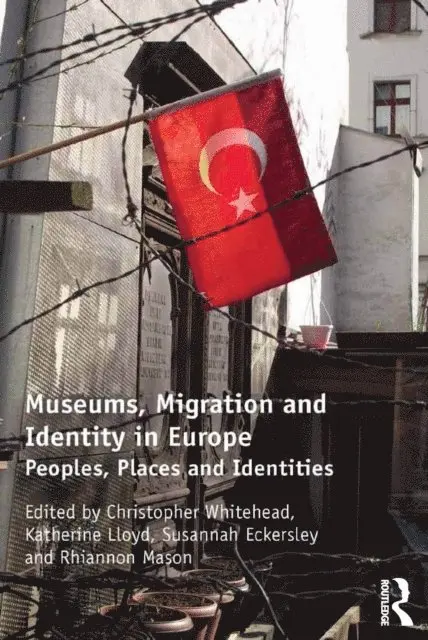
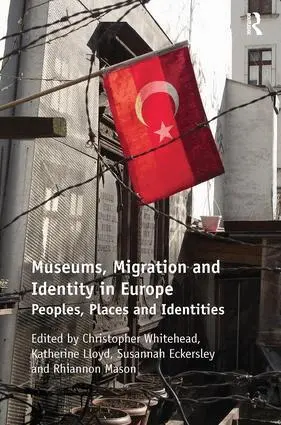
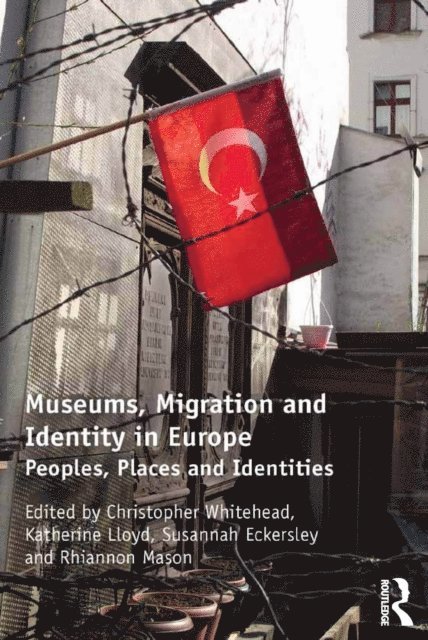
The imperatives surrounding museum representations of place have shifted from the late eighteenth century to today. The political significance of place itself has changed and continues to change at all scales, from local, civic, regional to national and supranational. At the same time, changes in population flows, migration patterns and demographic movement now underscore both cultural and political practice, be it in the accommodation of ’diversity’ in cultural and social policy, scholarly explorations of hybridity or in state immigration controls. This book investigates the historical and contemporary relationships between museums, places and identities. It brings together contributions from international scholars, academics, practitioners from museums and public institutions, policymakers, and representatives of associations and migrant communities to explore all these issues.
Diversity of Belonging in Europe
Public Spaces, Contested Places, Cultural Encounters
Inbunden, Engelska, 2022
1 895 kr
Skickas inom 10-15 vardagar
Diversity of Belonging in Europe analyzes conflicting notions of identity andbelonging in contemporary Europe. Addressing the creation, negotiation, and (re)use of diverse spaces and places of belonging, the book examines their fascinatingcomplexities in the context of a changing Europe.Taking an innovative interdisciplinary approach, the volume examinesrenegotiations of belonging played out through cultural encounters with differenceand change, in diverse public spaces and contested places. Highlighting theinterconnections between social change and culture, heritage, and memory, thechapters analyze multilayered public spaces and the negotiations over culture andbelonging that are connected to them. Through analyses of diverse case studies, theeditors and authors draw out the significance of the participation or exclusion ofdiffering community, grassroots, and activist groups in such practices and discoursesof belonging in relation to the contemporary emergence of identity conflicts andpolitical uses of the past across Europe. They analyze the ways in which people’ssense of belonging is connected to cultural, heritage, and memory practicesundertaken in different public spaces, including museums, cultural and communitycentres, city monuments and built heritage, neglected urban spaces, and online fora.Diversity of Belonging in Europe provides a valuable contribution to theexisting bodies of work on identities, migration, public space, memory, andheritage. The book will be of interest to scholars and students with an interest incontested belonging, public spaces, and the role of culture and heritage.Susannah Eckersley is Senior Lecturer at Newcastle University, UK, anAssociated Research Fellow at the Leibniz Centre for Contemporary History(ZZF) in Potsdam, Germany, and the Project Leader of en/counter/points – acollaborative European research project on public spaces and belonging fundedby HERA. Her expertise is in memory, museums, difficult heritage, migration,identities, and belonging.Claske Vos is an anthropologist and Assistant Professor in the Department ofEuropean Studies at the Humanities Faculty of the University of Amsterdam, theNetherlands. Her current work focuses on the intersection of EU funding, culturalactivism, and enlargement. Her expertise is in European cultural policy, culturalheritage, Southeast Europe, and European identity formation.
Diversity of Belonging in Europe
Public Spaces, Contested Places, Cultural Encounters
Häftad, Engelska, 2022
552 kr
Skickas inom 10-15 vardagar
Diversity of Belonging in Europe analyzes conflicting notions of identity andbelonging in contemporary Europe. Addressing the creation, negotiation, and (re)use of diverse spaces and places of belonging, the book examines their fascinatingcomplexities in the context of a changing Europe.Taking an innovative interdisciplinary approach, the volume examinesrenegotiations of belonging played out through cultural encounters with differenceand change, in diverse public spaces and contested places. Highlighting theinterconnections between social change and culture, heritage, and memory, thechapters analyze multilayered public spaces and the negotiations over culture andbelonging that are connected to them. Through analyses of diverse case studies, theeditors and authors draw out the significance of the participation or exclusion ofdiffering community, grassroots, and activist groups in such practices and discoursesof belonging in relation to the contemporary emergence of identity conflicts andpolitical uses of the past across Europe. They analyze the ways in which people’ssense of belonging is connected to cultural, heritage, and memory practicesundertaken in different public spaces, including museums, cultural and communitycentres, city monuments and built heritage, neglected urban spaces, and online fora.Diversity of Belonging in Europe provides a valuable contribution to theexisting bodies of work on identities, migration, public space, memory, andheritage. The book will be of interest to scholars and students with an interest incontested belonging, public spaces, and the role of culture and heritage.Susannah Eckersley is Senior Lecturer at Newcastle University, UK, anAssociated Research Fellow at the Leibniz Centre for Contemporary History(ZZF) in Potsdam, Germany, and the Project Leader of en/counter/points – acollaborative European research project on public spaces and belonging fundedby HERA. Her expertise is in memory, museums, difficult heritage, migration,identities, and belonging.Claske Vos is an anthropologist and Assistant Professor in the Department ofEuropean Studies at the Humanities Faculty of the University of Amsterdam, theNetherlands. Her current work focuses on the intersection of EU funding, culturalactivism, and enlargement. Her expertise is in European cultural policy, culturalheritage, Southeast Europe, and European identity formation.
Dimensions of Heritage and Memory
Multiple Europes and the Politics of Crisis
Inbunden, Engelska, 2019
2 160 kr
Skickas inom 10-15 vardagar
Dimensions of Heritage and Memory is a landmark contribution on the politics of the past in Europe today. The book explores the meanings of heritage in a time of crisis, when the past permeates social and political divisions, identity contests and official projects to forge a European community.Providing an overview of the literature and an analysis of the assumptions, values and philosophies embedded within European-level policy, the book explores different dimensions of heritage and memory, from official sites, museums and policy, to party politics, historical re-enactments and the everyday ways in which people use the past to make sense of who they are. The volume explores how different understandings of and attachments to the European past produce different ‘Europes’ in the present, accounting for today’s tense social and political relations. The book also explores formative histories for European identities that are neglected or hidden because of political circumstances and non-official heritage. Contributors consider the meanings of interlocking crises, such as economic fallout, xenophobia and the fragmentation of the EU, for new understandings of Europe’s past in the present.Dimensions of Heritage and Memorywill be of great interest to researchers, academics and postgraduate students in the fields of heritage and memory studies, museum studies, history, cultural studies, sociology, anthropology and politics. The book will also be interesting to practitioners and cultural heritage policy-makers.Chapters 1, 3, 4, 9, and 10 of this book are freely available as downloadable Open Access PDFs at http://www.taylorfrancis.com under a Creative Commons Attribution-Non Commercial-No Derivatives (CC-BY-NC-ND) 4.0 license.
2 098 kr
Skickas inom 10-15 vardagar
The imperatives surrounding museum representations of place have shifted from the late eighteenth century to today. The political significance of place itself has changed and continues to change at all scales, from local, civic, regional to national and supranational. At the same time, changes in population flows, migration patterns and demographic movement now underscore both cultural and political practice, be it in the accommodation of ’diversity’ in cultural and social policy, scholarly explorations of hybridity or in state immigration controls. This book investigates the historical and contemporary relationships between museums, places and identities. It brings together contributions from international scholars, academics, practitioners from museums and public institutions, policymakers, and representatives of associations and migrant communities to explore all these issues.