Sverre Raffnsøe - Böcker
Visar alla böcker från författaren Sverre Raffnsøe. Handla med fri frakt och snabb leverans.
6 produkter
6 produkter
1 589 kr
Skickas inom 10-15 vardagar
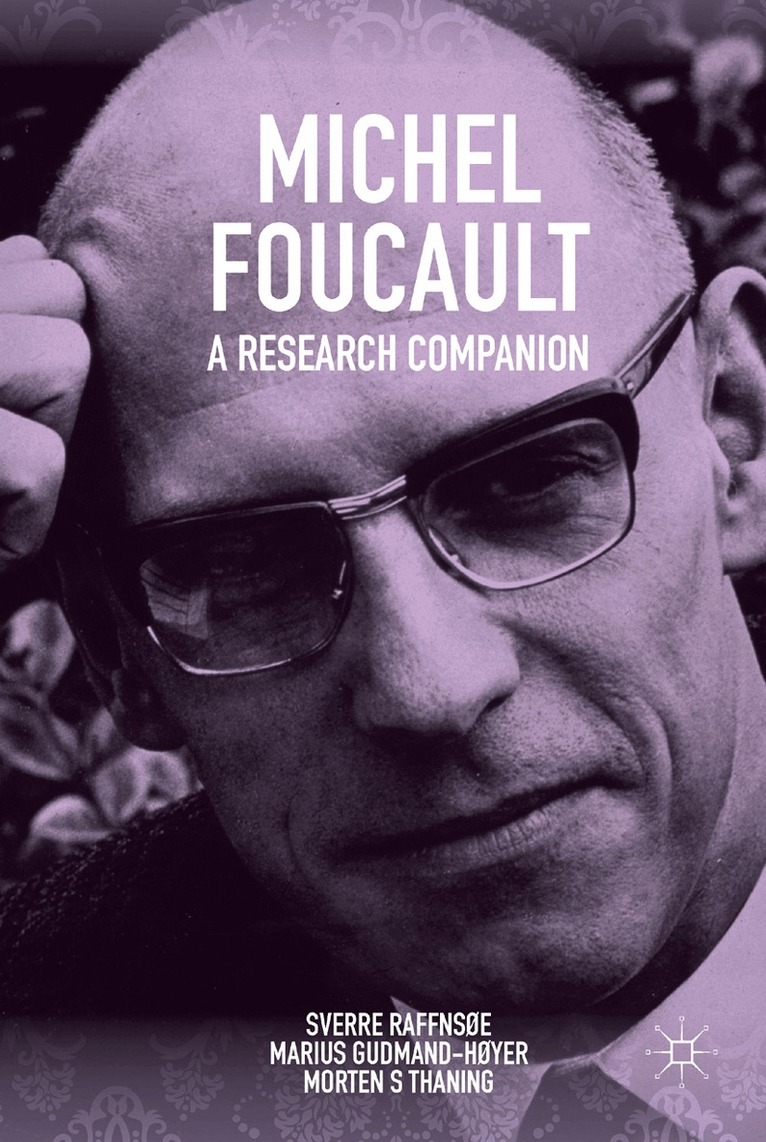
By reading Foucault as a philosopher, it offers an extensive systematic assessment and discussion of his unique conception of philosophical practice and brings a unifying trajectory in his work to light.
587 kr
Skickas inom 10-15 vardagar
The Anthropocene is a new epoch characterized by the overarching importance of the human species, but also by the recognition of human dependence. A critical human turn affecting the human condition is still arriving. This turn implies that the traditional field of investigation for the human sciences has become crucially important.
1 272 kr
Skickas inom 10-15 vardagar
By reading Foucault as a philosopher, it offers an extensive systematic assessment and discussion of his unique conception of philosophical practice and brings a unifying trajectory in his work to light.
Aestheticizing Society
Decisive Turns in the History of Philosophical Aesthetics
Inbunden, Engelska, 2027
1 406 kr
Kommande
Aestheticizing Society makes a significant and original contribution to understanding the contemporary aesthetic turn. By examining its constituent layers through crucial stages in the history of philosophical aesthetics, Sverre Raffnsøe situates sensory experience and affective expression as ubiquitously present and decisive.Moving through previous aesthetic turns including classical prescriptive poetics via Plato, Boileau, and Baumgarten, Raffnsøe highlights the beginnings of modern aesthetics in the relationship between aesthetic experience and expression, and traverses the golden age of aesthetics through Kant, Schiller, and Hegel. The notion of an absolute and autonomous art is explored alongside the development of aesthetic experience that invites the subject to transgress and renegotiate given reality.What is unique about the current aesthetic moment, Raffnsøe argues, is that human beings now configure their own nature as they relate to an aestheticized society, revealing striking implications of the present aesthetic turn for self-comprehension, the formation of self-revelation and self-transformation.
1 419 kr
Skickas inom 10-15 vardagar
This book challenges commonplace assertions that the humanities are presently undergoing a severe crisis as a result of a longstanding decline. Rather than hearkening to the widespread, reactive call for a last-ditch defense of the humanities under attack from an ungracious world, this book fundamentally reverses the perspective and makes a plea for a different, affirmative approach. It contends that the humanities have incessantly arrived at critical turning points since they were first constituted in a form that remains recognizable today and assumed a leading role in knowledge organization with the establishment of the modern university around 1800. Assuming a historical perspective, the monograph takes the human sciences back to their rightful place in the family tree of sciences and gives due recognition to their continuously decisive role in the production of new knowledge and the creation of new fields of knowledge. Situating the ongoing gemmation of the humanities in a broader context, this monograph also offers an encompassing introduction to the over-all development of knowledge in the last two hundred years.
1 419 kr
Skickas inom 10-15 vardagar
This book challenges commonplace assertions that the humanities are presently undergoing a severe crisis as a result of a longstanding decline. Rather than hearkening to the widespread, reactive call for a last-ditch defense of the humanities under attack from an ungracious world, this book fundamentally reverses the perspective and makes a plea for a different, affirmative approach. It contends that the humanities have incessantly arrived at critical turning points since they were first constituted in a form that remains recognizable today and assumed a leading role in knowledge organization with the establishment of the modern university around 1800. Assuming a historical perspective, the monograph takes the human sciences back to their rightful place in the family tree of sciences and gives due recognition to their continuously decisive role in the production of new knowledge and the creation of new fields of knowledge. Situating the ongoing gemmation of the humanities in a broader context, this monograph also offers an encompassing introduction to the over-all development of knowledge in the last two hundred years.