Taj Hashmi – författare
Visar alla böcker från författaren Taj Hashmi. Handla med fri frakt och snabb leverans.
7 produkter
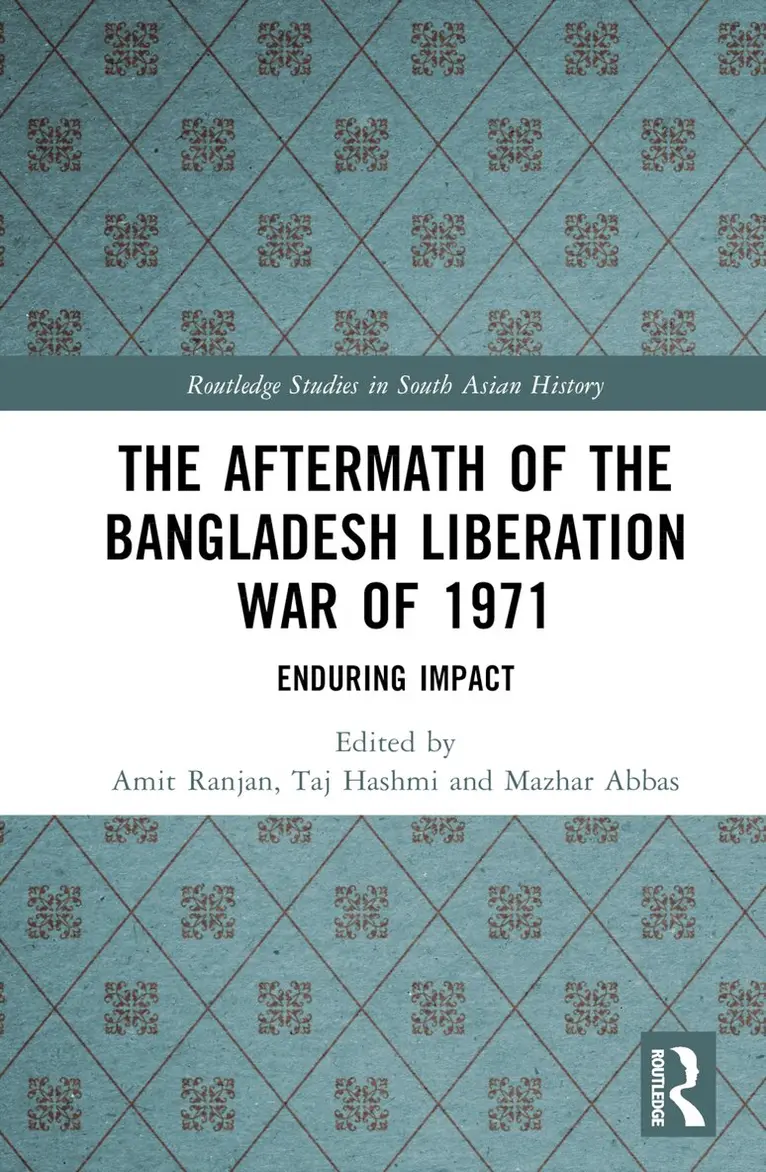
Aftermath of the Bangladesh Liberation War of 1971
Enduring Impact
Av Amit Ranjan, Taj Hashmi m. fl.
Inbunden, 2024
2591 kr
Lägg i varukorg
This book analyses the human dimension during and after the Bangladesh Liberation War of 1971.The chapters investigate questions of belonging and being an “alien”, civil rights and ethnic demands, and broader issues of citizenship and statelessness. The analysis centres around the situation of …
Aftermath of the Bangladesh Liberation War of 1971
Enduring Impact
Av Amit Ranjan, Taj Hashmi m. fl.
Häftad, 2026
728 kr
Lägg i varukorg
This book analyses the human dimension during and after the Bangladesh Liberation War of 1971.The chapters investigate questions of belonging and being an “alien”, civil rights and ethnic demands, and broader issues of citizenship and statelessness. The analysis centres around the situation of …
Aftermath of the Bangladesh Liberation War of 1971
Enduring Impact
Av Mazhar Abbas, Taj Hashmi m. fl.
E-bok, 2024
831 kr
Lägg i varukorg
This book analyses the human dimension during and after the Bangladesh Liberation War of 1971. The chapters investigate questions of belonging and being an “alien”, civil rights and ethnic demands, and broader issues of citizenship and statelessness. The analysis centres around the situation of …
Aftermath of the Bangladesh Liberation War of 1971
Enduring Impact
Av Mazhar Abbas, Taj Hashmi m. fl.
E-bok, 2024
813 kr
Lägg i varukorg
This book analyses the human dimension during and after the Bangladesh Liberation War of 1971. The chapters investigate questions of belonging and being an “alien”, civil rights and ethnic demands, and broader issues of citizenship and statelessness. The analysis centres around the situation of …
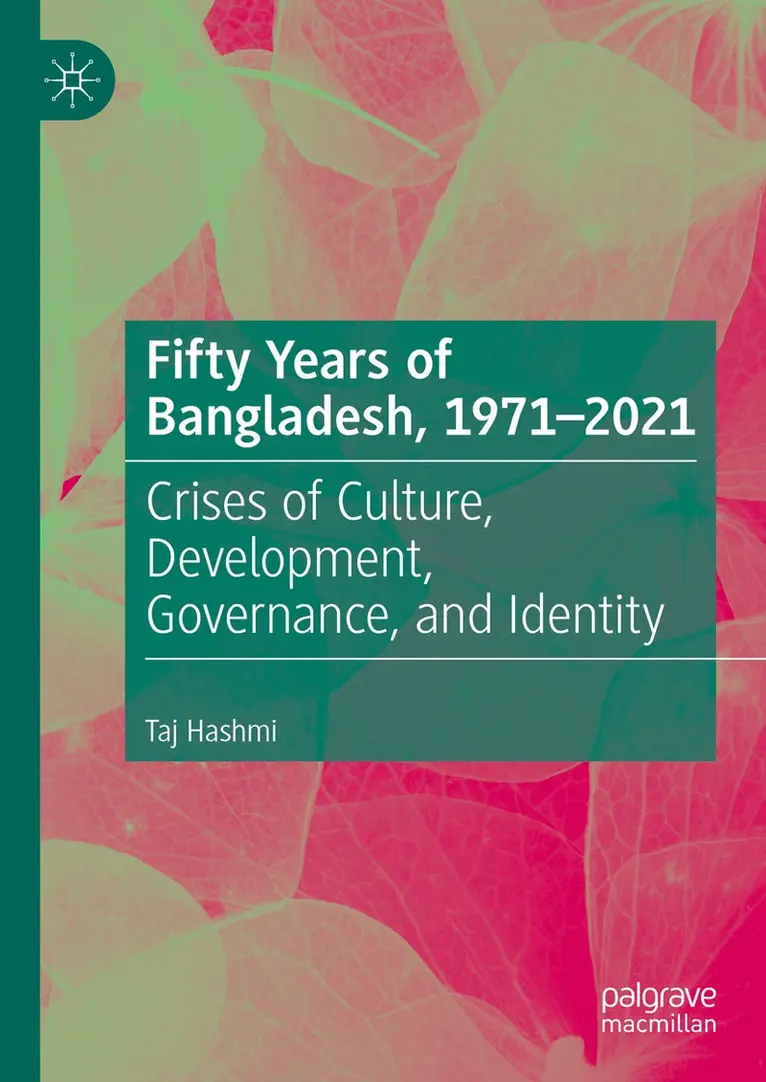
Fifty Years of Bangladesh, 1971-2021
Crises of Culture, Development, Governance, and Identity
Av Taj Hashmi
Inbunden, 2022
1577 kr
Lägg i varukorg
This book, the first historical sociology of its kind concerning Bangladesh, examines the country's what-went-wrong-syndrome during the first fifty years of its existence, 1971-2021. The work is an exception to the traditional studies on modern and contemporary Bangladesh. The study is also a …
Fifty Years of Bangladesh, 1971-2021
Crises of Culture, Development, Governance, and Identity
Av Taj Hashmi
E-bok, 2022
1886 kr
Lägg i varukorg
This book, the first historical sociology of its kind concerning Bangladesh, examines the country''s what-went-wrong-syndrome during the first fifty years of its existence, 1971-2021. The work is an exception to the traditional studies on modern and contemporary Bangladesh. The study is also a …
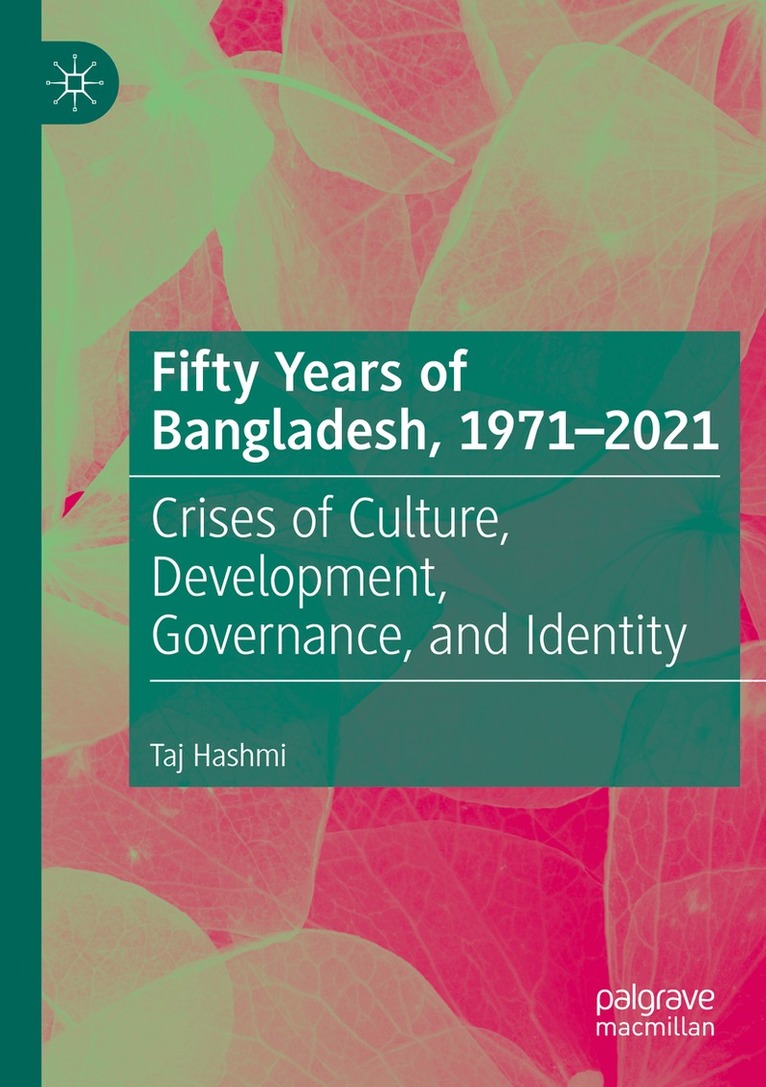
Fifty Years of Bangladesh, 1971-2021
Crises of Culture, Development, Governance, and Identity
Av Taj Hashmi
Häftad, 2023
1577 kr
Lägg i varukorg
This book, the first historical sociology of its kind concerning Bangladesh, examines the country's what-went-wrong-syndrome during the first fifty years of its existence, 1971-2021. The work is an exception to the traditional studies on modern and contemporary Bangladesh. The study is also a …