Tamás Bényei – författare
Visar alla böcker från författaren Tamás Bényei. Handla med fri frakt och snabb leverans.
4 produkter
1920s
A Decade of Modern British Fiction
Av Tamás Bényei, Shene Boskani m. fl.
Inbunden, 2025
1632 kr
Lägg i varukorg
The particularity of 1920s British fiction has become obscured by an academic focus on modernism. This book takes a fresh approach to the decade by examining both canonical writers such as Virginia Woolf and E. M. Forster as well as less widely-studied writers such as A. A. Milne and Naomi …
1920s
A Decade of Modern British Fiction
Av Tamás Bényei, Shene Boskani m. fl.
E-bok, 2025
1792 kr
Lägg i varukorg
The particularity of 1920s British fiction has become obscured by an academic focus on modernism. This book takes a fresh approach to the decade by examining both canonical writers such as Virginia Woolf and E. M. Forster as well as less widely-studied writers such as A. A. Milne and Naomi …
1920s
A Decade of Modern British Fiction
Av Tamás Bényei, Shene Boskani m. fl.
E-bok, 2025
1792 kr
Lägg i varukorg
The particularity of 1920s British fiction has become obscured by an academic focus on modernism. This book takes a fresh approach to the decade by examining both canonical writers such as Virginia Woolf and E. M. Forster as well as less widely-studied writers such as A. A. Milne and Naomi …
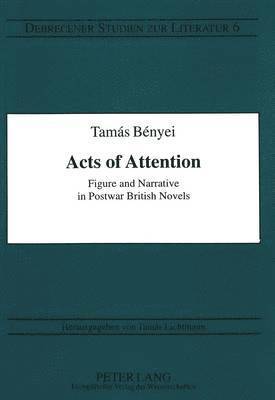
Acts of Attention
Figure and Narrative in Postwar British Novels
Av Tamas Benyei, Tamás Lichtmann
Häftad, 1999
660 kr
Tillfälligt slut
Postwar British novels have rarely been read in the meticulous, theoretically informed way that seems to be reserved for the classics. The objective of these readings of five postwar British novels (Evelyn Waugh: Brideshead Revisited, John Fowles: The French Lieutenant's Woman, William Golding: Sea …