Tanuja Kothiyal – författare
Visar alla böcker från författaren . Handla med fri frakt och snabb leverans.
5 produkter
5 produkter
Inbunden, Engelska, 2026
2 482 kr
Skickas inom 10-15 vardagar
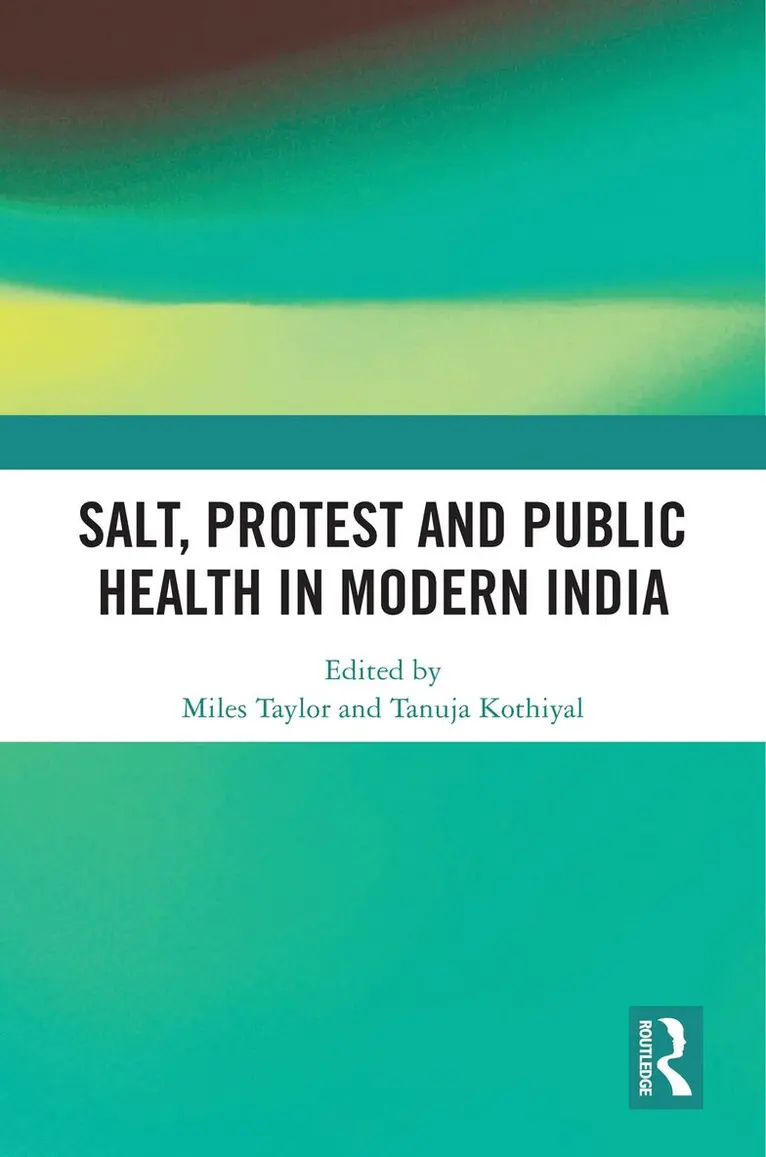
This book explores the central role of salt in modern Indian history through eleven specially commissioned essays from an international range of scholars. Down to 1947, the British controlled the production, distribution and sale of salt in India. Salt was taxed, with the burden falling disproportionately on the poor. By the early 20th century, salt yielded the largest revenue of all commodities taxed by the Government of India. When Mohandas Gandhi sought to mobilize the Indian poor against colonial rule in 1930, he chose a march from Ahmedabad to the sea-salt producing coastline of Gujarat as an act of civil disobedience, projecting the Indian struggle for independence to an unprecedented global audience. Using salt as a lens, these essays reconstruct how one of life's necessities remained a central issue of public policy in both colonial and independent India, exploring the entangled histories of colonial state making, economic policies, individual ambitions, legal entanglements, protest and public health.This volume will be invaluable for students, researchers and scholars interested in South Asian studies, Economic History and Public Policy. The book covers broad subject areas including colonial administration, taxation and revenue systems, civil disobedience movements, economic nationalism, public health policy, and the social and cultural significance of essential commodities in shaping state-society relations in modern India.The chapters in this book were originally published as a special issue of the Journal of South Asian Studies.
E-bok
PDF, Engelska, 20262 797 kr
Läs direkt efter köp
This book explores the central role of salt in modern Indian history through eleven specially commissioned essays from an international range of scholars. Down to 1947, the British controlled the production, distribution and sale of salt in India. Salt was taxed, with the burden falling disproportionately on the poor. By the early 20th century, salt yielded the largest revenue of all commodities taxed by the Government of India. When Mohandas Gandhi sought to mobilize the Indian poor against colonial rule in 1930, he chose a march from Ahmedabad to the sea-salt producing coastline of Gujarat as an act of civil disobedience, projecting the Indian struggle for independence to an unprecedented global audience. Using salt as a lens, these essays reconstruct how one of life's necessities remained a central issue of public policy in both colonial and independent India, exploring the entangled histories of colonial state making, economic policies, individual ambitions, legal entanglements, protest and public health.This volume will be invaluable for students, researchers and scholars interested in South Asian studies, Economic History and Public Policy. The book covers broad subject areas including colonial administration, taxation and revenue systems, civil disobedience movements, economic nationalism, public health policy, and the social and cultural significance of essential commodities in shaping state-society relations in modern India.The chapters in this book were originally published as a special issue of the Journal of South Asian Studies.
E-bok
Engelska, 20262 805 kr
Läs direkt efter köp
This book explores the central role of salt in modern Indian history through eleven specially commissioned essays from an international range of scholars. Down to 1947, the British controlled the production, distribution and sale of salt in India. Salt was taxed, with the burden falling disproportionately on the poor. By the early 20th century, salt yielded the largest revenue of all commodities taxed by the Government of India. When Mohandas Gandhi sought to mobilize the Indian poor against colonial rule in 1930, he chose a march from Ahmedabad to the sea-salt producing coastline of Gujarat as an act of civil disobedience, projecting the Indian struggle for independence to an unprecedented global audience. Using salt as a lens, these essays reconstruct how one of life's necessities remained a central issue of public policy in both colonial and independent India, exploring the entangled histories of colonial state making, economic policies, individual ambitions, legal entanglements, protest and public health.This volume will be invaluable for students, researchers and scholars interested in South Asian studies, Economic History and Public Policy. The book covers broad subject areas including colonial administration, taxation and revenue systems, civil disobedience movements, economic nationalism, public health policy, and the social and cultural significance of essential commodities in shaping state-society relations in modern India.The chapters in this book were originally published as a special issue of the Journal of South Asian Studies.
Inbunden, Engelska, 2022
1 107 kr
Skickas inom 7-10 vardagar
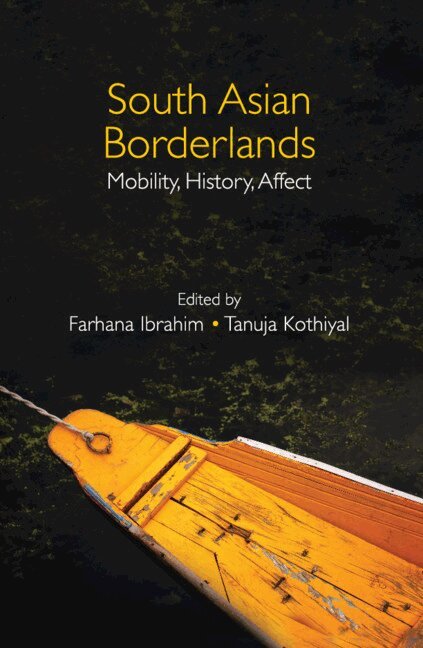
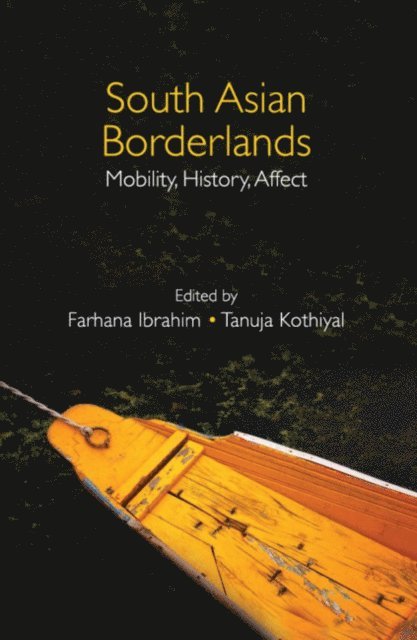
This is an interdisciplinary volume exploring a range of historical, anthropological and literary ideas and issues in South Asian Borderlands. Going beyond the territorial and geo-political imaginaries of contemporary borderlands in South Asia, chapters in this book engage with the questions of sovereignty, control, policing as well as continuing affections across politically divided borderlands. Modern conceptions of nationhood have created categories of legality and illegality among historically, socially, economically and emotionally connected residents of South Asian borderlands. This volume provides unique insights into the interconnected lives and histories of these borderland spaces and communities.
E-bok
PDF, Engelska, 20221 294 kr
Läs direkt efter köp
This is an interdisciplinary volume exploring a range of historical, anthropological and literary ideas and issues in South Asian Borderlands. Going beyond the territorial and geo-political imaginaries of contemporary borderlands in South Asia, chapters in this book engage with the questions of sovereignty, control, policing as well as continuing affections across politically divided borderlands. Modern conceptions of nationhood have created categories of legality and illegality among historically, socially, economically and emotionally connected residents of South Asian borderlands. This volume provides unique insights into the interconnected lives and histories of these borderland spaces and communities.