Ted Anderson - Böcker
Visar alla böcker från författaren Ted Anderson. Handla med fri frakt och snabb leverans.
9 produkter
9 produkter
118 kr
Skickas
103 kr
Skickas
103 kr
Skickas
103 kr
Skickas
1 801 kr
Skickas inom 5-8 vardagar
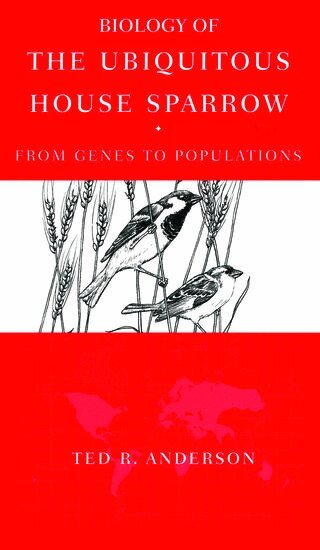
After the chicken, the House Sparrow is the most widely distributed bird species in the world, occurring on all continents except Antarctica and on most human-inhabited islands. Although its Latin name is Passer domesticus, it is certainly not domesticated. In fact, it is widely regarded as a pest species and is consequently not protected in most of its extensive range. This combination of ubiquity and minimal legal protection has contributed to its wideuse in studies by avian biologists throughout the world. The purpose of this book is to review and summarize the results of these global studies on House Sparrows, and to provide aspringboard for future studies on the species. House Sparrows have been used to study natural selection in introduced species, circadian rhythms, and the neuroendocrine control of the avian annual cycle. One current question of considerable interest concerns the catastrophic House Sparrow population declines in several urban centers in Europe. Is the House Sparrow a contemporary canary in the mine? Other topics of broad interest include the reproductive and flock-foraging strategies ofsparrows, and sexual selection and the function of the male badge in the species. Anderson also explores the role of the House Sparrow in disease transmission to humans and their domesticated animals.
1 200 kr
Skickas inom 5-8 vardagar
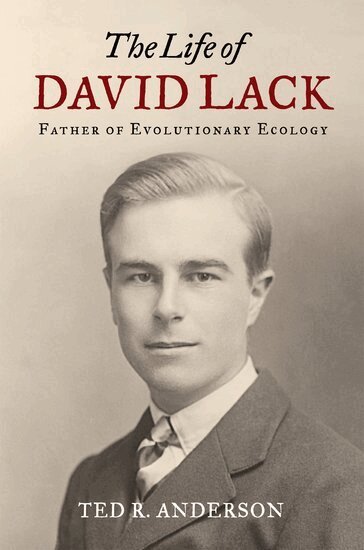
Most people who have taken a biology course in the past 50 years are familiar with the work of David Lack, but few remember his name. Almost all general biology texts produced during that period have a figure showing the beak size differences among the finches of the Galapagos Islands from Lack's 1947 classic, Darwin's Finches. Lack's pioneering conclusions in Darwin's Finches mark the beginning of a new scientific discipline, evolutionary ecology. Tim Birkhead, in his acclaimed book, The Wisdom of Birds, calls Lack the 'hero of modern ornithology.' Who was this influential, yet relatively unknown man? The Life of David Lack, Father of Evolutionary Ecology provides an answer to that question based on Ted Anderson's personal interviews with colleagues, family members and former students as well as material in the extensive Lack Archive at Oxford University.
145 kr
Skickas inom 3-6 vardagar
87 kr
Skickas
One day all the adults died, all over the world, at the same time.Now it’s twenty years later, and the children – all grown up – are still rebuilding the world. Horses and caravans are the only thin lines connecting tiny, scattered settlements. Gasoline is gone, phones long-dead, television a memory. The only power in America is the New Church, the religion of the angry children.In Dallastown, a stranger comes riding in, telling a story of escape from the New Church’s unstoppable Firemen. The Church is on the march, and the world might burn again – and the only hope might be a scared teenage girl, a gunslinger keeping his secrets, and a woman of few words and long knives. Welcome to the Orphan Age.Written by Ted Anderson (MOTH & WHISPER, My Little Pony, Adventure Time) with art by Nuno Plati (Alpha: Big Time, Marvel Girl).
184 kr
Tillfälligt slut
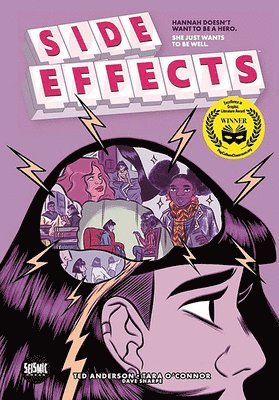
Winner of the 2023 Excellence in Graphic Literature Award from Pop Culture Classroom! HANNAH DOESN'T WANT TO BE A HERO. SHE JUST WANTS TO BE WELL. It’s Hannah’s first year away at college – the first time she’s been away from home, without a support network. Within the first month, the combination of classes and socializing and adjusting to college life sends her into a full-on breakdown. Fortunately, her roommate finds her, Hannah goes to campus mental health, and they prescribe her therapy and meds — though with every new medication, you’ve got to watch out for unexpected side effects. Every new medication Hannah tries comes with a new power and side effect. One makes her super-tough, and also makes her gain thirty pounds. Another gives her telepathy, while also completely screwing up her sleep schedule. Yet another gives her super-strength, as well as terrible constipation. Nothing balances, but the powers are handy; Hannah even manages to save a few of her friends from mortal peril, or at least minor annoyances. And with the growing confidence from her powers and her therapy, Hannah even manages to ask out the cute girl she’s been eyeing! Hannah doesn’t want to be a hero – she just wants to be well. But what does “well” even look like? What does it mean to be “healthy,” mentally speaking? How do you fix your brain when you’re living inside it? And can you really help other people if you can’t even help yourself?