Ted McCain – författare
997 kr
Skickas inom 3-6 vardagar
"I would like to see this book become required reading for every teacher or administrator before they break for the summer. Its simplified descriptions make it easily understood by non-technical people. I will make sure that all of my classes read it!"—Shirley CampbellDirector, Computer and Curriculum Inquiry CenterUniversity of Pittsburgh, PA
"McCain and Jukes build a case that the Information Age has not yet peaked and awaken us to the challenge of the dramatic technological changes we will surely see within our life time."—Frank Buck, Principal, Graham SchoolTalladega, AL
"Windows on the Future summarizes key developments and concepts making them readily understandable. Though I've been a member of the World Future Society and an avid reader of books for over 30 years, I am not aware of any other publication like this for practicing educators. This would be very valuable for professional development study groups."—Karen L. Tichy, Associate Superintendent for InstructionCatholic Education OfficeSt. Louis, MO
Get prepared to help your students move into the technological future!
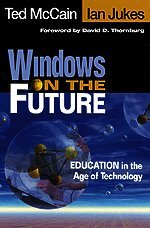
The world as we knew it ten years ago no longer exists. Ten years from now, today's world will have recreated itself many times over. Windows on the Future shows educators how to help students cultivate the attitudes and skills necessary to leverage this monumental change for their benefit.
Windows on the Future was designed to help the educator cope with changes created by technology and embrace a new mindset necessary to access the burgeoning technological advances. The goal is to keep schools and students relevant in the 21st Century, and McCain and Jukes offer new paradigms and frameworks to accomplish that.
Critical issues explored include:
Key trends for the new millennium The power of paradigm Education in the future New skills for students New roles for educators The need for vision463 kr
Skickas inom 3-6 vardagar
"I would like to see this book become required reading for every teacher or administrator before they break for the summer. Its simplified descriptions make it easily understood by non-technical people. I will make sure that all of my classes read it!"—Shirley CampbellDirector, Computer and Curriculum Inquiry CenterUniversity of Pittsburgh, PA
"McCain and Jukes build a case that the Information Age has not yet peaked and awaken us to the challenge of the dramatic technological changes we will surely see within our life time."—Frank Buck, Principal, Graham SchoolTalladega, AL
"Windows on the Future summarizes key developments and concepts making them readily understandable. Though I've been a member of the World Future Society and an avid reader of books for over 30 years, I am not aware of any other publication like this for practicing educators. This would be very valuable for professional development study groups."—Karen L. Tichy, Associate Superintendent for InstructionCatholic Education OfficeSt. Louis, MO
Get prepared to help your students move into the technological future!
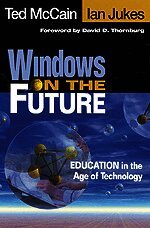
The world as we knew it ten years ago no longer exists. Ten years from now, today's world will have recreated itself many times over. Windows on the Future shows educators how to help students cultivate the attitudes and skills necessary to leverage this monumental change for their benefit.
Windows on the Future was designed to help the educator cope with changes created by technology and embrace a new mindset necessary to access the burgeoning technological advances. The goal is to keep schools and students relevant in the 21st Century, and McCain and Jukes offer new paradigms and frameworks to accomplish that.
Critical issues explored include:
Key trends for the new millennium The power of paradigm Education in the future New skills for students New roles for educators The need for vision1 072 kr
Skickas inom 3-6 vardagar
550 kr
Skickas inom 3-6 vardagar
626 kr
Skickas inom 3-6 vardagar
575 kr
Skickas inom 3-6 vardagar
434 kr
Läs direkt efter köp
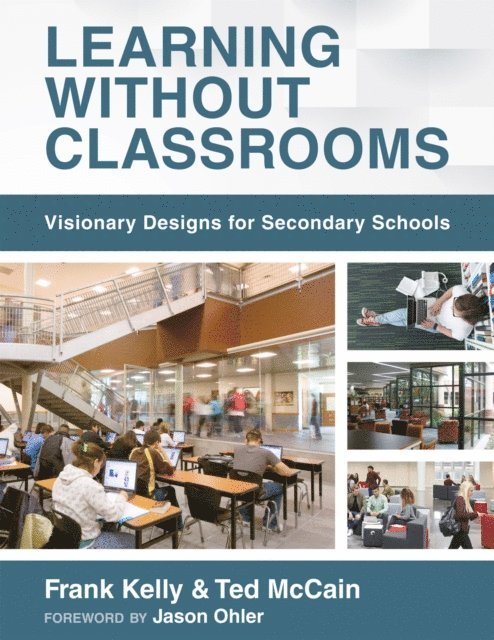
With foreword by Jason Ohler
Despite technological advancements, most secondary schools still function on ideas that are more than 100 years old. Learning Without Classrooms outlines new guidelines for how schools must operate to remain relevant and effective as we move further into the 21st century. Making a persuasive argument for moving beyond the long-established idea of operating schools with traditional classroom instruction to a personalized learning environment for individual students, the authors detail six crucial elements of school management (community, instruction, time, technology, school facilities, and funding) and how to address them concurrently to improve secondary school learning environments.
Transform secondary schools systemwide, from restructuring the physical learning environment to supporting personalized learning:
Learn the six elements of schooling, and understand how changing any one element influences the others.Explore nine critical skills students need for success in the modern world.Review the structure and methodology behind an advisory-based concept for school management.Consider scenarios of what learning will look like in the near future as powerful new technological tools become available.Study seven visionary designs for how to renovate existing secondary school facilities to support technologically infused, personalized learning environments.Contents:Introduction
Part 1: Understanding 21st Century LearningChapter 1: The Classroom Has Run Its CourseChapter 2: Key Principles for Modern SchoolingChapter 3: Nine Essential Skills for the Modern WorldChapter 4: How Technology Will Change Education
Part 2: Designing 21st Century SchoolsChapter 5: Schooling for the FutureChapter 6: How to Make It HappenChapter 7: Concepts for New Advisory-Based Schools
Part 3: Reimagining Seven Schools for the 21st CenturyChapter 8: Additional Considerations for Transitioning to an Advisory FormatChapter 9: The Capital SchoolChapter 10: The Green SchoolChapter 11: The Connected SchoolChapter 12: The Open SchoolChapter 13: The District School Chapter 14: The Tech SchoolChapter 15: The Academy School
Epilogue365 kr
Läs direkt efter köp
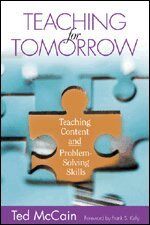
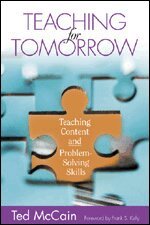
The educational pattern of lecture, listen, and forget is deeply ingrained in schools. In this user-friendly resource, author Ted McCain offers a compelling alternative that flips lessons on their heads: the problems-first instructional method. Using this method, you will fully engage students by first introducing a problem and then empowering learners to solve it using creativity, innovation, collaboration, and other essential skills.
Use this resource to help students achieve higher levels of thinking:
Identify the need for instructional change in the current educational system.Consider the transferable skills students need for solving problems in the workplace and in life outside the classroom.Study the benefits of a problems-first teaching style.Learn to implement problems-first methods into existing classrooms.Understand how this method teaches seven essential 21st century skills highly desired in the modern workforce.Discover how to introduce role-play into the classroom and broaden lessons to encompass whole-mind learning and boost student engagement.Contents:AcknowledgmentsTable of ContentsAbout the AuthorIntroductionPart One: Understanding New Needs and a New Approach for a Digital Generation Chapter 1: The New Needs of a Changing Generation Chapter 2: The Thinking and Processing Skills Students Need for the Future Chapter 3: The Key to a New ApproachPart Two: Learning How to Create Problems-First Projects Chapter 4: Envision a New Role for the Teacher Chapter 5: Ensure That Problems Are First, Teaching Is Second Chapter 6: Establish a Real-World Link Using Role-Play Chapter 7: Expand Your View of the Curriculum Chapter 8: Equip Students With the 4 Ds of Problem Solving Chapter 9: Elevate the Students'' Level of Thought Chapter 10: Educate the Whole Mind Chapter 11: Evaluate Holistically Chapter 12: Ease Yourself Out of the PicturePart Three: Making the Shift to Problems-First Teaching Chapter 13: Pointers for Shifting to a Problems-First Approach Chapter 14: Examples of Problems-First Lesson PlansReferences and ResourcesIndex