Terence Gomez – författare
Visar alla böcker från författaren Terence Gomez. Handla med fri frakt och snabb leverans.
16 produkter
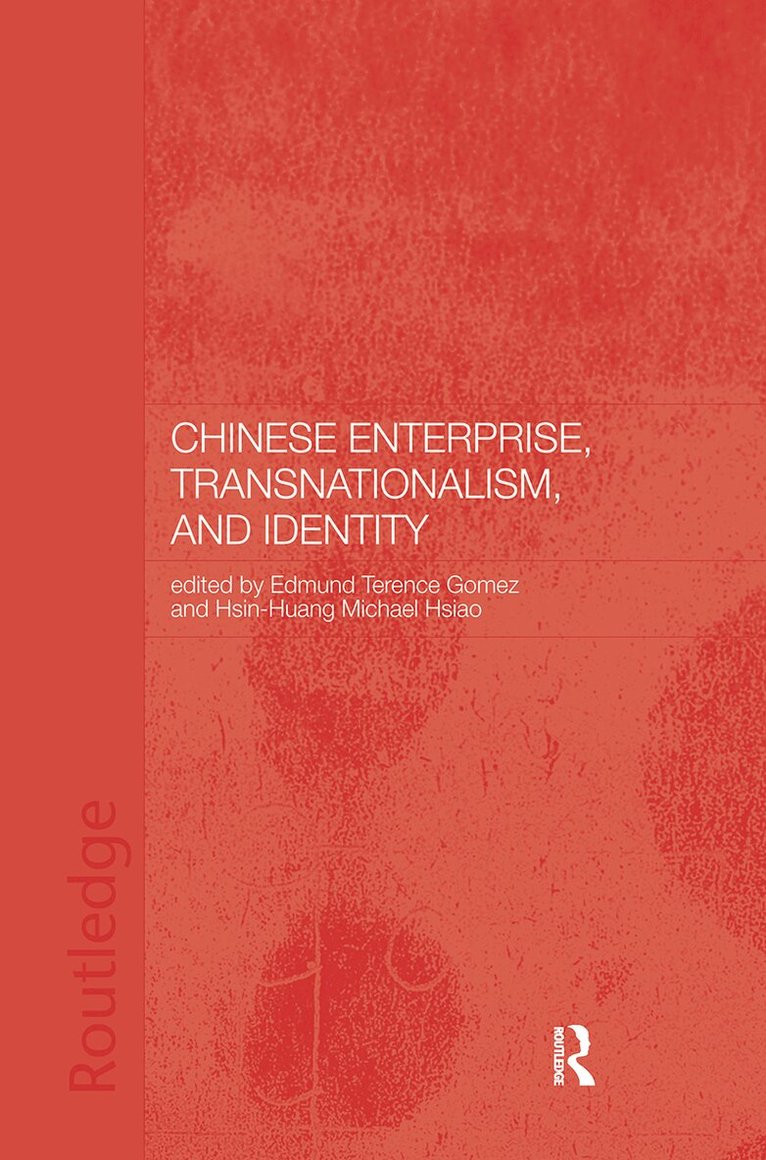
Chinese Enterprise, Transnationalism and Identity
Av Terence Gomez, Hsin-Huang Michael Hsiao
Inbunden, 2003
2586 kr
Lägg i varukorg
First Published in 2004. Chinese Enterprise, Transnationalism, and Identity focuses on one ethnic community – the Chinese – and examines the variety of issues surrounding enterprise development from national and transnational perspectives, starting with the role played by Chinese entrepreneurs in …
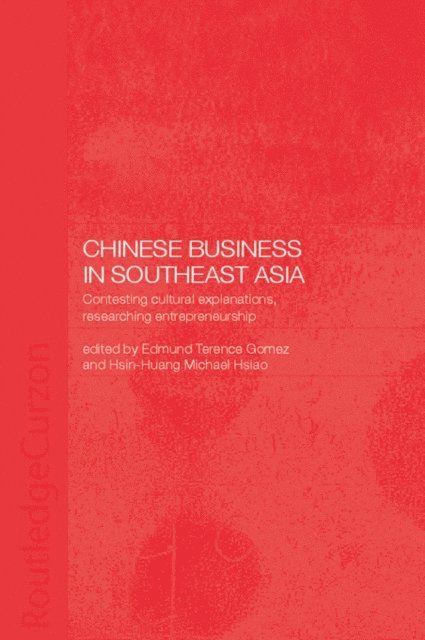
Chinese Business in Southeast Asia
Av Terence Gomez, Hsin-Huang Michael Hsiao
Häftad, 2003
667 kr
Lägg i varukorg
Presents empirical findings from different South-East Asian countries to demonstrate that Chinese businessmen employ a variety of strategies in their networking, entrepreneurship and organisational and firm development; and concludes that much more research is needed in order to provide a full …
State, Development and Identity in Multi-Ethnic Societies
Ethnicity, Equity and the Nation
Av Nicholas Tarling, Terence Gomez
Inbunden, 2008
2512 kr
Lägg i varukorg
The controversial work of Amy Chua argues that, as rapid modernization, industrialization, technological change and globalization bring about fundamental changes in national, ethnic and class identities, especially in developing countries, there is a danger that the laissez-faire capitalist system …
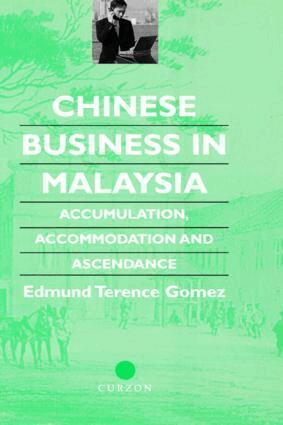
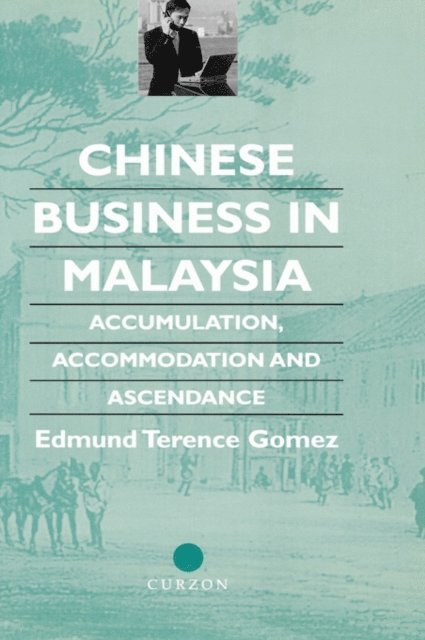
Chinese Business in Malaysia
Accumulation, Accommodation and Ascendance
Häftad, 2012
847 kr
Lägg i varukorg
Chinese companies have managed to perform well in Malaysia, especially after the recession in the mid-1980s, due to a clear change in the Malay dominated government's attitude to Chinese capital. Despite the problems that prevail among UMNO politicians, the government has provided a stable economic …
Chinese Business in Malaysia
Accumulation, Accommodation and Ascendance
Inbunden, 1999
2586 kr
Lägg i varukorg
Chinese companies have managed to perform well in Malaysia, especially after the recession in the mid-1980s, due to a clear change in the Malay dominated government's attitude to Chinese capital. Despite the problems that prevail among UMNO politicians, the government has provided a stable economic …
Chinese Enterprise, Transnationalism and Identity
Av Hsin-Huang Michael Hsiao, Terence Gomez
E-bok, 2004
856 kr
Lägg i varukorg
First Published in 2004. Chinese Enterprise, Transnationalism, and Identity focuses on one ethnic community – the Chinese – and examines the variety of issues surrounding enterprise development from national and transnational perspectives, starting with the role played by Chinese entrepreneurs …
Chinese Enterprise, Transnationalism and Identity
Av Hsin-Huang Michael Hsiao, Terence Gomez
E-bok, 2004
856 kr
Lägg i varukorg
First Published in 2004. Chinese Enterprise, Transnationalism, and Identity focuses on one ethnic community – the Chinese – and examines the variety of issues surrounding enterprise development from national and transnational perspectives, starting with the role played by Chinese entrepreneurs …
Chinese Business in Southeast Asia
Av Hsin-Huang Michael Hsiao, Terence Gomez
E-bok, 2012
768 kr
Lägg i varukorg
Presents empirical findings from different South-East Asian countries to demonstrate that Chinese businessmen employ a variety of strategies in their networking, entrepreneurship and organisational and firm development; and concludes that much more research is needed in order to provide a full …
Chinese Business in Southeast Asia
Av Hsin-Huang Michael Hsiao, Terence Gomez
E-bok, 2012
785 kr
Lägg i varukorg
Presents empirical findings from different South-East Asian countries to demonstrate that Chinese businessmen employ a variety of strategies in their networking, entrepreneurship and organisational and firm development; and concludes that much more research is needed in order to provide a full …
Chinese Business in Malaysia
Accumulation, Accommodation and Ascendance
E-bok, 2012
999 kr
Lägg i varukorg
Chinese companies have managed to perform well in Malaysia, especially after the recession in the mid-1980s, due to a clear change in the Malay dominated government''s attitude to Chinese capital. Despite the problems that prevail among UMNO politicians, the government has provided a stable …
Chinese Business in Malaysia
Accumulation, Accommodation and Ascendance
E-bok, 2012
999 kr
Lägg i varukorg
Chinese companies have managed to perform well in Malaysia, especially after the recession in the mid-1980s, due to a clear change in the Malay dominated government''s attitude to Chinese capital. Despite the problems that prevail among UMNO politicians, the government has provided a stable …
Chinese Business in Southeast Asia
Av Terence Gomez, Hsin-Huang Michael Hsiao
Inbunden, 2017
2586 kr
Lägg i varukorg
Presents empirical findings from different South-East Asian countries to demonstrate that Chinese businessmen employ a variety of strategies in their networking, entrepreneurship and organisational and firm development; and concludes that much more research is needed in order to provide a full …
Government-Linked Companies and Sustainable, Equitable Development
Av Terence Gomez, François Bafoil m. fl.
Häftad, 2017
847 kr
Lägg i varukorg
The debate over how far governments should intervene in economies in order to promote economic growth, a debate which from the 1980s seemed settled in favour of the neo-liberal, non-interventionist consensus, has taken on new vigour since the financial crisis of 2008 and after. Some countries, most …
Government-Linked Companies and Sustainable, Equitable Development
Av Terence Gomez, François Bafoil m. fl.
Inbunden, 2014
2586 kr
Lägg i varukorg
The debate over how far governments should intervene in economies in order to promote economic growth, a debate which from the 1980s seemed settled in favour of the neo-liberal, non-interventionist consensus, has taken on new vigour since the financial crisis of 2008 and after. Some countries, most …
Government-Linked Companies and Sustainable, Equitable Development
Av Kee-Cheok Cheong, Francois Bafoil m. fl.
E-bok, 2014
999 kr
Lägg i varukorg
The debate over how far governments should intervene in economies in order to promote economic growth, a debate which from the 1980s seemed settled in favour of the neo-liberal, non-interventionist consensus, has taken on new vigour since the financial crisis of 2008 and after. Some countries, most …
Government-Linked Companies and Sustainable, Equitable Development
Av Kee-Cheok Cheong, Francois Bafoil m. fl.
E-bok, 2014
999 kr
Lägg i varukorg
The debate over how far governments should intervene in economies in order to promote economic growth, a debate which from the 1980s seemed settled in favour of the neo-liberal, non-interventionist consensus, has taken on new vigour since the financial crisis of 2008 and after. Some countries, most …