Terry A. Barnhart – författare
Visar alla böcker från författaren Terry A. Barnhart. Handla med fri frakt och snabb leverans.
4 produkter
Ephraim George Squier and the Development of American Anthropology
Häftad, 2009
351 kr
Lägg i varukorg
Ephraim George Squier and the Development of American Anthropology is an intellectual biography of Ephraim Squier (1821–88) and his contributions to the development of the nascent disciplines of archaeology and anthropology. During his career, which spanned the years 1845–77, Squier consistently …
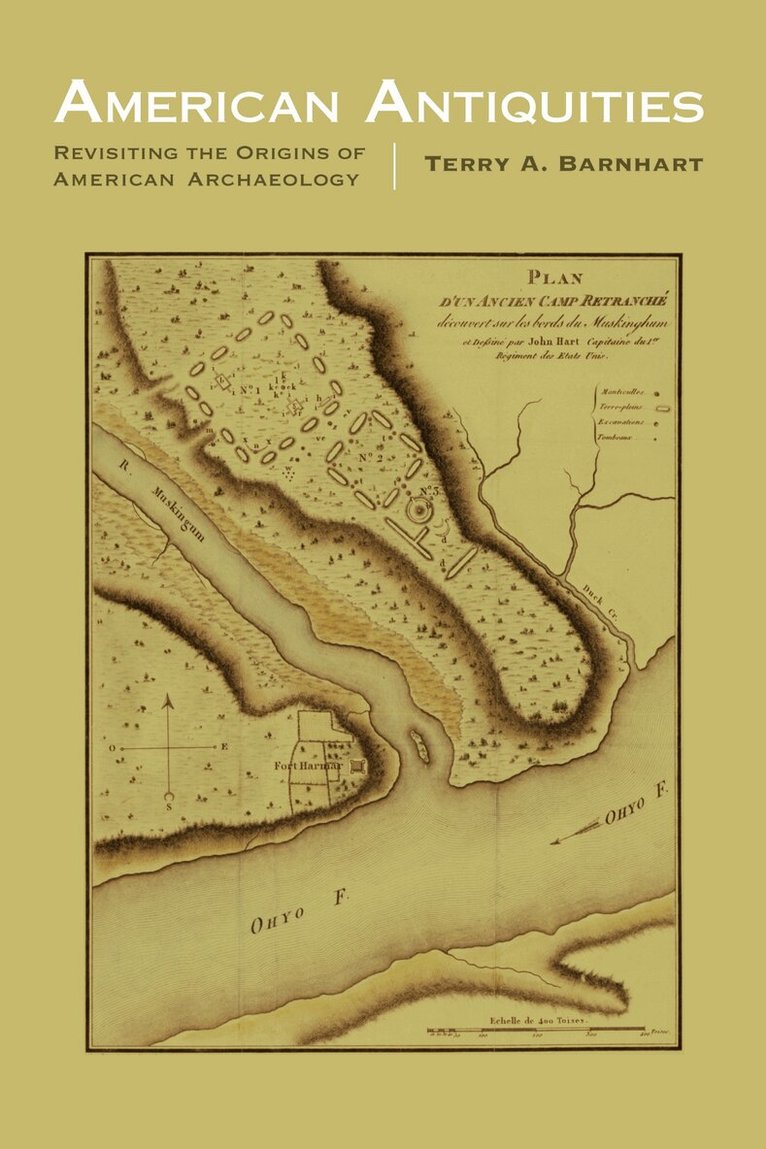
American Antiquities
Revisiting the Origins of American Archaeology
Inbunden, 2015
877 kr
Lägg i varukorg
Writing the history of American archaeology, especially concerning eighteenth- and nineteenth-century arguments, is not always as straightforward as it might seem. Archaeology's trajectory from an avocation to a semi-profession to a specialized profession, rather than being a linear progression, …
American Antiquities
Revisiting the Origins of American Archaeology
E-bok, 2015
773 kr
Lägg i varukorg
Writing the history of American archaeology, especially concerning eighteenth- and nineteenth-century arguments, is not always as straightforward as it might seem. Archaeology's trajectory from an avocation to a semi-profession to a specialized profession, rather than being a linear progression, …
Albert Taylor Bledsoe
Defender of the Old South and Architect of the Lost Cause
Inbunden, 2011
541 kr
Tillfälligt slut
Albert Taylor Bledsoe (1809-1877), a principal architect of the South's ""Lost Cause"" mythology, remains one of the Civil War generation's most controversial intellectuals. In Albert Taylor Bledsoe: Defender of the Old South and Architect of the Lost Cause, Terry A. Barnhart sheds new light on …