Terry Boswell - Böcker
Visar alla böcker från författaren Terry Boswell. Handla med fri frakt och snabb leverans.
6 produkter
6 produkter
1 039 kr
Skickas inom 10-15 vardagar
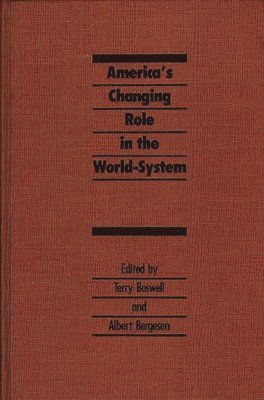
Over the last two decades, America's position in the world has declined and the world economy has suffered an extended period of stagnation resulting in a severe sociopolitical crisis. This volume brings together thirteen experts in world-systems analysis to examine the long-term effects of this crisis in world order. Using historical and quantitative analysis, the contributors both theoretically and empirically discuss possible transformations of U.S. society and the world-system, focusing on North-South trade, East-West conflicts, and the relations of the United States with Europe, Japan, and Central America. The effects of this economic crisis on American social life are explored in depth, with emphasis on the organization of business firms, the status of women, and the state of American culture.
1 039 kr
Skickas inom 10-15 vardagar
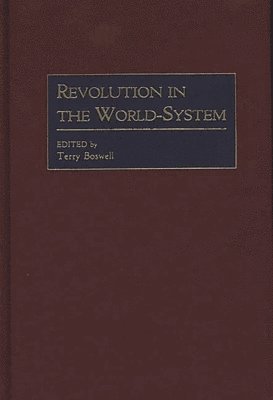
Seventy-one of the 168 member nations of the UN were rocked by insurgency during the past decade. Among the most overwhelming of the conflicts were full-scale civil and separatist wars in Afghanistan, Angola, Cambodia, El Salvador, Ethiopia, Indonesia, Mozambique, Peru, the Philippines, Somalia, and the Sudan. In light of the fact that major civil wars also occurred in 21 independent countries during the 1970s, 13 countries during the 1960s, and 14 countries during the 1950s, it seems clear that the current prevalence of revolutions world-wide reflects a growing trend in world affairs.This volume grew out of the twelfth annual Political Economy of the World-System Conference, War and Revolution, held at Emory University. It consists of entirely original research from a variety of perspectives and disciplines and provides world- systematic, comparative historical and case study analyses of revolutions and the prolonged development of structural dynamics and political processes that give rise to these upheavals. The contributors emphasize the importance of viewing revolution from a global perspective with careful attention to the political and cultural dimensions as well as the economic factors involved. Following an introduction by editor Terry Boswell, the work is divided into four sections: world revolutions, comparative studies of revolution, case studies of social revolution in Nicaragua and Iran, and case studies of revolutionary situations in Poland, Chile, and South Africa. An afterword by former U.S. President Jimmy Carter completes the volume. This work provides an important interdisciplinary perspective on intranational strife in the modern world, and will be useful in college and university courses in political science, world affairs, history, and sociology.
1 564 kr
Skickas inom 5-8 vardagar
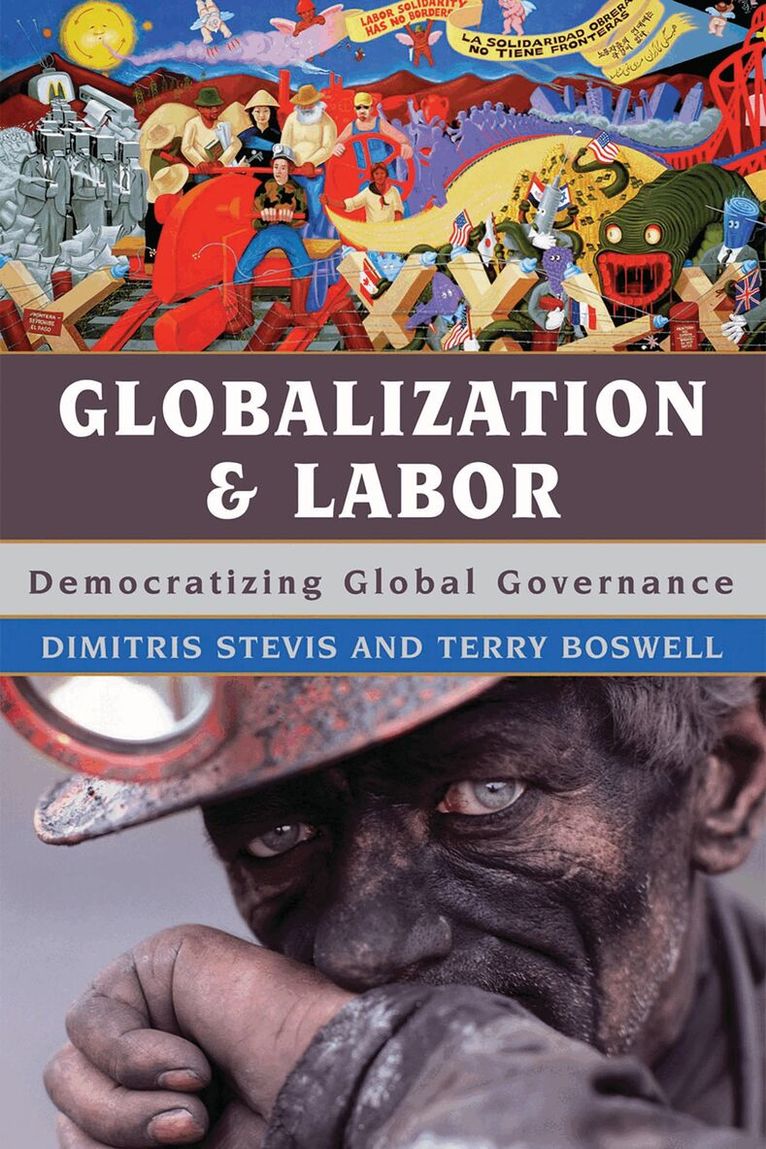
Unions have long been a central force in the democratization of national and global governance, and this timely book examines the role of labor in fighting for a more democratic and equitable world. In a clear and compelling narrative, Dimitris Stevis and Terry Boswell explore the past accomplishments and the formidable challenges still facing global union politics. Outlining the contradictions of globalization and global governance, they assess the implications for global union politics since its inception in the nineteenth century. The authors place this key social movement in a political economy framework as they argue that social movements can be fruitfully compared based on their emphases on egalitarianism and internationalism. Applying these concepts to global union politics across time, the authors consider whether global union politics has become more active and more influential or has failed to rise to the challenge of global capitalism. All readers interested in global organizations, governance, and social movements will find this deeply informed work an essential resource.
572 kr
Skickas inom 5-8 vardagar
Unions have long been a central force in the democratization of national and global governance, and this timely book examines the role of labor in fighting for a more democratic and equitable world. In a clear and compelling narrative, Dimitris Stevis and Terry Boswell explore the past accomplishments and the formidable challenges still facing global union politics. Outlining the contradictions of globalization and global governance, they assess the implications for global union politics since its inception in the nineteenth century. The authors place this key social movement in a political economy framework as they argue that social movements can be fruitfully compared based on their emphases on egalitarianism and internationalism. Applying these concepts to global union politics across time, the authors consider whether global union politics has become more active and more influential or has failed to rise to the challenge of global capitalism. All readers interested in global organizations, governance, and social movements will find this deeply informed work an essential resource.
1 088 kr
Tillfälligt slut
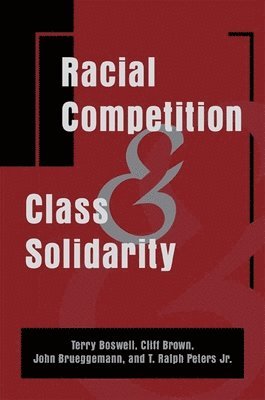
Looks at union organizing and strikes that were either strengthened by interracial cooperation or defeated by racial competition during the period between the Civil War and the Civil Rights Movement.It sometimes seems that racial conflict is an intractable impediment to class solidarity in the United States. Yet in a time of economic depression and overt racism, the unions of the CIO did, on a number of occasions, forge interracial solidarity among industrial workers of the 1930s and 1940s. This book explores the role of racism and racial solidarity in union organizing efforts or strikes during the period between the Civil War and the Civil Rights Movement, covering both those conditions and actions that enabled unions to realize interracial solidarity and those more common circumstances in which union organizing was defeated by racial competition.The authors combine theories of racial competition, specifically split labor market theory, with game theory models of collective action to compare the patterns of race relations that accompanied nine American labor organizing drives and strikes. They conclude that racial competition thwarted solidarity when minorities were recent immigrants or where employers used racist paternalism. Where conditions were more favorable, unions overcame racial divisions by institutionalizing their rhetoric about racial equality in the form of black organizers and black union officials, in what came to be known as the "miners' formula." This formula worked, and the CIO unions today remain among the country's most integrated institutions and most powerful advocates of working class interests.
382 kr
Tillfälligt slut
Looks at union organizing and strikes that were either strengthened by interracial cooperation or defeated by racial competition during the period between the Civil War and the Civil Rights Movement.It sometimes seems that racial conflict is an intractable impediment to class solidarity in the United States. Yet in a time of economic depression and overt racism, the unions of the CIO did, on a number of occasions, forge interracial solidarity among industrial workers of the 1930s and 1940s. This book explores the role of racism and racial solidarity in union organizing efforts or strikes during the period between the Civil War and the Civil Rights Movement, covering both those conditions and actions that enabled unions to realize interracial solidarity and those more common circumstances in which union organizing was defeated by racial competition.The authors combine theories of racial competition, specifically split labor market theory, with game theory models of collective action to compare the patterns of race relations that accompanied nine American labor organizing drives and strikes. They conclude that racial competition thwarted solidarity when minorities were recent immigrants or where employers used racist paternalism. Where conditions were more favorable, unions overcame racial divisions by institutionalizing their rhetoric about racial equality in the form of black organizers and black union officials, in what came to be known as the "miners' formula." This formula worked, and the CIO unions today remain among the country's most integrated institutions and most powerful advocates of working class interests.