Terry G. Wilfong - Böcker
Visar alla böcker från författaren Terry G. Wilfong. Handla med fri frakt och snabb leverans.
2 produkter
2 produkter
Del 28 - Oriental Institute Communications
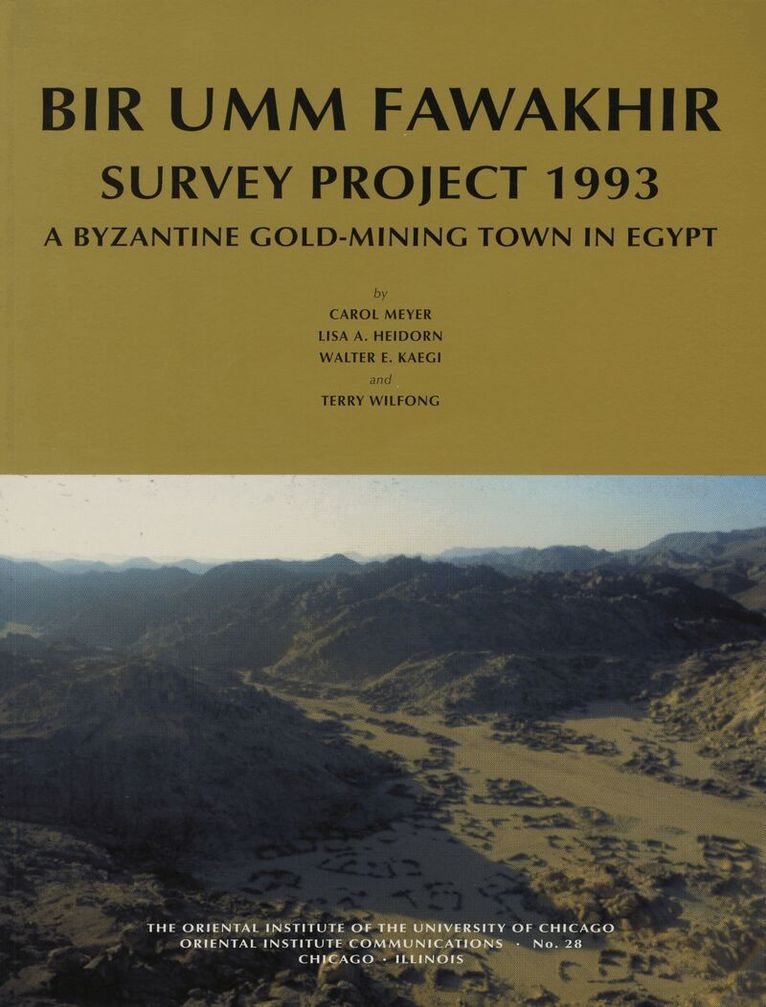
Bir Umm Fawakhir Survey Project 1993
A Byzantine Gold-Mining Town in Egypt
Häftad, Engelska, 2000
636 kr
Skickas inom 5-8 vardagar
The Oriental Institute continued its survey of Bir Umm Fawakhir, a site lying half way between the Nile and the Red Sea, with a short season in January 1993. Located close to the famous bekhen-stone quarries and graffiti of the Wadi Hammamat, the 1992 project took the form of a geological study of the area of Bir Umm Fawakhir. The presence of these mineral resources in this otherwise barren hyper-arid desert, explains why the Bir Umm Fawakhir town was established in this area. By far the most valuable resource was the gold carried in white quartz veins in the local granite, and the mountainsides around Bir Umm Fawakhir are riddled and trenched with ancient mines. This report reflects on the aims of the 1993 season which was to continue mapping the site, to expand the pottery corpus, to seek for some specific features not found in 1992 such as defensive structures and churches, and to carrry out a more general survey of the site's immediate vicinity.
Del 118 - Oriental Institute Publications
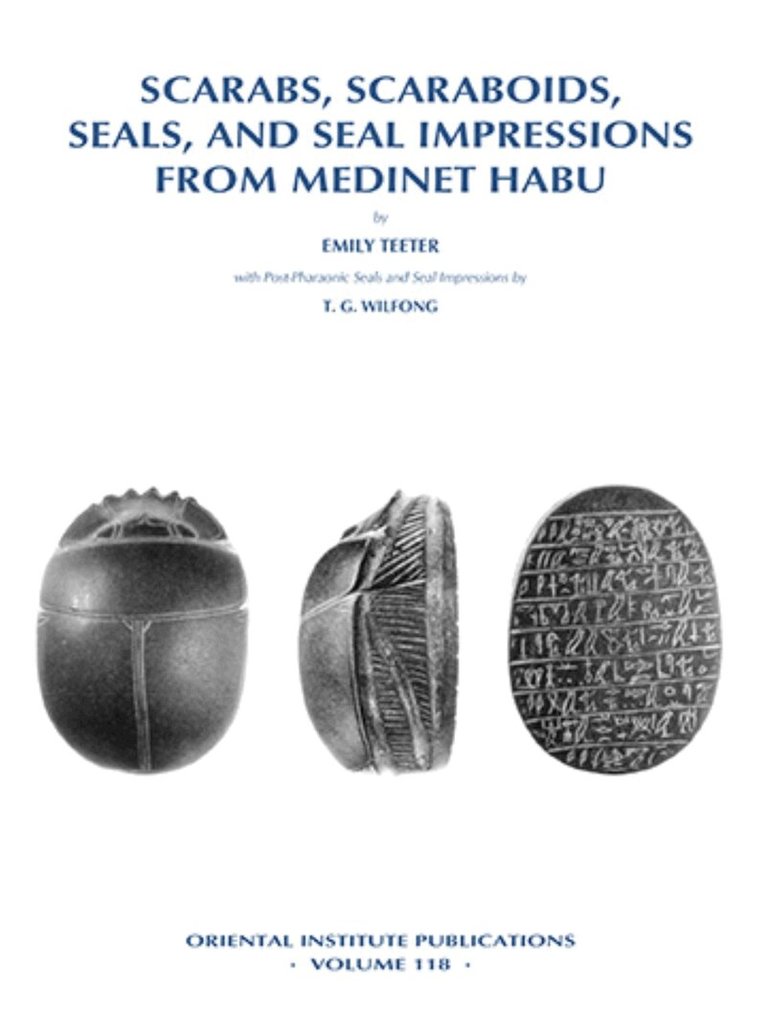
Scarabs, Scaraboids, Seals and Seal Impressions from Medinet Habu
Inbunden, Engelska, 2003
1 435 kr
Skickas inom 5-8 vardagar
Medinet Habu in western Thebes (modern Luxor, Egypt) is dominated by the great mortuary temples of King Ramesses III (ca. 1182 BC), and Kings Aye and Horemheb (ca. 1324-1293 BC). It served as the seat of the regional government in the Late New Kingdom, and an important Coptic Christian community grew up within its great fortification walls. For nearly 1,500 years Medinet Habu played a central role in Egyptian religion, life, and politics. In 1924, the Oriental Institute of the University of Chicago began the documentation of Medinet Habu, but the last facet of the documentation - the publication of thousands of objects excavated at the site - was interrupted by World War II. This book, the first of a projected multiple volume series, marks the resurrection of the project to publish the small finds. It includes a catalogue of 349 scarabs, scaraboids (including lentoids, cowroids, and buttons), heart scarabs and their Sons of Horus amulets, heart amulets, seals, and seal impressions on bullae, vessel stoppers, amphora handles, mudbricks, and funerary cones that date from approximately 1470 BC to the eighth century AD. Each object is described and illustrated and, whenever possible, placed in its original archaeological context. These scarabs and scaraboids comprise one of the largest groups of such material excavated from any site in Egypt.