Tesia Marshik – författare
Visar alla böcker från författaren Tesia Marshik. Handla med fri frakt och snabb leverans.
2 produkter
2 produkter
Häftad, Engelska, 2026
396 kr
Kommande
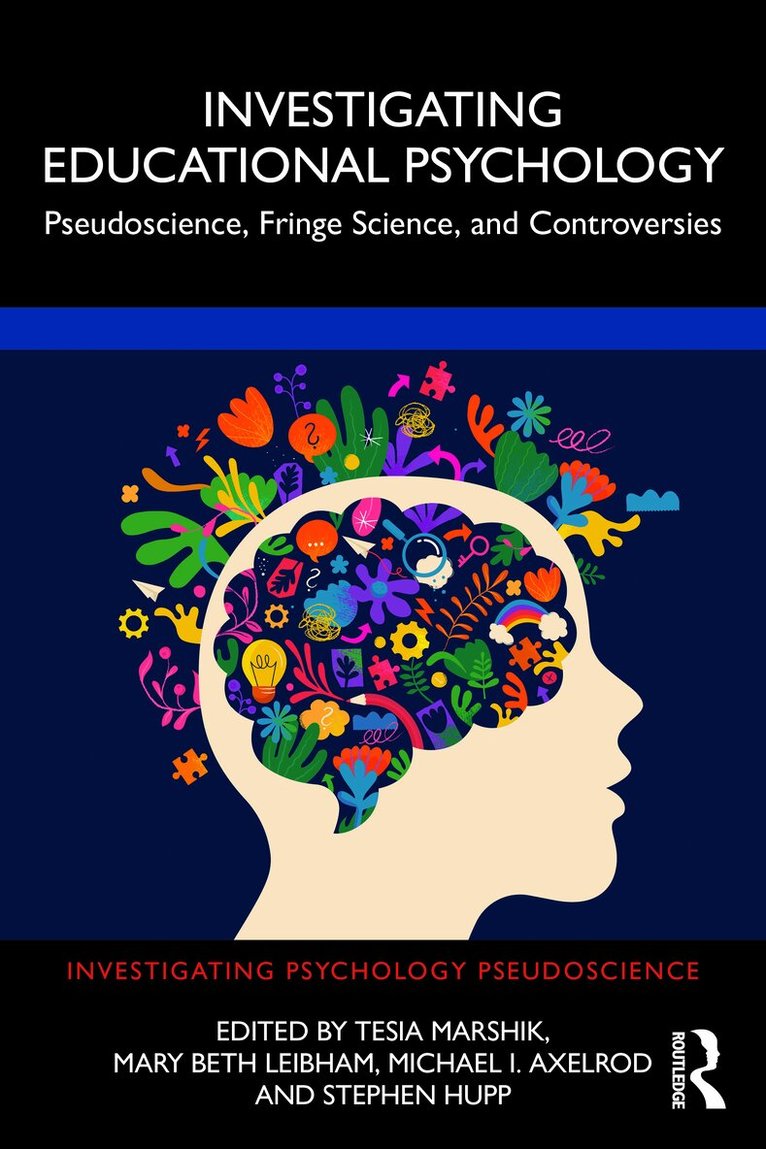
Investigating Educational Psychology explores the field of educational psychology through the lens of pseudoscience and fringe science.The field of education is particularly susceptible to pseudoscientific fads that remain persistent despite a lack of supporting evidence. In this book a panel of experts honor the role of science in the field, whilst also exploring and guarding against the harmful effects of pseudoscience. They examine a range of topics, including single-sex schooling, cognitive development, social-emotional development, learning styles and theories, literacy, video games and youth aggression, ability grouping, and assessment. Each chapter analyzes several claims within an area and equips the reader with the skills needed to differentiate between pseudoscientific and evidence-based approaches in both study and practice.The book offers an important supplement for both undergraduate and graduate educational psychology courses. It will also be useful for practicing educational psychologists and teachers, as well as anyone interested in pseudoscience within the education sector.
Inbunden, Engelska, 2026
2 241 kr
Kommande
Investigating Educational Psychology explores the field of educational psychology through the lens of pseudoscience and fringe science.The field of education is particularly susceptible to pseudoscientific fads that remain persistent despite a lack of supporting evidence. In this book a panel of experts honor the role of science in the field, whilst also exploring and guarding against the harmful effects of pseudoscience. They examine a range of topics, including single-sex schooling, cognitive development, social-emotional development, learning styles and theories, literacy, video games and youth aggression, ability grouping, and assessment. Each chapter analyzes several claims within an area and equips the reader with the skills needed to differentiate between pseudoscientific and evidence-based approaches in both study and practice.The book offers an important supplement for both undergraduate and graduate educational psychology courses. It will also be useful for practicing educational psychologists and teachers, as well as anyone interested in pseudoscience within the education sector.