Tessa Murdoch – författare
Visar alla böcker från författaren Tessa Murdoch. Handla med fri frakt och snabb leverans.
3 produkter
3 produkter
Inbunden, Engelska, 2021
361 kr
Skickas inom 7-10 vardagar
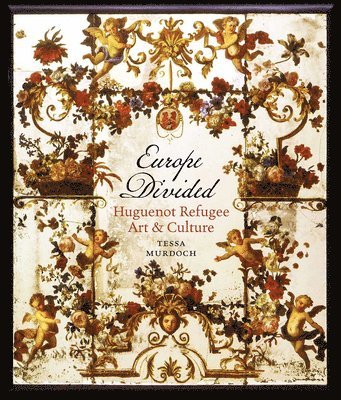
This richly illustrated book focuses on the extraordinary international networks resulting from the diaspora of more than 200,000 refugees who left France in the late 17th century to join communities already in exile spread far and wide. First-generation Huguenot refugees included hundreds of trained artists, designers, and craftsmen. Beyond the French borders, they raised the quality of design and workshop practice, passing on skills to their apprentices; sons, godsons, cousins, and to successive generations, who continued to dominate output in the luxury trades. Although silver and silks are the best-known fields with which Huguenot settlers are associated, their significant contribution to architecture, ceramics, design, clock and watchmaking, engraving, furniture, woodwork, sculpture, portraiture, and art education provides fascinating insight into the motivation and resolve of this highly skilled diaspora. Thanks to a sophisticated network of Huguenot merchants, retailers, and bankers who financed their production, their wares reached a global market.
Inbunden, Engelska, 2022
892 kr
Skickas
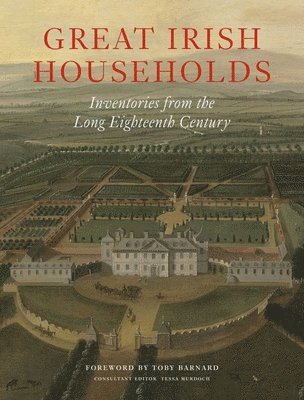
The value of inventories in charting how houses were arranged, furnished and used is now widely appreciated. Typically, the listings and valuations were occasioned by the death of an owner and the consequent need to deal with testamentary dispositions. That was not always so. The inventory for Castlecomer House, Co. Kilkenny, for example, was drawn up to make a claim following the house's devastation in the 1798 uprising. Mostly hitherto unpublished, the inventories chosen give new-found insights into the lifestyle and taste of some of the foremost families of the day. Above stairs, the inventories show the evolving collecting habits and tastes of eighteenth-century patrons across Ireland and how the interiors of great town and country houses were arranged or responded to new materials and new ideas. The meticulous recording of the contents of the kitchen and scullery likewise sheds light on life below stairs. Itemized equipment required for the brewhouse, dairy, stables, garden and farmyard reflects the at times significant scale of the communities the houses supported and the remarkable degree of self-sufficiency at some of the demesnes. A comprehensive index facilitates access to the myriad items forming the inventories, while the books listed at three of the houses are tentatively identified in separate appendices. A foreword together with short preambles to the inventories set the households in their historical context. Illustrated with contemporary engravings of the houses and with portraits of the owners of the time, the inventories will appeal to country-house visitors, historians of interiors, patronage, collecting and material culture as well as to scholars, curators, collectors, creative designers, film directors, bibliographers, lexicographers and novelists. The eighteenth century is the period onto which the Knight of Glin directed his penetrating gaze as art historian. The book is dedicated to his memory.
Inbunden, Engelska, 2009
538 kr
Tillfälligt slut
The French Hospital for poor French Protestants and their descendants residing in Great Britain was incorporated in 1718. Affectionately known as La Providence, it was one of the earliest foundations to cater for London's needy immigrants, and one of the first in Britain to provide sympathetic care for the mentally ill. This book charts the hospital's history from its early days in Finsbury to its present location in the cathedral city of Rochester, Kent, where it provides sheltered housing for elderly people of Huguenot descent. Over the years many distinguished Huguenot settlers or their descendants have been associated with the hospital, among them the soldiers Henri, Earl of Galway, and John, Earl Ligonier, the lawyer Sir Samuel Romilly and the archaeologist Sir Austen Henry Layard. The ivory carver David Le Marchand died there in 1726. The architect Robert Lewis Roumieu designed the spectacular new building in Victoria Park, Hackney, which was the French Hospital's home from the late 1860s to the early 1940s. More than a hundred new photographs of the hospital's collections of paintings, engravings, silver, furniture and memorabilia provide a unique visual record.Portraits featured include the eighteenth-century Huguenot merchants Jean-Henri Guinand and Pierre Ogier. The early hospital records held at the Huguenot Library include tradesmen's bills, portraits of inmates and hospital staff. An eighteenth-century steward's diary records that one inmate hid over half a hundredweight of the hospital's coal supply under her bed. Heraldic shields and book-plates record some of the principal Huguenot families who have served as directors, and a transcription of the 1742 inventory compiled in French lends historical colour. This richly illustrated account will appeal to a wide audience including social and art historians and all who are interested in Huguenot heritage.