The Learning Health System Series – författare
Artificial Intelligence Code of Conduct for Health and Medicine
Essential Guidance for Aligned Action
368 kr
Läs direkt efter köp
1 170 kr
Läs direkt efter köp
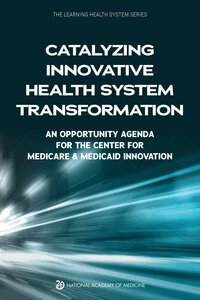
In mid-2022, the United States has lost more than 1 million people to the COVID-19 pandemic. We have been real-time witnesses to scores of heroic responses to the disease, death, inequity, and economic strife unleashed by the virus, but have also experienced the consequences of poor pandemic preparedness and long-standing structural failures in our health system.
For decades, the U.S. health system has fallen far short of its potential to support and improve individual and population health. The COVID-19 pandemic has presented death and devastation—but also an unprecedented opportunity to truly transform U.S. health, health care, and health delivery.
To capitalize on this opportunity, the National Academy of Medicine gathered field leaders from across all of the major health system sectors to assess how each sector has responded to the pandemic and the opportunities that exist for health system transformation. The opportunity is now to capitalize on the hard-won lessons of COVID-19 and build a health care system that centers patients, families, and communities; cares for clinicians; supports care systems, public health, and biomedical research to perform at the best of their abilities; applies innovations from digital health and quality, safety, and standards organizations; and encourages health care payers and health product manufacturers and innovators to produce products that benefit all.
351 kr
Läs direkt efter köp
334 kr
Läs direkt efter köp
Sharing health data and information across stakeholder groups is the bedrock of a learning health system. As data and information are increasingly combined across various sources, their generative value to transform health, health care, and health equity increases significantly. Health data have proven their centrality in guiding action to change the course of individual and population health, if properly stewarded and used.
In the context of the COVID-19 pandemic, both data and a lack of data illuminated profound shortcomings that affected health care and health equity. Yet, a silver lining of the pandemic was a surge in collaboration among data holders in public health, health care, and technology firms, suggesting that an evolution in health data sharing is visible and tangible.
This Special Publication features some of these novel data-sharing collaborations, and has been developed to provide practical context and implementation guidance that is critical to advancing the lessons learned identified in its parent NAM Special Publication, Health Data Sharing: Building a Foundation of Stakeholder Trust. The focus of this publication is to identify and describe exemplar groups to dispel the myth that sharing health data more broadly is impossible and illuminate the innovative approaches that are being taken to make progress in the current environment. It also serves as a resource for those waiting in the wings, showing how barriers were addressed and harvesting lessons and insights from those on the front lines.
In the meantime, knowledge is already available to foster better health care and health outcomes. The examples described in this volume suggest how intentional attention to health data sharing can enable unparalleled advances, securing a healthier and more equitable future for all.
485 kr
Läs direkt efter köp
In response to a growing national awareness that the development and use of new diagnostic, therapeutic, and preventive interventions had been occurring at a quickening pace—one far outstripping the evidence necessary to make informed decisions about their comparative advantage—the Patient-Centered Outcomes Research Institute (PCORI) was established in 2010 as part of the Affordable Care Act legislation. PCORI is guided by the imperative to help patients, families, clinicians, and other health care stakeholders make better informed health care decisions and improve care and outcomes. To inform the next steps in its organizational strategy, PCORI enlisted the National Academy of Medicine (NAM) to leverage its deep experience in convening experts on matters of significant national importance, including its long-standing thought leadership role in the realization of a learning health system. The NAM formed a multi-stakeholder workgroup and held two virtual convenings with the objective of engaging with patients, clinicians, health system leaders, researchers, and other stakeholders from the broader health community to identify and discuss high-priority emerging issues in health, health care, and biomedical science and technology. The key messages from these meetings are outlined in the Special Publication Priorities on the Health Horizon: Informing PCORI''s Strategic Plan.
Given the breadth of the domains considered in the Priorities on the Health Horizon meetings—emerging technologies, social and environmental factors, optimizing value, and infrastructure—a formidable set of pressing health and health care research needs were reviewed and discussed. In addition, certain fundamental strategic priorities emerged as basic and critical to progress in the field: (1) the need to reorient research perspectives and activities to patient and family priorities and values, and in particular, those conditions that drive inequities; (2) the need to foster strategic learning partnerships across groups, organizations, and sectors; and (3) the need to build the continuous learning infrastructure to produce new insights at the pace and scale necessary for health and health care improvement.
Moving forward, building the capacity to continuously improve learning and sharing throughout the system will entail stakeholders working together as seamlessly as possible. The NAM and PCORI worked together to facilitate an expansive dialogue with key stakeholders and engender trust through a focus on shared commitments to progress on improving health for all Americans in the decade ahead.
301 kr
Läs direkt efter köp
The effective use of data is foundational to the concept of a learning health system—one that leverages and shares data to learn from every patient experience, and feeds the results back to clinicians, patients and families, and health care executives to transform health, health care, and health equity. More than ever, the American health care system is in a position to harness new technologies and new data sources to improve individual and population health.
Learning health systems are driven by multiple stakeholders—patients, clinicians and clinical teams, health care organizations, academic institutions, government, industry, and payers. Each stakeholder group has its own sources of data, its own priorities, and its own goals and needs with respect to sharing that data. However, in America''s current health system, these stakeholders operate in silos without a clear understanding of the motivations and priorities of other groups. The three stakeholder working groups that served as the authors of this Special Publication identified many cultural, ethical, regulatory, and financial barriers to greater data sharing, linkage, and use. What emerged was the foundational role of trust in achieving the full vision of a learning health system.
This Special Publication outlines a number of potentially valuable policy changes and actions that will help drive toward effective, efficient, and ethical data sharing, including more compelling and widespread communication efforts to improve awareness, understanding, and participation in data sharing. Achieving the vision of a learning health system will require eliminating the artificial boundaries that exist today among patient care, health system improvement, and research. Breaking down these barriers will require an unrelenting commitment across multiple stakeholders toward a shared goal of better, more equitable health.
We can improve together by sharing and using data in ways that produce trust and respect. Patients and families deserve nothing less.
568 kr
Läs direkt efter köp
The emergence of artificial intelligence (AI) in health care offers unprecedented opportunities to improve patient and clinical team outcomes, reduce costs, and impact population health. While there have been a number of promising examples of AI applications in health care, it is imperative to proceed with caution or risk the potential of user disillusionment, another AI winter, or further exacerbation of existing health- and technology-driven disparities.
This Special Publication synthesizes current knowledge to offer a reference document for relevant health care stakeholders. It outlines the current and near-term AI solutions; highlights the challenges, limitations, and best practices for AI development, adoption, and maintenance; offers an overview of the legal and regulatory landscape for AI tools designed for health care application; prioritizes the need for equity, inclusion, and a human rights lens for this work; and outlines key considerations for moving forward.
AI is poised to make transformative and disruptive advances in health care, but it is prudent to balance the need for thoughtful, inclusive health care AI that plans for and actively manages and reduces potential unintended consequences, while not yielding to marketing hype and profit motives.
301 kr
Läs direkt efter köp
Evidence-based medicine arose from a clear need and represents a major advance in the science of clinical decision making. Despite broad acceptance of evidence-based medicine, however, a fundamental issue remains unresolved: evidence is derived from groups of people, yet medical decisions are made by and for individuals. Despite persistent assertions from clinicians that determining the best therapy for each patient is a more complicated endeavor than just picking the best treatment on average, traditional approaches have been overly reliant on the average effects estimated from the outcomes of clinical trials.
This Special Publication is based on a workshop, held by the National Academy of Medicine, that considered patient and stakeholder perspectives on the importance of understanding heterogeneous treatment effects (HTE) and best practices for implementing clinical programs that take HTE into account. For evidence to be more applicable to individual patients, we need to combine methods for strong causal inference (first and foremost, randomization) with methods for prediction that permit inferences about which particular patients are likely to benefit and which are not. Better population-based outcomes will only be realized when we understand more completely how to treat patients as the unique individuals they are.
435 kr
Läs direkt efter köp
Realizing the promise of digital technology will depend on the ability to share information across time and space from multiple devices, sources, systems, and organizations. The major barrier to progress is not technical; rather, it is in the failure of organizational demand and purchasing requirements. In contrast to many other industries, the purchasers of health care technologies have not marshaled their purchasing power to drive interoperability as a key requirement. Better procurement practices, supported by compatible interoperability platforms and architecture, will allow for better, safer patient care; reduced administrative workload for clinicians; protection from cybersecurity attacks; and significant financial savings across multiple markets.
With funding support from the Gordon and Betty Moore Foundation, this National Academy of Medicine Special Publication represents a multi-stakeholder exploration of the path toward achieving large-scale interoperability through strategic acquisition of health information technology solutions and devices. In this publication, data exchanges over three environments are identified as critical to achieving interoperability: facility-to-facility (macro-tier); intra-facility (meso-tier); and at point-of-care (micro-tier). The publication further identifies the key characteristics of information exchange involved in health and health care, the nature of the requirements for functional interoperability in care processes, the mapping of those requirements into prevailing contracting practices, the specification of the steps necessary to achieve system-wide interoperability, and the proposal of a roadmap for using procurement specifications to engage those steps. The publication concludes with a series of checklists to be used by health care organizations and other stakeholders to accelerate progress in achieving system-wide interoperability.
468 kr
Läs direkt efter köp
To advance insights and perspectives on how to better manage the care of the high-need patient population, the National Academy of Medicine, with guidance from an expert planning committee, was tasked with convening three workshops held between July 2015 and October 2016. The resulting special publication, Effective Care for High-Need Patients: Opportunities for Improving Outcomes, Value, and Health, summarizes the presentations, discussions, and relevant literature.
284 kr
Läs direkt efter köp
As a result of a collaboration between the National Academy of Medicine (NAM) and the Office of the National Coordinator for Health Information Technology, this NAM Special Publication summarizes and builds on a meeting series in which a multi-stakeholder group of experts discussed the potential of clinical decision support (CDS) to transform care delivery by ameliorating the burden that expanding clinical knowledge and care and choice complexity place on the finite time and attention of clinicians, patients, and members of the care team. This summary also includes highlights from discussions to address the barriers to realizing the full benefits of CDS-facilitated value improvement. Optimizing Strategies for Clinical Decision Support identifies the need for a continuously learning health system driven by the seamless and rapid generation, processing, and practical application of the best available evidence for clinical decision making and lays out a series of actionable collaborative next steps to optimize strategies for adoption and use of CDS.
284 kr
Läs direkt efter köp
In 2016, the National Academy of Medicine (NAM) hosted a series of meetings, which was sponsored by the Patient-Centered Outcomes Research Institute, with support from NAM''s Executive Leadership Network. The series underscored the importance of partnerships between researchers and health system leadership and considered opportunities to build institutional capacity, cross-institutional synergy, and system-wide learning. During these meetings, health system executives, researchers, and others discussed building infrastructure that simultaneously facilitates care delivery, care improvement and evidence development. The vision is a digital system-wide progress toward continuous and seamless learning and improvement throughout health and health care. This publication aims to answer the following questions:
How can evidence development be accelerated, given current knowledge and resources?What might that mean for better outcomes for patients and greater efficiency in health care?What system and culture changes are required to generate evidence from the care experience?How much progress has been made in preparing the field for the paradigm shift?What are the hallmarks of successful partnerships among care executives and research leaders?What are the priorities in advancing executive leadership to the next level for continuously learning health and health care?351 kr
Läs direkt efter köp
The United States is experiencing a decline in life expectancy despite high health care spending due to a multitude of factors, including the COVID-19 pandemic, opioid epidemic, high burden of chronic disease, and systemic and structural inequities.
A response proportional to this crisis is required. Valuing America''s Health: Aligning Financing to Reward Better Health and Well-Being explores opportunities to transform the current health and health care system to one that promotes whole person and whole population health. The publication emphasizes the need for a bold vision and sustainable financing strategies to prioritize health and well-being for all. Authors of the publication highlight the importance of building a movement to prioritize health, repairing systemic failures, holding stakeholders accountable, controlling health care costs, incentivizing health promotion, adopting collaborative financing and policy-making approaches, and empowering individuals and communities in health decision-making.
The way is clear; what is needed now is the will to move forward. Learn more about how to ensure our nation''s health and health care system can support optimal health for all.
351 kr
Läs direkt efter köp
The U.S. biomedical research enterprise has played a vital role in advancing science, human health, and the economy. It has contributed significantly to fields such as agriculture, environmental remediation, job creation, and technological innovation. Over the past 80 years, landmark achievements include reducing cancer mortality, developing HIV/AIDS treatments, sequencing the human genome, and creating vaccines that mitigated the impact of the COVID-19 pandemic. The enterprise has grown remarkably in less than a century and holds even greater potential for future success. However, its progress is hindered by a lack of high-level national coordination, a fragmented funding system, and a declining workforce.The State of the U.S. Biomedical and Health Research Enterprise: Strategies for Achieving a Healthier America addresses these challenges in five key areas—strategic vision, funding, health equity, coordination and convergence science, and workforce development—offering a roadmap that could be used to sustain U.S. leadership in global health.
373 kr
Skickas inom 3-6 vardagar
301 kr
Läs direkt efter köp
Artificial Intelligence Code of Conduct for Health and Medicine
Essential Guidance for Aligned Action
255 kr
Tillfälligt slut
231 kr
Tillfälligt slut
220 kr
Tillfälligt slut
385 kr
Tillfälligt slut
208 kr
Tillfälligt slut
290 kr
Tillfälligt slut
184 kr
Tillfälligt slut
184 kr
Tillfälligt slut
231 kr
Tillfälligt slut
231 kr
Tillfälligt slut