National Academy of Medicine – författare
Visar alla böcker från författaren National Academy of Medicine. Handla med fri frakt och snabb leverans.
27 produkter
27 produkter
Häftad, Engelska, 2022
455 kr
Tillfälligt slut
The global response to COVID-19 has demonstrated the importance of vigilance and preparedness for infectious diseases, particularly influenza. There is a need for more effective influenza vaccines and modern manufacturing technologies that are adaptable and scalable to meet demand during a pandemic. The rapid development of COVID-19 vaccines has demonstrated what is possible with extensive data sharing, researchers who have the necessary resources and novel technologies to conduct and apply their research, rolling review by regulators, and public-private partnerships. As demonstrated throughout the response to COVID-19, the process of research and development of novel vaccines can be significantly optimized when stakeholders are provided with the resources and technologies needed to support their response. Vaccine Research and Development to Advance Pandemic and Seasonal Influenza Preparedness and Response focuses on how to leverage the knowledge gained from the COVID-19 pandemic to optimize vaccine research and development (R&D) to support the prevention and control of seasonal and pandemic influenza. The committee's findings address four dimensions of vaccine R&D: (1) basic and translational science, (2) clinical science, (3) manufacturing science, and (4) regulatory science.
Häftad, Engelska, 2022
503 kr
Tillfälligt slut
The COVID-19 pandemic has challenged the world's preparedness for a respiratory virus event. While the world has been combating COVID-19, seasonal and pandemic influenza remain imminent global health threats. Non-vaccine public health control measures can combat emerging and ongoing influenza outbreaks by mitigating viral spread. Public Health Lessons for Non-Vaccine Influenza Interventions examines provides conclusions and recommendations from an expert committee on how to leverage the knowledge gained from the COVID-19 pandemic to optimize the use of public health interventions other than vaccines to decrease the toll of future seasonal and potentially pandemic influenza. It considers the effectiveness of public health efforts such as use of masks and indoor spacing, use of treatments such as monoclonal antibodies, and public health communication campaigns.
Häftad, Engelska, 2022
514 kr
Tillfälligt slut
The COVID-19 pandemic has laid bare the fragility of the global system of preparedness and response to pandemics and the fragmentation of our research and development ecosystem. The pandemic has provided a disruptive moment to advance new norms and frameworks for influenza. It also has demonstrated how innovative global public-private partnerships and coordination mechanisms can lead to rapid successes in viral vaccine research, manufacturing, and risk pooling. Countering the Pandemic Threat Through Global Coordination on Vaccines identifies ways to strengthen pandemic and seasonal influenza global coordination, partnerships, and financing. This report presents seven overarching recommendations for how the urgent influenza threat should be conceptualized and prioritized within the global pandemic preparedness and response agenda in the future.
Häftad, Engelska, 2022
567 kr
Tillfälligt slut
Influenza viruses, both seasonal and pandemic, have the potential to disrupt the health and well-being of populations around the world. The global response to the COVID-19 pandemic and prior public health emergencies of international concern illustrate the importance of global preparedness and coordination among governments, academia, scientists, policy makers, nongovernmental organizations, the private sector, and the public to address the threat of pandemic influenza. These health emergencies have revealed opportunities to enhance global vaccine infrastructure, manufacturing, distribution, and administration.Globally Resilient Supply Chains for Seasonal and Pandemic Influenza Vaccines outlines key findings and recommendations to bolster vaccine distribution, manufacturing, and supply chains for future seasonal and pandemic influenza events. This report addresses the challenges of manufacturing and distributing vaccines for both seasonal and pandemic influenza, highlighting the critical components of vaccine manufacturing and distribution and offering recommendations that would address gaps in the current global vaccine infrastructure.
Artificial Intelligence Code of Conduct for Health and Medicine
Essential Guidance for Aligned Action
Häftad, Engelska, 2025
257 kr
Tillfälligt slut
Over the last decade, advances in artificial intelligence (AI) technologies have created transformational opportunities for health, health care, and biomedical science. While new tools are available to improve effectiveness and efficiency in myriad applications in health and health care, challenges persist, including those related to increasing costs of care, staff burnout and shortages, and the growing disease burden of an aging population. The need for new approaches to address these long-standing challenges is evident and AI offers both new hope and new concerns.An Artificial Intelligence Code of Conduct for Health and Medicine: Essential Guidance for Aligned Action presents a unifying AI Code of Conduct (AICC) framework developed to align the field around responsible development and application of AI and to catalyze collective action to ensure that the transformative potential of AI in health and medicine is realized. Designed to be applied at every level of decision making—from boardroom to bedside and from innovation labs to reimbursement policies—the publication serves as a blueprint for building trust, protecting patients, and ensuring that innovation benefits people.
Häftad, Engelska, 2022
222 kr
Tillfälligt slut
While the world continues to respond to the COVID-19 pandemic, novel influenza viruses persist as a constant pandemic threat. The global response to COVID-19 has pushed the boundaries on what is possible for rapid pandemic response in several areas, including vaccine research, development, manufacturing, equitable distribution, allocation, and administration. If well understood and sufficiently adapted, these actions could be applied to future pandemic and seasonal influenza vaccine preparedness efforts. However, developing and delivering these more effective vaccines to meet the demand goes beyond simply technical challenges and includes issues across governance, financing, research, supply chain, and public engagement.To address these challenges, the National Academies of Sciences, Engineering, and Medicine convened a virtual public workshop in May of 2021 to discuss the emerging evidence on unprecedented actions related to COVID-19 that could inform and advance pandemic and seasonal influenza vaccine preparedness efforts and subsequent response. This Proceedings of a Workshop provides a high-level summary of the presentations and discussions that occurred during the workshop.
Häftad, Engelska, 2017
621 kr
Tillfälligt slut
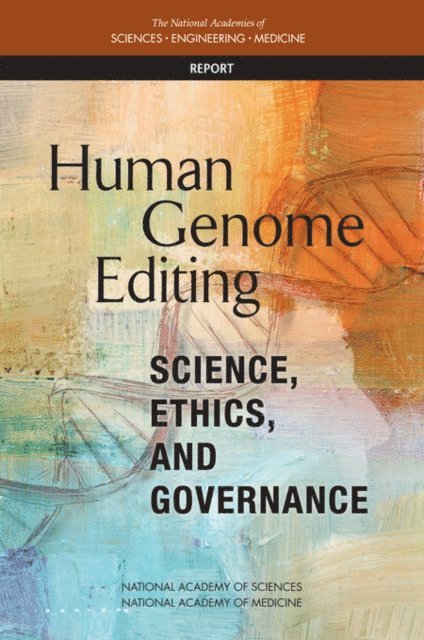
Genome editing is a powerful new tool for making precise alterations to an organisma (TM)s genetic material. Recent scientific advances have made genome editing more efficient, precise, and flexible than ever before. These advances have spurred an explosion of interest from around the globe in the possible ways in which genome editing can improve human health. The speed at which these technologies are being developed and applied has led many policymakers and stakeholders to express concern about whether appropriate systems are in place to govern these technologies and how and when the public should be engaged in these decisions. Human Genome Editing considers important questions about the human application of genome editing including: balancing potential benefits with unintended risks, governing the use of genome editing, incorporating societal values into clinical applications and policy decisions, and respecting the inevitable differences across nations and cultures that will shape how and whether to use these new technologies.This report proposes criteria for heritable germline editing, provides conclusions on the crucial need for public education and engagement, and presents 7 general principles for the governance of human genome editing.
Häftad, Engelska, 2022
329 kr
Tillfälligt slut
With unprecedented global aging, societies must undertake all-of-society efforts to maximize the benefits and minimize the burdens of aging populations. The Global Roadmap for Healthy Longevity (Global Roadmap) describes a realistic vision of healthy longevity that could be achieved by 2050. The vision includes full inclusion of people of all ages, regardless of health or functional status, in all aspects of society and societies characterized by social cohesion and equity. To achieve the vision, Global Roadmap recommends changes that need to be made to health systems, social infrastructure, physical environments, education, work, and retirement. In some cases, the recommended changes benefit older people most directly, but when older people thrive, people of all ages benefit. If taken up, the recommendations of this report can support individuals of all ages in all corners of the globe to live long, meaningful, and purpose-driven lives by 2050.
Häftad, Engelska, 2019
679 kr
Tillfälligt slut
Patient-centered, high-quality health care relies on the well-being, health, and safety of health care clinicians. However, alarmingly high rates of clinician burnout in the United States are detrimental to the quality of care being provided, harmful to individuals in the workforce, and costly. It is important to take a systemic approach to address burnout that focuses on the structure, organization, and culture of health care.Taking Action Against Clinician Burnout: A Systems Approach to Professional Well-Being builds upon two groundbreaking reports from the past twenty years, To Err Is Human: Building a Safer Health System and Crossing the Quality Chasm: A New Health System for the 21st Century, which both called attention to the issues around patient safety and quality of care. This report explores the extent, consequences, and contributing factors of clinician burnout and provides a framework for a systems approach to clinician burnout and professional well-being, a research agenda to advance clinician well-being, and recommendations for the field.
Häftad, Engelska, 2020
590 kr
Skickas
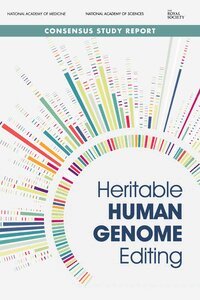
Heritable human genome editing - making changes to the genetic material of eggs, sperm, or any cells that lead to their development, including the cells of early embryos, and establishing a pregnancy - raises not only scientific and medical considerations but also a host of ethical, moral, and societal issues. Human embryos whose genomes have been edited should not be used to create a pregnancy until it is established that precise genomic changes can be made reliably and without introducing undesired changes - criteria that have not yet been met, says Heritable Human Genome Editing.From an international commission of the U.S. National Academy of Medicine, U.S. National Academy of Sciences, and the U.K.'s Royal Society, the report considers potential benefits, harms, and uncertainties associated with genome editing technologies and defines a translational pathway from rigorous preclinical research to initial clinical uses, should a country decide to permit such uses. The report specifies stringent preclinical and clinical requirements for establishing safety and efficacy, and for undertaking long-term monitoring of outcomes. Extensive national and international dialogue is needed before any country decides whether to permit clinical use of this technology, according to the report, which identifies essential elements of national and international scientific governance and oversight.
Häftad, Engelska, 2021
679 kr
Tillfälligt slut
The decade ahead will test the nation's nearly 4 million nurses in new and complex ways. Nurses live and work at the intersection of health, education, and communities. Nurses work in a wide array of settings and practice at a range of professional levels. They are often the first and most frequent line of contact with people of all backgrounds and experiences seeking care and they represent the largest of the health care professions.A nation cannot fully thrive until everyone - no matter who they are, where they live, or how much money they make - can live their healthiest possible life, and helping people live their healthiest life is and has always been the essential role of nurses. Nurses have a critical role to play in achieving the goal of health equity, but they need robust education, supportive work environments, and autonomy. Accordingly, at the request of the Robert Wood Johnson Foundation, on behalf of the National Academy of Medicine, an ad hoc committee under the auspices of the National Academies of Sciences, Engineering, and Medicine conducted a study aimed at envisioning and charting a path forward for the nursing profession to help reduce inequities in people's ability to achieve their full health potential. The ultimate goal is the achievement of health equity in the United States built on strengthened nursing capacity and expertise. By leveraging these attributes, nursing will help to create and contribute comprehensively to equitable public health and health care systems that are designed to work for everyone.The Future of Nursing 2020-2030: Charting a Path to Achieve Health Equity explores how nurses can work to reduce health disparities and promote equity, while keeping costs at bay, utilizing technology, and maintaining patient and family-focused care into 2030. This work builds on the foundation set out by The Future of Nursing: Leading Change, Advancing Health (2011) report.
Häftad, Engelska, 2025
231 kr
Tillfälligt slut
Since its founding, the Center for Medicare & Medicaid Innovation (CMMI) has tested more than 50 alternative payment models reaching more than 28 million patients across 528,000 health care providers and plans, yielding invaluable insights on the implementation of models to achieve better care, better health, and lower costs. On the other hand, many basic lessons learned are lessons unapplied. U.S. population health outcomes lag behind its highly economically developed peers and our health system is still firmly entrenched in the fee-for-service payment system that rewards service volume.This Special Publication suggests six key priority actions for CMMI centered on signaling, mapping, measuring, modeling, partnering, and demonstrating. These priority actions, coupled with implementation considerations that focus on meaningful and continuous engagement, intersectionality and diversity, and expanding CMMI activities and impact, are intended to assist in aligning, supporting, and informing the implementation of CMMI's Strategic Refresh.
Inbunden, Engelska, 2023
738 kr
Tillfälligt slut
Commissioned to mark the 50th anniversary of the National Academy of Medicine (NAM; formerly the Institute of Medicine [IOM]), this volume describes the circumstances that led to the IOM's founding in 1970, the members and leaders who built and sustained the organization, and the process by which the IOM became the NAM in 2015. The volume also details a selection of the IOM/NAM's most influential contributions to biomedical science, U.S. health care, and population health and concludes with the story of how the organization navigated unprecedented national and global crises between 2015 and 2021.
Inbunden, Engelska, 2023
361 kr
Tillfälligt slut
The past half-century has been an era of astonishing progress for biomedical science, health, and health care in the United States and worldwide. This volume, commissioned to mark the occasion of the 50th anniversary of the founding of the U.S. National Academy of Medicine (NAM; formerly the Institute of Medicine [IOM]), tells the story of that progress across five major fields: biomedical science and technology, diseases and conditions, public health, U.S. health care, and global health. Since the NAM was founded in 1970, the nation and the world have seen multitudes of remarkable "firsts"—including the dawn of targeted gene therapies, the near eradication of polio, revolutionary treatments for cancers and cardiovascular disease, and many more. NAM members were the architects of many of these breakthroughs, alongside countless dedicated scientists, clinicians, educators, and public health leaders worldwide. The milestones chronicled in this volume are a testament to their remarkable work, which has saved and improved innumerable lives.
Häftad, Engelska, 2023
220 kr
Tillfälligt slut
Sharing health data and information across stakeholder groups is the bedrock of a learning health system. As data and information are increasingly combined across various sources, their generative value to transform health, health care, and health equity increases significantly. Health data have proven their centrality in guiding action to change the course of individual and population health, if properly stewarded and used.In the context of the COVID-19 pandemic, both data and a lack of data illuminated profound shortcomings that affected health care and health equity. Yet, a silver lining of the pandemic was a surge in collaboration among data holders in public health, health care, and technology firms, suggesting that an evolution in health data sharing is visible and tangible.This Special Publication features some of these novel data-sharing collaborations, and has been developed to provide practical context and implementation guidance that is critical to advancing the lessons learned identified in its parent NAM Special Publication, Health Data Sharing: Building a Foundation of Stakeholder Trust. The focus of this publication is to identify and describe exemplar groups to dispel the myth that sharing health data more broadly is impossible and illuminate the innovative approaches that are being taken to make progress in the current environment. It also serves as a resource for those waiting in the wings, showing how barriers were addressed and harvesting lessons and insights from those on the front lines.In the meantime, knowledge is already available to foster better health care and health outcomes. The examples described in this volume suggest how intentional attention to health data sharing can enable unparalleled advances, securing a healthier and more equitable future for all.
Häftad, Engelska, 2023
388 kr
Tillfälligt slut
The emergence of artificial intelligence (AI) in health care offers unprecedented opportunities to improve patient and clinical team outcomes, reduce costs, and impact population health. While there have been a number of promising examples of AI applications in health care, it is imperative to proceed with caution or risk the potential of user disillusionment, another AI winter, or further exacerbation of existing health- and technology-driven disparities.This Special Publication synthesizes current knowledge to offer a reference document for relevant health care stakeholders. It outlines the current and near-term AI solutions; highlights the challenges, limitations, and best practices for AI development, adoption, and maintenance; offers an overview of the legal and regulatory landscape for AI tools designed for health care application; prioritizes the need for equity, inclusion, and a human rights lens for this work; and outlines key considerations for moving forward.AI is poised to make transformative and disruptive advances in health care, but it is prudent to balance the need for thoughtful, inclusive health care AI that plans for and actively manages and reduces potential unintended consequences, while not yielding to marketing hype and profit motives.
Häftad, Engelska, 2023
208 kr
Tillfälligt slut
Evidence-based medicine arose from a clear need and represents a major advance in the science of clinical decision making. Despite broad acceptance of evidence-based medicine, however, a fundamental issue remains unresolved: evidence is derived from groups of people, yet medical decisions are made by and for individuals. Despite persistent assertions from clinicians that determining the best therapy for each patient is a more complicated endeavor than just picking the best treatment on average, traditional approaches have been overly reliant on the average effects estimated from the outcomes of clinical trials.This Special Publication is based on a workshop, held by the National Academy of Medicine, that considered patient and stakeholder perspectives on the importance of understanding heterogeneous treatment effects (HTE) and best practices for implementing clinical programs that take HTE into account. For evidence to be more applicable to individual patients, we need to combine methods for strong causal inference (first and foremost, randomization) with methods for prediction that permit inferences about which particular patients are likely to benefit and which are not. Better population-based outcomes will only be realized when we understand more completely how to treat patients as the unique individuals they are.
Häftad, Engelska, 2023
290 kr
Tillfälligt slut
Realizing the promise of digital technology will depend on the ability to share information across time and space from multiple devices, sources, systems, and organizations. The major barrier to progress is not technical; rather, it is in the failure of organizational demand and purchasing requirements. In contrast to many other industries, the purchasers of health care technologies have not marshaled their purchasing power to drive interoperability as a key requirement. Better procurement practices, supported by compatible interoperability platforms and architecture, will allow for better, safer patient care; reduced administrative workload for clinicians; protection from cybersecurity attacks; and significant financial savings across multiple markets.With funding support from the Gordon and Betty Moore Foundation, this National Academy of Medicine Special Publication represents a multi-stakeholder exploration of the path toward achieving large-scale interoperability through strategic acquisition of health information technology solutions and devices. In this publication, data exchanges over three environments are identified as critical to achieving interoperability: facility-to-facility (macro-tier); intra-facility (meso-tier); and at point-of-care (micro-tier). The publication further identifies the key characteristics of information exchange involved in health and health care, the nature of the requirements for functional interoperability in care processes, the mapping of those requirements into prevailing contracting practices, the specification of the steps necessary to achieve system-wide interoperability, and the proposal of a roadmap for using procurement specifications to engage those steps. The publication concludes with a series of checklists to be used by health care organizations and other stakeholders to accelerate progress in achieving system-wide interoperability.
Häftad, Engelska, 2023
137 kr
Tillfälligt slut
There is no question that opioid use disorder has become the fastest growing, serious, and far-reaching public health crisis facing our nation today. The growing and unprecedented opioid epidemic is a critical issue for public health and medical care throughout the country. Provisional estimates suggest that nearly 65,000 Americans died from a drug overdose in 2016, a 21% increase from the previous year and at a level higher than occurred during the peak years for deaths from HIV infection and automobile fatalities.Nearly half of opioid overdose deaths are related to medications obtained legally by prescription, sparking deep concern among leaders in the health care sector. The need is clear for clinicians, as the "gatekeepers" of opioid prescriptions, and as the front line in facilitating access to treatment for addiction, to work together with state and community leaders to reduce the impact of opioid misuse on American communities.At the request of the National Governors Association, the National Academy of Medicine convened a group of experts and field leaders to explore clinicians' roles in addressing opioid misuse and addiction. The resulting Special Publication is informed by, and builds on, initiatives and guidelines that have been stewarded by various stakeholder organizations providing leadership in addressing these issues. In the midst of evolving understanding of and experience in pain management and substance abuse, the authors offer to clinicians a set of axioms applicable both to responsible, appropriate opioid prescribing practices, and to recognition and treatment of substance use disorder. Also underscored are actions that clinicians can take to improve their skills and effectiveness in the face of the growing need, including leadership engagement to ensure that communities have the resources and tools that clinicians require to fulfill their responsibilities.
Häftad, Engelska, 2023
184 kr
Tillfälligt slut
As a result of a collaboration between the National Academy of Medicine (NAM) and the Office of the National Coordinator for Health Information Technology, this NAM Special Publication summarizes and builds on a meeting series in which a multi-stakeholder group of experts discussed the potential of clinical decision support (CDS) to transform care delivery by ameliorating the burden that expanding clinical knowledge and care and choice complexity place on the finite time and attention of clinicians, patients, and members of the care team. This summary also includes highlights from discussions to address the barriers to realizing the full benefits of CDS-facilitated value improvement. Optimizing Strategies for Clinical Decision Support identifies the need for a continuously learning health system driven by the seamless and rapid generation, processing, and practical application of the best available evidence for clinical decision making and lays out a series of actionable collaborative next steps to optimize strategies for adoption and use of CDS.
Häftad, Engelska, 2023
186 kr
Tillfälligt slut
In 2016, the National Academy of Medicine (NAM) hosted a series of meetings, which was sponsored by the Patient-Centered Outcomes Research Institute, with support from NAM's Executive Leadership Network. The series underscored the importance of partnerships between researchers and health system leadership and considered opportunities to build institutional capacity, cross-institutional synergy, and system-wide learning. During these meetings, health system executives, researchers, and others discussed building infrastructure that simultaneously facilitates care delivery, care improvement and evidence development. The vision is a digital system-wide progress toward continuous and seamless learning and improvement throughout health and health care. This publication aims to answer the following questions:How can evidence development be accelerated, given current knowledge and resources?What might that mean for better outcomes for patients and greater efficiency in health care?What system and culture changes are required to generate evidence from the care experience?How much progress has been made in preparing the field for the paradigm shift?What are the hallmarks of successful partnerships among care executives and research leaders?What are the priorities in advancing executive leadership to the next level for continuously learning health and health care?
Häftad, Engelska, 2023
585 kr
Tillfälligt slut
What can be more vital to each of us than our health? Yet, despite unprecedented health care spending, the U.S. health system is substantially underperforming, especially with respect to what should be possible, given current knowledge. Although the United States is currently devoting 18% of its Gross Domestic Product to delivering medical care—more than $3 trillion annually and nearly double the expenditure of other advanced industrialized countries—the U.S. health system ranked only 37 in performance in a World Health Organization assessment of member nations. In Vital Directions for Health & Health Care: An Initiative of the National Academy of Medicine, the National Academy of Medicine (NAM), which has long stood as the nation's most trusted independent source of guidance in health, health care, and biomedical science, has marshaled the wisdom of more than 150 of the nation's best researchers and health policy experts to assess opportunities for substantially improving the health and well-being of Americans, the quality of care delivered, and the contributions of science and technology. This publication identifies practical and affordable steps that can and must be taken across eight action and infrastructure priorities, ranging from paying for value and connecting care, to measuring what matters most and accelerating the capture of real-world evidence. Without obscuring the difficulty of the changes needed, in Vital Directions, the NAM offers an important blueprint and resource for health, policy, and leaders at all levels to achieve much better health outcomes at much lower cost.
Häftad, Engelska, 2024
231 kr
Tillfälligt slut
The United States is experiencing a decline in life expectancy despite high health care spending due to a multitude of factors, including the COVID-19 pandemic, opioid epidemic, high burden of chronic disease, and systemic and structural inequities.A response proportional to this crisis is required. Valuing America's Health: Aligning Financing to Reward Better Health and Well-Being explores opportunities to transform the current health and health care system to one that promotes whole person and whole population health. The publication emphasizes the need for a bold vision and sustainable financing strategies to prioritize health and well-being for all. Authors of the publication highlight the importance of building a movement to prioritize health, repairing systemic failures, holding stakeholders accountable, controlling health care costs, incentivizing health promotion, adopting collaborative financing and policy-making approaches, and empowering individuals and communities in health decision-making.The way is clear; what is needed now is the will to move forward. Learn more about how to ensure our nation's health and health care system can support optimal health for all.
Häftad, Engelska, 2023
397 kr
Tillfälligt slut
Advances in biomedical science, data science, engineering, and technology are leading to high-pace innovation with potential to transform health and medicine. These innovations simultaneously raise important ethical and social issues, including how to fairly distribute their benefits and risks. The National Academies of Sciences, Engineering, and Medicine, in collaboration with the National Academy of Medicine, established the Committee on Creating a Framework for Emerging Science, Technology, and Innovation in Health and Medicine to provide leadership and engage broad communities in developing a framework for aligning the development and use of transformative technologies with ethical and equitable principles. The committees resulting report describes a governance framework for decisions throughout the innovation life cycle to advance equitable innovation and support an ecosystem that is more responsive to the needs of a broader range of individuals and is better able to recognize and address inequities as they arise.
Häftad, Engelska, 2024
231 kr
Tillfälligt slut
The U.S. biomedical research enterprise has played a vital role in advancing science, human health, and the economy. It has contributed significantly to fields such as agriculture, environmental remediation, job creation, and technological innovation. Over the past 80 years, landmark achievements include reducing cancer mortality, developing HIV/AIDS treatments, sequencing the human genome, and creating vaccines that mitigated the impact of the COVID-19 pandemic. The enterprise has grown remarkably in less than a century and holds even greater potential for future success. However, its progress is hindered by a lack of high-level national coordination, a fragmented funding system, and a declining workforce.The State of the U.S. Biomedical and Health Research Enterprise: Strategies for Achieving a Healthier America addresses these challenges in five key areas—strategic vision, funding, health equity, coordination and convergence science, and workforce development—offering a roadmap that could be used to sustain U.S. leadership in global health.
Häftad, Engelska, 2025
208 kr
Skickas
Climate change is a defining health challenge of the 21st century. Its impacts, from heat-related illness and extreme weather to food insecurity and mental health distress, are already affecting populations across the United States and globally. However, gaps in research, data, infrastructure, and public engagement hinder the nation's ability to respond effectively and equitably.A Research Agenda to Protect Human Health and Build Resilience in the Face of a Changing Climate outlines a bold vision to advance climate-health research. This agenda identifies key research domains including health impacts, adaptation and mitigation strategies, infrastructure and capacity building, and policy and public engagement. The publication provides actionable guidance to accelerate transdisciplinary science, inform evidence-based policy, and support community resilience, especially for those most vulnerable to climate threats.
Häftad, Engelska, 2025
210 kr
Tillfälligt slut
The integration of large language models (LLMs) and generative artificial intelligence (AI) in health care holds the potential to transform the practice of medicine, the work and experiences of health care providers, and the health and well-being of patients. Generative AI can support clinical decision making and streamline workflows, promote patients and their support networks' engagement in care processes, and support clinical research. However, successful and ethical implementation of generative AI requires careful consideration of the associated risks, particularly those concerning data privacy, bias, transparency, and infrastructure limitations. Generative Artificial Intelligence in Health and Medicine: Opportunities and Responsibilities for Transformative Innovation explores the transformative potential of generative AI in health care, with a focus on its applications in clinical decision making, administrative efficiency, and patient engagement.