Thomas Guiney – författare
Visar alla böcker från författaren Thomas Guiney. Handla med fri frakt och snabb leverans.
9 produkter
9 produkter
E-bok
PDF, Engelska, 2018946 kr
Läs direkt efter köp
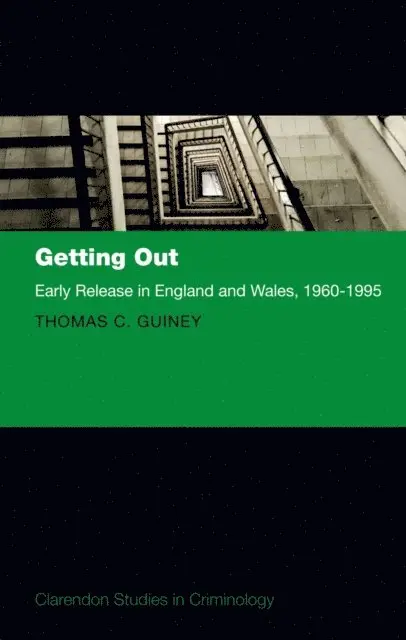
Getting Out offers the first systematic account of the evolution of early release as a public policy concern in England and Wales between 1960 and 1995. At a time when public discourse on crime has focused, to a significant degree, upon the powers of the police and the sentence of the court this book seeks to turn current debate on its head and examine the circumstances in which policy makers have found it desirable to reduce the custodial element of a prison sentence and return prisoners to the community. Drawing upon an extensive period of archival research, and interviews with key decision-makers, this book considers three defining periods of reform that illuminate the complex ideas, trade-offs, and moments of political controversy that have shaped this secretive and little understood area of penal policy. The book argues that early release is inherently bound up with prevailing societal justifications for punishment and the appropriate use of imprisonment within our liberal democratic system. It draws attention to the uneasy constitutional balance of power between the judiciary and the executive, and reflects upon the administrative task of governing large captive populations where the hopes and expectations of inmates do not always align with the interests of prison authorities or the community at large. In so doing, Getting Out challenges widespread assumptions about penal change and shows how government policy has been shaped by the legacy of past political choices, the organisation of central government departments and the fluid balance of power within Whitehall.
E-bok
Engelska, 2018946 kr
Läs direkt efter köp
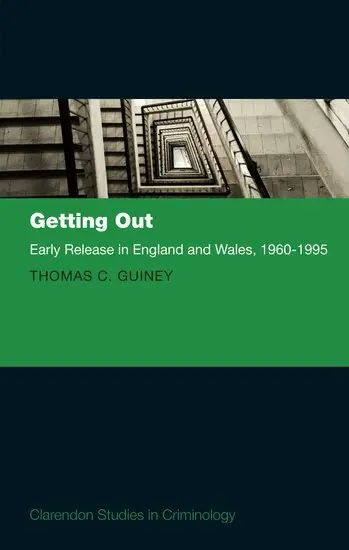
Getting Out offers the first systematic account of the evolution of early release as a public policy concern in England and Wales between 1960 and 1995. At a time when public discourse on crime has focused, to a significant degree, upon the powers of the police and the sentence of the court this book seeks to turn current debate on its head and examine the circumstances in which policy makers have found it desirable to reduce the custodial element of a prison sentence and return prisoners to the community. Drawing upon an extensive period of archival research, and interviews with key decision-makers, this book considers three defining periods of reform that illuminate the complex ideas, trade-offs, and moments of political controversy that have shaped this secretive and little understood area of penal policy. The book argues that early release is inherently bound up with prevailing societal justifications for punishment and the appropriate use of imprisonment within our liberal democratic system. It draws attention to the uneasy constitutional balance of power between the judiciary and the executive, and reflects upon the administrative task of governing large captive populations where the hopes and expectations of inmates do not always align with the interests of prison authorities or the community at large. In so doing, Getting Out challenges widespread assumptions about penal change and shows how government policy has been shaped by the legacy of past political choices, the organisation of central government departments and the fluid balance of power within Whitehall.
Inbunden, Engelska, 2018
1 316 kr
Skickas inom 3-6 vardagar
Getting Out offers the first systematic account of the evolution of early release as a public policy concern in England and Wales between 1960 and 1995. At a time when public discourse on crime has focused, to a significant degree, upon the powers of the police and the sentence of the court this book seeks to turn current debate on its head and examine the circumstances in which policy makers have found it desirable to reduce the custodial element of a prison sentence and return prisoners to the community. Drawing upon an extensive period of archival research, and interviews with key decision-makers, this book considers three defining periods of reform that illuminate the complex ideas, trade-offs, and moments of political controversy that have shaped this secretive and little understood area of penal policy. The book argues that early release is inherently bound up with prevailing societal justifications for punishment and the appropriate use of imprisonment within our liberal democratic system. It draws attention to the uneasy constitutional balance of power between the judiciary and the executive, and reflects upon the administrative task of governing large captive populations where the hopes and expectations of inmates do not always align with the interests of prison authorities or the community at large. In so doing, Getting Out challenges widespread assumptions about penal change and shows how government policy has been shaped by the legacy of past political choices, the organisation of central government departments and the fluid balance of power within Whitehall.
Inbunden, Engelska, 2025
1 150 kr
Skickas inom 10-15 vardagar
Does parole have a future? If it does, can we begin to imagine a different path? Is progressive penal reform possible, or has the time come to consider more radical alternatives in a context where there is little, if any, consensus on the underlying aims and techniques of contemporary prison release? What does this all mean for the prisoners, families, victims and publics upon whose confidence the parole system ultimately depends?This book brings together a world-leading panel of 27 experts who draw upon insights from law, sociology, criminology and political science to explore these pressing questions. At a time when many parole systems are experiencing considerable strain, the aims of this collection are twofold: first, to encourage systematic and critical reflection on the rationalities, institutions and practices of parole. Second, to think big, and pose ambitious ‘what if’ questions about the possible futures of parole and prison release.Offering novel insights from Asia, Australia, Europe, North America and South America, this collection builds the case for, and then showcases, a ‘way of doing’ parole research that is global in outlook, interdisciplinary in approach and unapologetically normative in character.
E-bok
Engelska, 20251 209 kr
Läs direkt efter köp
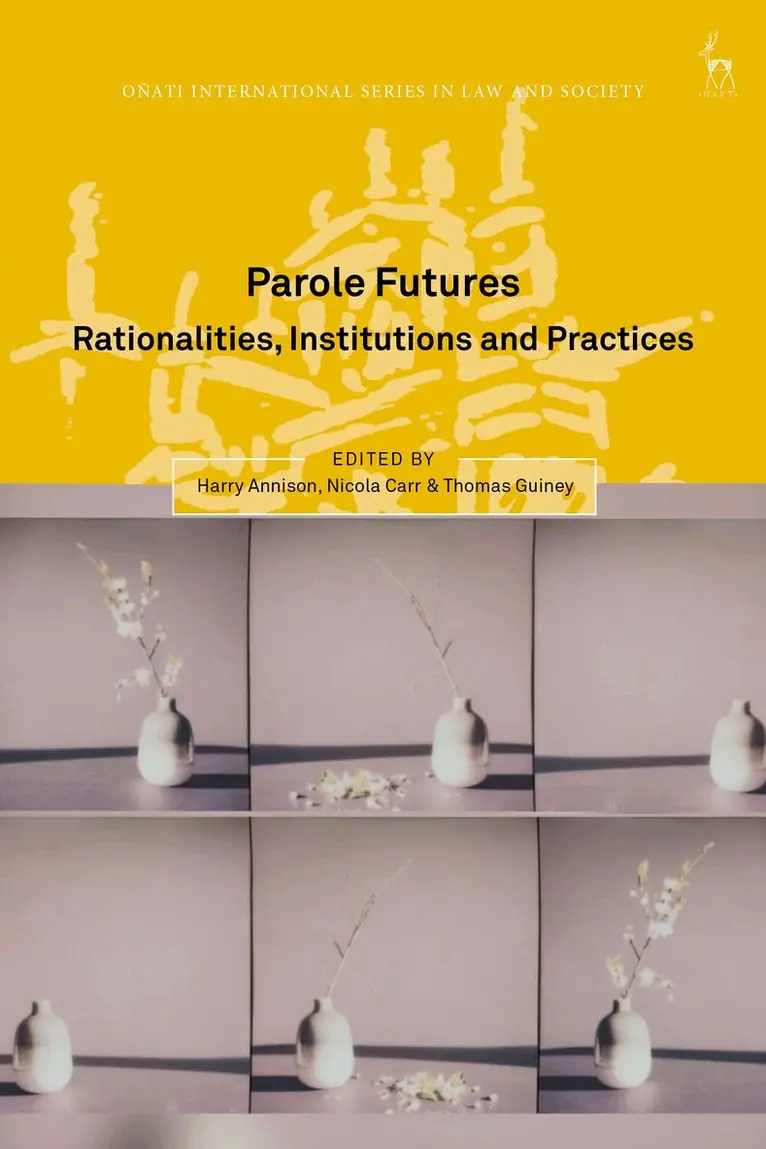
Does parole have a future? If it does, can we begin to imagine a different path? Is progressive penal reform possible, or has the time come to consider more radical alternatives in a context where there is little, if any, consensus on the underlying aims and techniques of contemporary prison release? What does this all mean for the prisoners, families, victims and publics upon whose confidence the parole system ultimately depends? This book brings together a world-leading panel of 27 experts who draw upon insights from law, sociology, criminology and political science to explore these pressing questions. At a time when many parole systems are experiencing considerable strain, the aims of this collection are twofold: first, to encourage systematic and critical reflection on the rationalities, institutions and practices of parole. Second, to think big, and pose ambitious ''what if'' questions about the possible futures of parole and prison release. Offering novel insights from Asia, Australia, Europe, North America and South America, this collection builds the case for, and then showcases, a ''way of doing'' parole research that is global in outlook, interdisciplinary in approach and unapologetically normative in character.
E-bok
PDF, Engelska, 20251 209 kr
Läs direkt efter köp
Does parole have a future? If it does, can we begin to imagine a different path? Is progressive penal reform possible, or has the time come to consider more radical alternatives in a context where there is little, if any, consensus on the underlying aims and techniques of contemporary prison release? What does this all mean for the prisoners, families, victims and publics upon whose confidence the parole system ultimately depends? This book brings together a world-leading panel of 27 experts who draw upon insights from law, sociology, criminology and political science to explore these pressing questions. At a time when many parole systems are experiencing considerable strain, the aims of this collection are twofold: first, to encourage systematic and critical reflection on the rationalities, institutions and practices of parole. Second, to think big, and pose ambitious ''what if'' questions about the possible futures of parole and prison release. Offering novel insights from Asia, Australia, Europe, North America and South America, this collection builds the case for, and then showcases, a ''way of doing'' parole research that is global in outlook, interdisciplinary in approach and unapologetically normative in character.
Häftad, Engelska, 2027
684 kr
Kommande
Does parole have a future? If it does, can we begin to imagine a different path? Is progressive penal reform possible, or has the time come to consider more radical alternatives in a context where there is little, if any, consensus on the underlying aims and techniques of contemporary prison release? What does this all mean for the prisoners, families, victims and publics upon whose confidence the parole system ultimately depends?This book brings together a world-leading panel of 27 experts who draw upon insights from law, sociology, criminology and political science to explore these pressing questions. At a time when many parole systems are experiencing considerable strain, the aims of this collection are twofold: first, to encourage systematic and critical reflection on the rationalities, institutions and practices of parole. Second, to think big, and pose ambitious ‘what if’ questions about the possible futures of parole and prison release.Offering novel insights from Asia, Australia, Europe, North America and South America, this collection builds the case for, and then showcases, a ‘way of doing’ parole research that is global in outlook, interdisciplinary in approach and unapologetically normative in character.
Inbunden, Engelska, 2026
1 091 kr
Skickas inom 10-15 vardagar
Prison building has moved from the margins to the mainstream of our penal politics. In recent years the UK Government has invested billions in new prison building and the main political parties are currently locked into a penal arms race over who can, and who will, build the most additional prison places in England and Wales. Prison building is now widely lauded as the definitive policy solution to the current prisons crisis and yet, this remains an elusive sphere of penal policymaking. Academic research remains in its infancy, and we still know very little about how these large investment decisions are made, by whom and for what reasons.In seeking to shine a light on this subterranean and largely closed sphere of contemporary penal policymaking, this book presents the first systematic study of prison building programmes in England and Wales since the mid-1990’s punitive turn. Drawing upon extensive archival research, 28 exploratory qualitative interviews, publicly recorded data, historic satellite imagery and other mapping techniques this book has three main aims: (1) to provide an authoritative historical account of prison building activity in England and Wales since the mid-1990s punitive turn, (2) to explain why successive governments have chosen to invest in new prison building programmes and (3) to reflect upon how the prisons we build - functionally, architecturally, geographically – continue to shape our politics long after they have been constructed.
E-bok
Engelska, 20261 367 kr
Läs direkt efter köp
Prison building has moved from the margins to the mainstream of our penal politics. In recent years the UK Government has invested billions in new prison building and the main political parties are currently locked into a penal arms race over who can, and who will, build the most additional prison places in England and Wales. Prison building is now widely lauded as the definitive policy solution to the current prisons crisis and yet, this remains an elusive sphere of penal policymaking. Academic research remains in its infancy, and we still know very little about how these large investment decisions are made, by whom and for what reasons.In seeking to shine a light on this subterranean and largely closed sphere of contemporary penal policymaking, this book presents the first systematic study of prison building programmes in England and Wales since the mid-1990’s punitive turn. Drawing upon extensive archival research, 28 exploratory qualitative interviews, publicly recorded data, historic satellite imagery and other mapping techniques this book has three main aims: (1) to provide an authoritative historical account of prison building activity in England and Wales since the mid-1990s punitive turn, (2) to explain why successive governments have chosen to invest in new prison building programmes and (3) to reflect upon how the prisons we build - functionally, architecturally, geographically – continue to shape our politics long after they have been constructed.