Thomas J. Slater - Böcker
Visar alla böcker från författaren Thomas J. Slater. Handla med fri frakt och snabb leverans.
3 produkter
3 produkter
787 kr
Skickas inom 10-15 vardagar
This is the most comprehensive study to date of the work of Milos Forman, best known for his Academy Award winning direction of One Flew over the Cuckoo's Nest (1975) and Amadeus (1984). The work begins with a brief biography that emphasizes the relationship for Forman's life to his philosophic and artistic development. The major portion of the work consists of a critical filmography with annotations based on the author's direct study, and an annotated bibliography with an introductory essay.
929 kr
Skickas inom 10-15 vardagar
One of the most fascinating aspects of film studies is how it can explain more about the nature of closed societies. In Eastern Europe, artists, intellectuals, and entertainers are now free to create film outside the direct control of the state. This unique handbook convincingly shows how much film art was still being produced behind the Iron Curtain even during such repressive periods as those under Stalin and Brezhnev. Thomas J. Slater has compiled a valuable history of cinematic evolution in the Soviet Union and Eastern Europe through the use of detailed historiographical essays for each country.The dramatic changes in the political and economic structures of Eastern Europe that occurred during 1989-90 have revealed even more about courageous filmmakers who worked under difficult conditions. Many were still able to produce artistically important films, but filmmakers were often forced to become propagandizers for their authoritarian governments. This book outlines the film achievements in the Soviet Union, Poland, Czechoslovakia, Yugoslavia, Hungary, East Germany, Romania, and Bulgaria, and how their people responded to the films they were allowed to see. An appendix contains a chronology of major historical, cultural, and film events in the Soviet Union and Eastern Europe during the past 100 years. This book will be of great value to scholars not only of film studies, but also of history, social and political science, communications, culture, and the fine arts. The handbook is an excellent addition to the collections of academic and public libraries and provides a vital listing for film historians and filmmakers.
673 kr
Skickas inom 3-6 vardagar
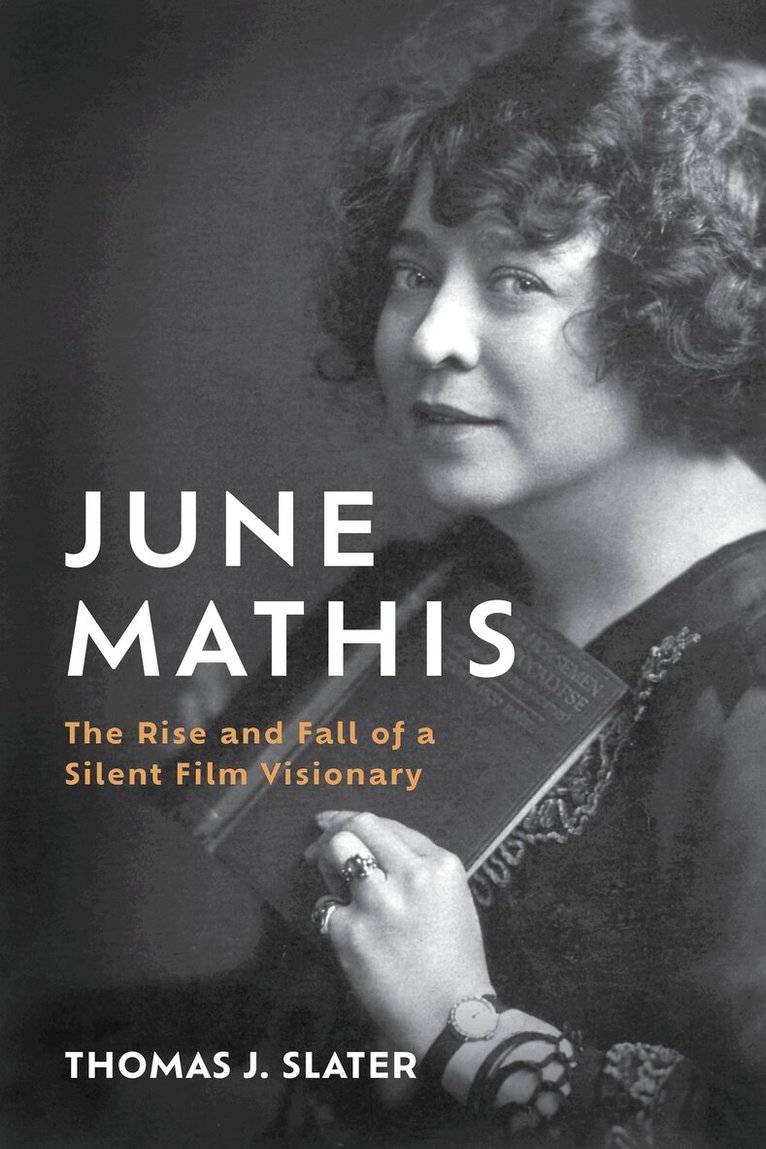
Along with thousands of other girls who hoped to escape tedious employment and domesticity, June Mathis (1887–1927) started acting as a young teen. After more than a decade of stepping onto stages across the US, she moved into the burgeoning film business and behind the camera to begin a prolific career as a screenwriter and producer for profound movies like The Four Horsemen of the Apocalypse (1921) and Blood and Sand (1922). With her expert use of melodrama and masterful technique, Mathis would eventually become the first female head writer at Metro Pictures._x000D_In June Mathis: The Rise and Fall of a Silent Film Visionary, Thomas J. Slater illuminates Mathis's important and complicated life and work, not only detailing her discovery of the silent movie superstar Rudolph Valentino and her involvement on the original screenplay for Ben-Hur (1925) but also her prowess in all aspects of production. Slater pulls from historical records as well as letters, never-before-studied scripts, and Mathis's handwritten will to build a robust narrative for someone who always had to struggle for success, even though Photoplay acknowledged her as "the most powerful woman in the motion picture industry" in 1923. Slater discusses Mathis's artistic and moral failings, as well as how her efforts—such as overlooked collaborations with writer Katharine Kavanaugh and actress Alla Nazimova—consistently challenged male dominance, militarism, and greed._x000D_Despite her talent and achievements, Mathis was pushed to the margins when the industry began removing women from spheres of influence. Following a few months of freelancing, she suffered a heart attack during a Broadway show and died at the age of forty. Very quickly, this woman whose ideas shaped American film for more than a decade was forgotten. June Mathis portrays the cinematic legacy of this "million-dollar girl" whose complex story ended too soon but remains relevant today.