Thomas K. Goldstick – författare
Visar alla böcker från författaren Thomas K. Goldstick. Handla med fri frakt och snabb leverans.
5 produkter
Oxygen Transport to Tissue XIII
Av Thomas K. Goldstick, Michael McCabe m. fl.
Häftad, 2012
551 kr
Lägg i varukorg
The International Societyon Oxygen Transport to Tissue (ISOTT) was founded in 1973 "to facilitate the exchange of scientific information among those interested in any aspect of the transport and/or utilization of oxygen in tissues". Its members span virtually all disciplines, extending from various …
Oxygen Transport to Tissue XIII
Av David J. Maguire, Michael McCabe m. fl.
E-bok, 2012
718 kr
Lägg i varukorg
The International Societyon Oxygen Transport to Tissue (ISOTT) was founded in 1973 "to facilitate the exchange of scientific information among those interested in any aspect of the transport and/or utilization of oxygen in tissues". Its members span virtually all disciplines, extending from various …
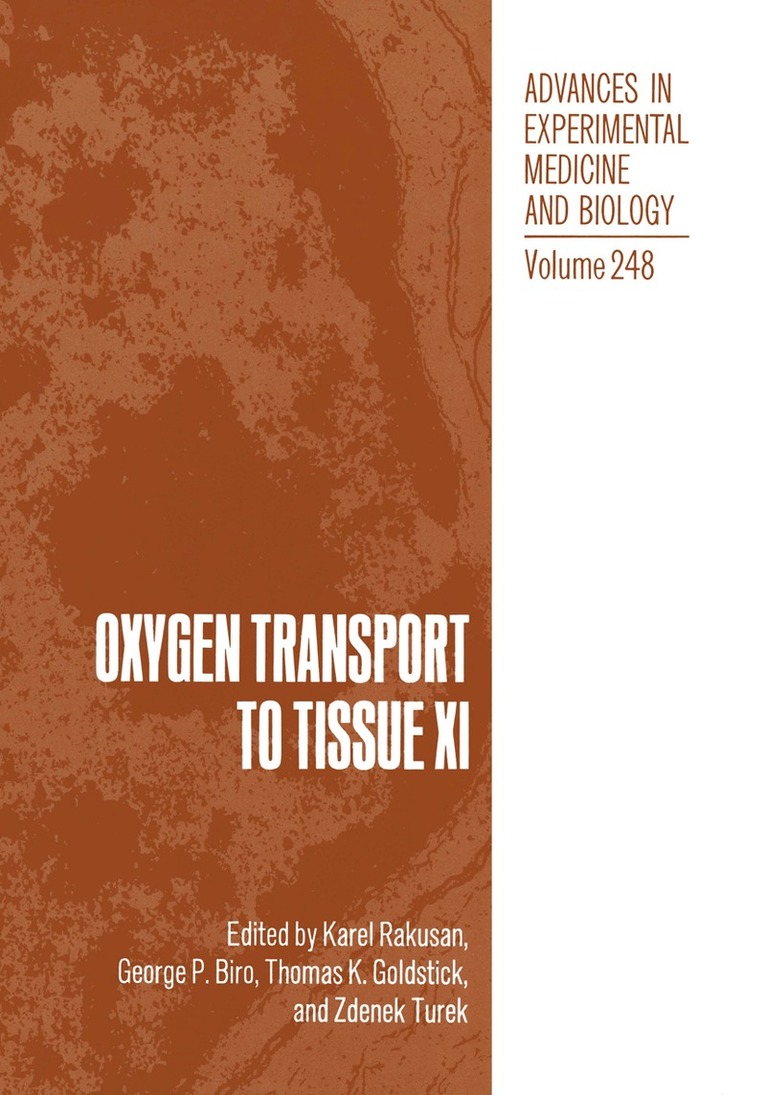
Oxygen Transport to Tissue XI
Av Thomas K. Goldstick, George P. Biro m. fl.
E-bok, 2012
734 kr
Lägg i varukorg
The Ottawa ''88 meeting of the International Society for Oxygen Transport to Tissue attracted a record number of participants and presentations. We were able to avoid simultaneous sessions and still keep the scientific program to four days by using poster sessions followed by plenary debate on each …
Oxygen Transport to Tissue XI
Av Karel Rakusan, George P. Biro m. fl.
Häftad, 2012
551 kr
Lägg i varukorg
The Ottawa '88 meeting of the International Society for Oxygen Transport to Tissue attracted a record number of participants and presentations. We were able to avoid simultaneous sessions and still keep the scientific program to four days by using poster sessions followed by plenary debate on each …