Thomas Karshan - Böcker
Visar alla böcker från författaren Thomas Karshan. Handla med fri frakt och snabb leverans.
4 produkter
4 produkter
145 kr
Skickas
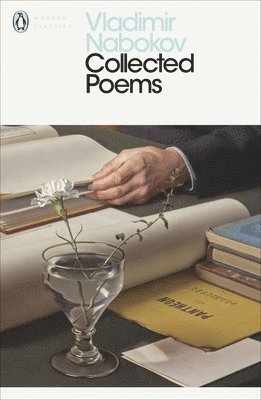
These masterly poems span the decades of Nabokov's career, from 'Music', written in 1914, to the short, playful 'To Vera', composed in 1974. 'The University Poem', one of Nabokov's major poetic works, is here in English for the first time: an extraordinary autobiographical poem looking back at his time at Cambridge, with its dinners, girls and memories, it is suffused with rich description, wit and verbal dexterity. Included too are the surreally comic 'A Literary Dinner', the enchanting, 'Eve', the wryly humorous 'An Evening of Russian Poetry' and a meditation on the act of creation, 'Tolstoy', as well as verse written on America, lepidoptery, sport, love and Nabokov's Russian homeland.
405 kr
Skickas inom 7-10 vardagar
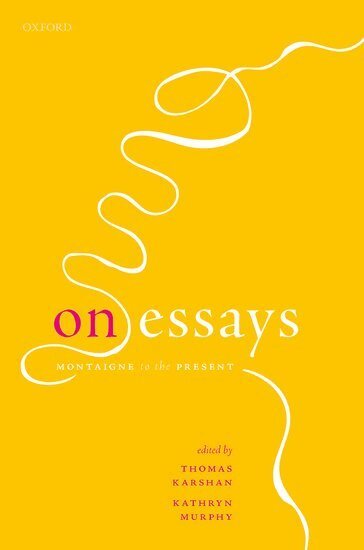
Montaigne called it a ramble; Chesterton the joke of literature; and Hume an ambassador between the worlds of learning and of conversation. But what is an essay, and how did it emerge as a literary form? What are the continuities and contradictions across its history, from Montaigne's 1580 Essais through the familiar intimacies of the Romantic essay, and up to more recent essayists such as Virginia Woolf, James Baldwin, and Claudia Rankine?Sometimes called the fourth genre, the essay has been over-shadowed in literary history by fiction, poetry, and drama, and has proved notoriously resistant to definition. On Essays reveals in the essay a pattern of paradox: at once a pedagogical tool and a refusal of the methodical languages of universities and professions; politically engaged but retired and independent; erudite and anti-pedantic; occasional and enduring; intimate and oratorical; allusive and idiosyncratic. Perhaps because it is a form of writing against which literary scholarship has defined itself, there has been surprisingly little work on the tradition of the essay. Neither a comprehensive history nor a student companion, On Essays is a series of seventeen elegantly written essays on authors and aspects in the history of the genre - essays which, taken together, form the most substantial book yet published on the essay in Britain and America.
1 800 kr
Skickas inom 5-8 vardagar
Montaigne called it a ramble; Chesterton the joke of literature; and Hume an ambassador between the worlds of learning and of conversation. But what is an essay, and how did it emerge as a literary form? What are the continuities and contradictions across its history, from Montaigne's 1580 Essais through the familiar intimacies of the Romantic essay, and up to more recent essayists such as Virginia Woolf, James Baldwin, and Claudia Rankine?Sometimes called the fourth genre, the essay has been over-shadowed in literary history by fiction, poetry, and drama, and has proved notoriously resistant to definition. On Essays reveals in the essay a pattern of paradox: at once a pedagogical tool and a refusal of the methodical languages of universities and professions; politically engaged but retired and independent; erudite and anti-pedantic; occasional and enduring; intimate and oratorical; allusive and idiosyncratic.Perhaps because it is a form of writing against which literary scholarship has defined itself, there has been surprisingly little work on the tradition of the essay. Neither a comprehensive history nor a student companion, On Essays is a series of seventeen elegantly written essays on authors and aspects in the history of the genre — essays which, taken together, form the most substantial book yet published on the essay in Britain and America.
1 820 kr
Skickas inom 5-8 vardagar
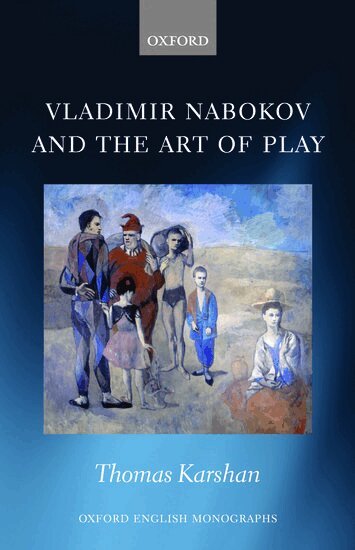
In a speech given in December 1925, Vladimir Nabokov declared that 'everything in the world plays', including 'love, nature, the arts, and domestic puns.' All of Nabokov's novels contain scenes of games: chess, scrabble, cards, football, croquet, tennis, and boxing, the play of light and the play of thought, the play of language, of forms, and of ideas, children's games, cruel games of exploitation, and erotic play. Thomas Karshan argues that play is Nabokov's signature theme, and that Nabokov's novels form one of the most sophisticated treatments of play ever achieved. He traces the idea of art as play back to German aesthetics, and shows how Nabokov's aesthetic outlook was formed by various Russian émigré writers who espoused those aesthetics. Karshan then follows Nabokov's exploration of play as subject and style through his whole oeuvre, outlining the relation of play to other important themes such as faith, make-believe, violence, freedom, order, work, Marxism, desire, childhood, art, and scholarship. As he does so, he demonstrates a series of new literary sources, contexts, and parallels for Nabokov's writing, in writers as diverse as Kant, Schiller, Nietzsche, Pushkin, Dostoyevsky, Bely, the Joyce of Finnegans Wake, Pope, and the humanist tradition of the literary game.Drawing in detail on Nabokov's untranslated early essays and poems, and on highly restricted archival material, Vladimir Nabokov and the Art of Play provides the fullest scholarly-critical reading of Nabokov to date, and defines the ludic aspect of his work that has been such a vital example for, and influence on, contemporary writers, from Orhan Pamuk, W. G. Sebald, and Georges Perec, to John Updike, Martin Amis, and Tom Stoppard. Through Nabokov, it addresses the literary game-playing that is one of the most distinctive elements in post-1945 literature.