Thomas M. Bohn - Böcker
Visar alla böcker från författaren Thomas M. Bohn. Handla med fri frakt och snabb leverans.
9 produkter
9 produkter
1 956 kr
Skickas inom 3-6 vardagar
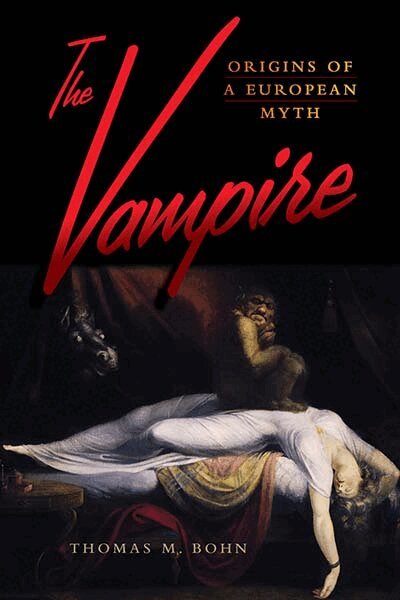
Even before Bram Stoker immortalized Transylvania as the homeland of his fictional Count Dracula, the figure of the vampire was inextricably tied to Eastern Europe in the popular imagination. Drawing on a wealth of heretofore neglected sources, this book offers a fascinating account of how vampires-whose various incarnations originally emerged from the folk traditions of societies throughout the world-became identified with such a specific region. It demonstrates that the modern conception of the vampire was born in the crucible of the Enlightenment, embodying a mysterious, Eastern "otherness" that stood opposed to Western rationality.
566 kr
Skickas inom 3-6 vardagar
Even before Bram Stoker immortalized Transylvania as the homeland of his fictional Count Dracula, the figure of the vampire was inextricably tied to Eastern Europe in the popular imagination.Drawing on a wealth of previously neglected sources, this book offers a fascinating account of how vampires—whose various incarnations originally emerged from folk traditions from all over the world—became so strongly identified with Eastern Europe. It demonstrates that the modern conception of the vampire was born in the crucible of the Enlightenment, embodying a mysterious, Eastern otherness that stood opposed to Western rationality.From the Prologue:From Original Sin to Eternal LifeFor a broad contemporary public, the vampire has become a star, a media sensation from Hollywood. Bestselling authors such as Bram Stoker, Anne Rice and Stephenie Meyer continue to fire the imaginations of young and old alike, and bloodsuckers have achieved immortality through films like Dracula, Interview with a Vampireand Twilight. It is no wonder that, in the teenage bedrooms of our globalized world, vampires even steal the show from Harry Potter. They have long since been assigned individual personalities and treated with sympathy. They may possess superhuman powers, but they are also burdened by their immortality and have to learn to come to terms with their craving for blood. Whereas the Southeast European vampire, discovered in the 1730s, underwent an Americanization and domestication in the media landscape of the twentieth century, the creole zombies that first became known through the cheap novels and horror films of the 1920s still continue to serve as brainless horror figures. Do bloodsuckers really exist and should we really be afraid of the dead? These are the questions that I seek to tackle, following the wishes of my daughter, who was ten when I started this project.
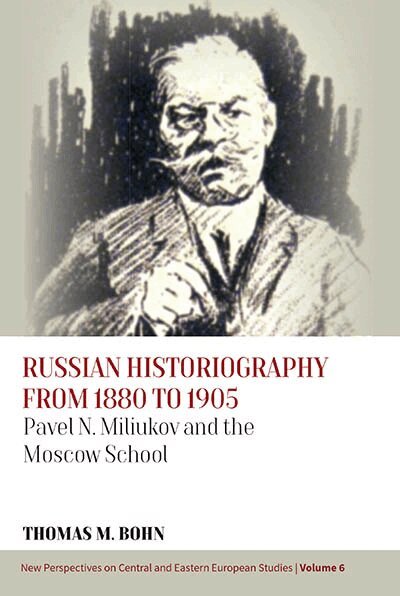
Russian Historiography from 1880 to 1905
Pavel N. Miliukov and the Moscow School
Inbunden, Engelska, 2024
2 605 kr
Skickas inom 3-6 vardagar
In Russian historiography, the Moscow School’s paradigm shift from political and legal history to social and economic history was markedly driven by Pavel Miliukov (1859-1943), the late leader of the Constitutional Democrats and foreign minister of the Provisional Government. Russian Historiography from 1880 to 1905 develops a narrative of historical sociology’s advancement through the Moscow School under Miliukov’s influence and provides a window into his decision making as a political figure who based his leadership not on public opinion but on the effectiveness of historical processes.
Minsk - Musterstadt Des Sozialismus: Stadtplanung Und Urbanisierung in Der Sowjetunion Nach 1945
Inbunden, Tyska
718 kr
Skickas inom 3-6 vardagar
365 kr
Skickas inom 3-6 vardagar
Wisent-Wildnis und Welterbe
Geschichte des polnisch-weißrussischen Nationalparks von Bialowieza
Inbunden, Tyska, 2017
725 kr
Skickas inom 11-20 vardagar
650 kr
Skickas inom 11-20 vardagar
Del 11 - Historische Belarus-Studien
Weissrussland Oder Belarus?: Die Weisse Russ in Historiographie Und Kartographie
Häftad, Tyska, 2025
375 kr
Skickas inom 3-6 vardagar
531 kr
Tillfälligt slut
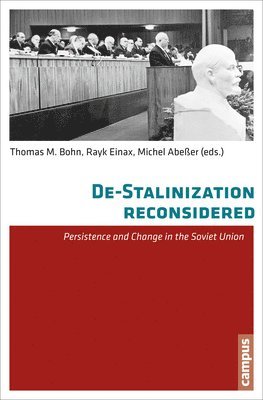
Joseph Stalin's death was a defining event in Soviet history. In its aftermath, the state was forced to reconceive its political, economic, social, and cultural identity. This volume critically engages with this period of de-Stalinization in the Soviet Union. It offers fresh perspectives not just on Scalinism, but also on questions of change and continuity in Soviet politics, modernization, and society more generally, moving broad-scale processes such as urbanization into the center of interpreting Soviet history. And in so doing, De-Stalinization Reconsidered makes clear that the Soviet history of the 1950s and '60s is crucial for understanding not only glasnost and perestroika, but contemporary Russia, as well.