Thomas R. H. Havens - Böcker
Visar alla böcker från författaren Thomas R. H. Havens. Handla med fri frakt och snabb leverans.
5 produkter
5 produkter
833 kr
Skickas inom 10-15 vardagar
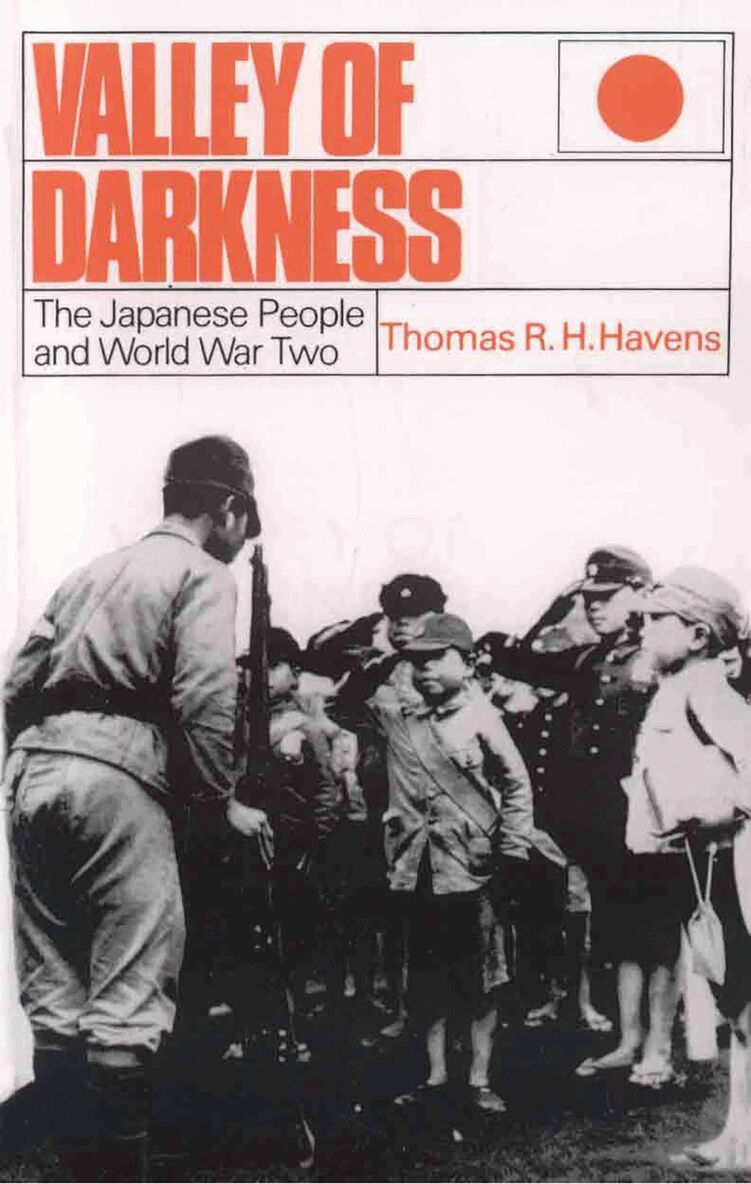
This volume portrays the daily life of ordinary Japanese civilians on the home front during World War Two. Drawing extensively on wartime records and early postwar recollections of people who lived through the war era, the book reveals a surprisingly cohesive society that bore up remarkably well. Originally published by W.W. Norton and Company in 1978.
Radicals and Realists in the Japanese Nonverbal Arts
The Avant-garde Rejection of Modernism
Inbunden, Engelska, 2006
502 kr
Skickas inom 10-15 vardagar
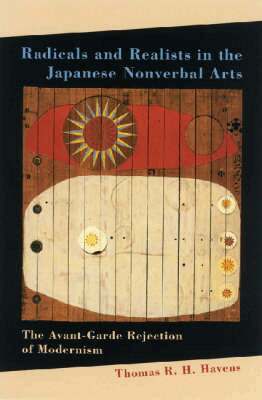
Radicals and Realists is the first book in any language to discuss Japan's avant-garde artists, their work, and the historical environment in which they produced it during the two most creative decades of the twentieth century, the 1950s and 1960s. After surveying censorship and arts policy during the American occupation of Japan (1945-1952), the narrative divides into two chronological sections dealing with the 1950s and 1960s, bisected by the rise of an artistic underground in Shinjuku and the security treaty crisis of May 1960.
538 kr
Skickas inom 7-10 vardagar
Japanese have been fervid long-distance runners for many centuries. Today, on a per capita basis, at least as many Japanese residents complete marathons each year as in the United States or any other country. Marathon Japan is the first comprehensive English-language chronicle of the history of this important part of Japanese sports culture. It traces the development of distance racing beginning with the Stockholm Olympics of 1912, when the Japanese government used athletics, and above all the marathon, as a means to continue its late nineteenth-century project of winning the respect of Western countries and achieving parity with the world powers. The marathon soon became the first event in a Western-derived sport in which Japanese proved consistently superior to athletes from other countries. During the 1920s and 1930s, Japanese runners regularly produced the fastest times in the world, and twice in the period after World War Two - in the 1960s and late 1970s–1980s - Japanese men again dominated world marathoning. Japanese women likewise emerged as some of the world’s fastest in the 1990s and early 2000s. Meanwhile the general public took up distance running with enthusiasm, starting in the 1960s and continuing unabated today, symbolized most recently by massive open-entry marathons in Tokyo, Osaka, and other Japanese cities comparable in scale and challenge to major world races in Boston, New York, Chicago, London, and Berlin.In this book, Thomas Havens analyzes the origins, development, and significance of Japan’s century-long excellence in marathons and long-distance relays (ekiden), as well as the reasons for the explosive growth of distance racing among ordinary citizens in more recent decades. He reveals the key role of commercial media companies in promoting sports, especially marathons and ekidens, from the 1910s to today and explains how running became a consumer commodity beginning in the 1970s as Japanese society matured into an age of capitalistaffluence. What comes to light as well are the relentlessly nationalistic goals underlying government policies toward sports - above all marathons, where Japanese have been so successful - throughout the modern era. The public craze for distance racing, both watching and running, has created a shared citizenship of civic participation among young and old, male and female, persons of every social background and level of education. The combination of speedy elite athletes and huge numbers of general-citizen runners means that Japan today is truly a marathon nation.Marathon Japan will appeal to Japan specialists interested in modern cultural and social history. It will engage recreational runners in Japan and abroad as well as anyone interested in the history of sports.
874 kr
Skickas inom 7-10 vardagar
319 kr
Skickas inom 7-10 vardagar
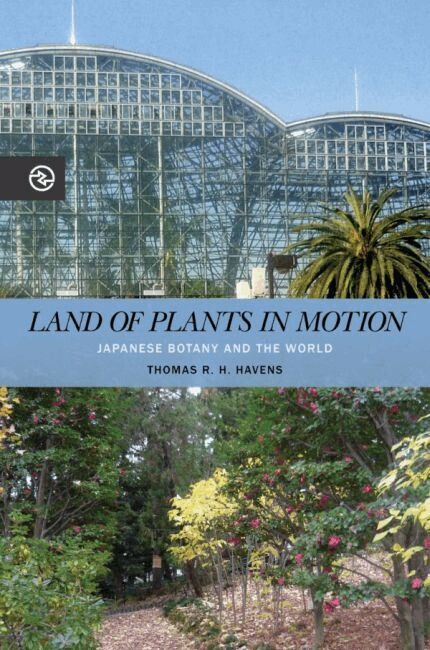
Land of Plants in Motion is the first in any language to examine two companion stories: (1) the rise of an East Asian floristic zone and how the Japanese islands evolved an astonishing wealth of plant species, and (2) the growth of Japanese botanical sciences.The majority of plant species regarded as ""Japanese"" trace their origins to western China and the eastern Himalaya but are so indigenized that they often seem native today. Early modern scientists in Japan drew on knowledge of Chinese herbal medicine but achieved distinctive insights into plant life commensurate with but separate from their European counterparts. Scholars at the University of Tokyo pioneered Japanese plant biology in the late nineteenth century. They incorporated Western botanical methods but sought a degree of difference in taxonomy while also gaining international legitimacy through publications in English. Japan's age of empire (1895-1945) was less about plant exploration and more about plant collection, for both scientific and economic benefits. Displays of species from throughout the empire made Japan's sphere of colonization and conquest visible at home. The infrastructure for research and instruction expanded slowly after World War Two: new laboratories, botanical gardens, scholarly societies, and publications eventually allowed for great diversity of specialized study, especially with the growth of molecular biology in the 1970s and DNA research in the 1980s. Basic research was harmed by cuts in government funding during 2012-2017, but Japanese plant biologists continue to enjoy international esteem in many fields of scholarship.