Thomas W. Busch - Böcker
Visar alla böcker från författaren Thomas W. Busch. Handla med fri frakt och snabb leverans.
2 produkter
2 produkter
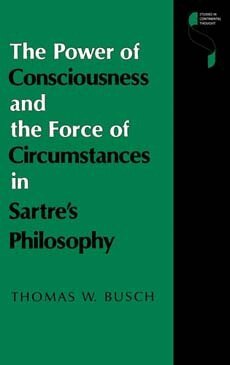
Power of Consciousness and the Force of Circumstances in Sartre's Philosophy
Inbunden, Engelska, 1989
274 kr
Skickas inom 10-15 vardagar
"Displaying a masterful grasp of the texts, the author shows how otherness forces itself upon the existentialist Sartre, gradually constraining him to modify his understanding of consciousness as omnipotent. The issue is Sartre's discovery of the social and its conceptual assimilation into his individualistic, consciousness-oriented philosophy." —Thomas R. Flynn"This very successful and accessible scholarly book . . . is simultaneously a succinct and clear overview of Sartre's philosophical works. . . . and a fresh consideration of Sartre's body of work." —Choice"Busch's admirably clear and compact discussion is essential reading for Sartre scholars, since it powerfully addresses many issues dividing them . . . " —Ethics" . . . a useful overview of the evolution of Sartre's thought . . . " —Review of Politics" . . . a thought provoking reassessment of Sartre's philosophical career." —Man and World" . . . succinct, richly documented survey . . . " —International Studies in Philosophy
353 kr
Skickas inom 7-10 vardagar
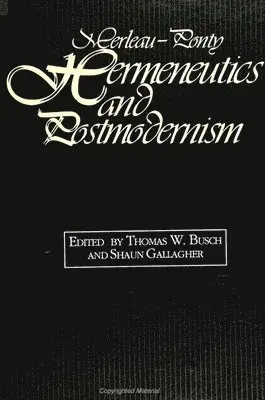
Opens up new dimensions in the philosophical thought of Merleau-Ponty and addresses contemporary issues concerning interpretation theory and postmodernity.This book opens up new dimensions in the philosophical thought of Merleau-Ponty and addresses contemporary issues concerning interpretation theory and postmodernity. In Part I the authors employ the texts of Merleau-Ponty to challenge many of assumptions that operate in the current field of hermeneutics. They find in Merleau-Ponty the outline of a hermeneutics of ambiguity that incorporates his accounts of the human body, language, and temporality in working out the concepts of interpretation, context, perspective, truth, and interpersonal transgression. Merleau-Ponty thus enters into a productive dialogue with contemporary thinkers such as Gadamer, Ricoeur, Habermas, Levinas, and Derrida.Part II engages Merleau-Ponty with the "many voices" of postmodernism. Some of the most able Merleau-Ponty interpreters reveal the richness of his work through variant readings. Can Merleau-Ponty be construed as a postmodern thinker, or as a critic of postmodernism? To what extent can the concepts of flesh, reversibility, and ecart be made to function as deconstructive non-concepts? What can Merleau-Ponty contribute toward a postmodern politics? These essays move the discussion from Derrida to Deleuze, Foucault, and Lyotard.