
Tim Mulgan – författare
Visar alla böcker från författaren . Handla med fri frakt och snabb leverans.
19 produkter
19 produkter
E-bok
PDF, Engelska, 2015437 kr
Läs direkt efter köp
Two familiar worldviews dominate Western philosophy: materialist atheism and the benevolent God of the Abrahamic faiths. Tim Mulgan explores a third way. Ananthropocentric Purposivism claims that there is a cosmic purpose, but human beings are irrelevant to it. Purpose in the Universe develops a philosophical case for Ananthropocentric Purposivism that it is at least as strong as the case for either theism or atheism. The book borrows traditional theist arguments to defend a cosmic purpose. These include cosmological, teleological, ontological, meta-ethical, and mystical arguments. It then borrows traditional atheist arguments to reject a human-centred purpose. These include arguments based on evil, diversity, and the scale of the universe. Mulgan also highlights connections between morality and metaphysics, arguing that evaluative premises play a crucial and underappreciated role in metaphysical debates about the existence of God, and Ananthropocentric Purposivism mutually supports an austere consequentialist morality based on objective values. He concludes that, by drawing on a range of secular and religious ethical traditions, a non-human-centred cosmic purpose can ground a distinctive human morality. Our moral practices, our view of the moral universe, and our moral theory are all transformed if we shift from the familiar choice between a universe without meaning and a universe where humans matter to the less self-aggrandising thought that, while it is about something, the universe is not about us.
E-bok
Engelska, 2015437 kr
Läs direkt efter köp
Two familiar worldviews dominate Western philosophy: materialist atheism and the benevolent God of the Abrahamic faiths. Tim Mulgan explores a third way. Ananthropocentric Purposivism claims that there is a cosmic purpose, but human beings are irrelevant to it. Purpose in the Universe develops a philosophical case for Ananthropocentric Purposivism that it is at least as strong as the case for either theism or atheism. The book borrows traditional theist arguments to defend a cosmic purpose. These include cosmological, teleological, ontological, meta-ethical, and mystical arguments. It then borrows traditional atheist arguments to reject a human-centred purpose. These include arguments based on evil, diversity, and the scale of the universe. Mulgan also highlights connections between morality and metaphysics, arguing that evaluative premises play a crucial and underappreciated role in metaphysical debates about the existence of God, and Ananthropocentric Purposivism mutually supports an austere consequentialist morality based on objective values. He concludes that, by drawing on a range of secular and religious ethical traditions, a non-human-centred cosmic purpose can ground a distinctive human morality. Our moral practices, our view of the moral universe, and our moral theory are all transformed if we shift from the familiar choice between a universe without meaning and a universe where humans matter to the less self-aggrandising thought that, while it is about something, the universe is not about us.
E-bok
PDF, Engelska, 2006475 kr
Läs direkt efter köp
What do we owe to our descendants? How do we balance their needs against our own? Tim Mulgan develops a new theory of our obligations to future generations, based on a new rule-consequentialist account of the morality of individual reproduction. He argues that the resulting theory accounts for a wide range of independently plausible intuitions - covering individual morality, intergenerational justice, and international justice. In particular, the moderateconsequentialist approach is superior to its two main rivals in this area - person-affecting theories and traditional consequentialism. The former fall foul of Parfit''s Non-Identity Problem, while the latter are invariably implausibly demanding. Mulgan also claims that most puzzles in contemporary value theory(such as Parfit''s Repugnant Conclusion) are actually puzzles in the theory of right action, and can only be solved if we abandon strict consequentialism for a more moderate alternative.The heart of the book is the first systematic exploration of the rule-consequentialist account of the morality of individual reproduction. Mulgan demostrates that this account is superior to all available alternatives, both consequentialist and non-consequentialist. Once we recognise the intergenerational dimension, moral and political philosophy cannot be considered in isolation. The latter must be founded on the former. Rule consequentialism provides the best foundation for a theory ofintergenerational justice.Future People brings together several different contemporary philosophical discussions: obligations to future generations, the morality of individual reproduction, the demands of morality, and international justice. While the focus is on developing a new account, there are also substantial discussions of alternative views, especially contract-based accounts of intergenerational justice and competing forms of consequentialism.
E-bok
PDF, Engelska, 20241 127 kr
Läs direkt efter köp
Tim Mulgan introduces a new thought experiment: the world will end in two hundred years, and humanity faces imminent and unavoidable (but not immediate) extinction. This book presents imaginary philosophical debates and lectures within this slowly ending world. The Ending World is both a provocative thought experiment and a challenging possible future. Exploring it from within - adopting the perspective of philosophers living in that ending world - helps us to imagine this world from the inside, to evaluate it as a possible future, to discover what we owe to future people who might inhabit such a future, and to explore how we might justify ourselves to them. The book explores contemporary debates about pessimism, the meaning of life, the existence of God, the purpose of the universe, the permissibility of creating new people, the need to connect with past and future people, the rectification of historical injustice, the design of utopias, and the desirability of escaping into virtual realities. It draws on a wide range of work in contemporary philosophy - including Samuel Scheffler''s discussions of human extinction, Jonathan Lear''s exploration of radical hope, David Benatar''s anti-natalism, work on procreative ethics by Rivka Weinberg, Melinda Roberts, and Elizabeth Harman, and the author''s own previous work on collective consequentialism, future ethics, and alternative conceptions of divine purpose.A central question throughout the book is whether we could equip our descendants to flourish in an ending world, even if we cannot imagine flourishing there ourselves. The book defends an innovative account of our obligations to future people, based on the need to launch multigenerational projects to transform our inherited traditions and values so that they will still make sense even at humanity''s end.
E-bok
Engelska, 20241 127 kr
Läs direkt efter köp
Tim Mulgan introduces a new thought experiment: the world will end in two hundred years, and humanity faces imminent and unavoidable (but not immediate) extinction. This book presents imaginary philosophical debates and lectures within this slowly ending world. The Ending World is both a provocative thought experiment and a challenging possible future. Exploring it from within - adopting the perspective of philosophers living in that ending world - helps us to imagine this world from the inside, to evaluate it as a possible future, to discover what we owe to future people who might inhabit such a future, and to explore how we might justify ourselves to them. The book explores contemporary debates about pessimism, the meaning of life, the existence of God, the purpose of the universe, the permissibility of creating new people, the need to connect with past and future people, the rectification of historical injustice, the design of utopias, and the desirability of escaping into virtual realities. It draws on a wide range of work in contemporary philosophy - including Samuel Scheffler''s discussions of human extinction, Jonathan Lear''s exploration of radical hope, David Benatar''s anti-natalism, work on procreative ethics by Rivka Weinberg, Melinda Roberts, and Elizabeth Harman, and the author''s own previous work on collective consequentialism, future ethics, and alternative conceptions of divine purpose.A central question throughout the book is whether we could equip our descendants to flourish in an ending world, even if we cannot imagine flourishing there ourselves. The book defends an innovative account of our obligations to future people, based on the need to launch multigenerational projects to transform our inherited traditions and values so that they will still make sense even at humanity''s end.
Inbunden, Engelska, 2024
1 170 kr
Skickas inom 5-8 vardagar
Tim Mulgan introduces a new thought experiment: the world will end in two hundred years, and humanity faces imminent and unavoidable (but not immediate) extinction. This book presents imaginary philosophical debates and lectures within this slowly ending world. The Ending World is both a provocative thought experiment and a challenging possible future. Exploring it from within - adopting the perspective of philosophers living in that ending world - helps us to imagine this world from the inside, to evaluate it as a possible future, to discover what we owe to future people who might inhabit such a future, and to explore how we might justify ourselves to them. The book explores contemporary debates about pessimism, the meaning of life, the existence of God, the purpose of the universe, the permissibility of creating new people, the need to connect with past and future people, the rectification of historical injustice, the design of utopias, and the desirability of escaping into virtual realities. It draws on a wide range of work in contemporary philosophy - including Samuel Scheffler's discussions of human extinction, Jonathan Lear's exploration of radical hope, David Benatar's anti-natalism, work on procreative ethics by Rivka Weinberg, Melinda Roberts, and Elizabeth Harman, and the author's own previous work on collective consequentialism, future ethics, and alternative conceptions of divine purpose.A central question throughout the book is whether we could equip our descendants to flourish in an ending world, even if we cannot imagine flourishing there ourselves. The book defends an innovative account of our obligations to future people, based on the need to launch multigenerational projects to transform our inherited traditions and values so that they will still make sense even at humanity's end.
Häftad, Engelska, 2019
734 kr
Skickas inom 3-6 vardagar
Two familiar worldviews dominate Western philosophy: materialist atheism and the benevolent God of the Abrahamic faiths. Tim Mulgan explores a third way. Ananthropocentric Purposivism claims that there is a cosmic purpose, but human beings are irrelevant to it. Purpose in the Universe develops a philosophical case for Ananthropocentric Purposivism that it is at least as strong as the case for either theism or atheism. The book borrows traditional theist arguments to defend a cosmic purpose. These include cosmological, teleological, ontological, meta-ethical, and mystical arguments. It then borrows traditional atheist arguments to reject a human-centred purpose. These include arguments based on evil, diversity, and the scale of the universe. Mulgan also highlights connections between morality and metaphysics, arguing that evaluative premises play a crucial and underappreciated role in metaphysical debates about the existence of God, and Ananthropocentric Purposivism mutually supports an austere consequentialist morality based on objective values. He concludes that, by drawing on a range of secular and religious ethical traditions, a non-human-centred cosmic purpose can ground a distinctive human morality. Our moral practices, our view of the moral universe, and our moral theory are all transformed if we shift from the familiar choice between a universe without meaning and a universe where humans matter to the less self-aggrandising thought that, while it is about something, the universe is not about us.
Inbunden, Engelska, 2006
2 106 kr
Skickas inom 5-8 vardagar
What do we owe to our descendants? How do we balance their needs against our own? Tim Mulgan develops a new theory of our obligations to future generations, based on a new rule-consequentialist account of the morality of individual reproduction. He argues that the resulting theory accounts for a wide range of independently plausible intuitions - covering individual morality, intergenerational justice, and international justice. In particular, the moderate consequentialist approach is superior to its two main rivals in this area - person-affecting theories and traditional consequentialism. The former fall foul of Parfit's Non-Identity Problem, while the latter are invariably implausibly demanding. Mulgan also claims that most puzzles in contemporary value theory (such as Parfit's Repugnant Conclusion) are actually puzzles in the theory of right action, and can only be solved if we abandon strict consequentialism for a more moderate alternative.The heart of the book is the first systematic exploration of the rule-consequentialist account of the morality of individual reproduction. Mulgan demostrates that this account is superior to all available alternatives, both consequentialist and non-consequentialist. Once we recognise the intergenerational dimension, moral and political philosophy cannot be considered in isolation. The latter must be founded on the former. Rule consequentialism provides the best foundation for a theory of intergenerational justice.Future People brings together several different contemporary philosophical discussions: obligations to future generations, the morality of individual reproduction, the demands of morality, and international justice. While the focus is on developing a new account, there are also substantial discussions of alternative views, especially contract-based accounts of intergenerational justice and competing forms of consequentialism.
Häftad, Engelska, 2008
869 kr
Skickas inom 5-8 vardagar
What do we owe to our descendants? How do we balance their needs against our own? Tim Mulgan develops a new theory of our obligations to future generations, based on a new rule-consequentialist account of the morality of individual reproduction. He argues that the resulting theory accounts for a wide range of independently plausible intuitions - covering individual morality, intergenerational justice, and international justice. In particular, the moderate consequentialist approach is superior to its two main rivals in this area - person-affecting theories and traditional consequentialism. The former fall foul of Parfit's Non-Identity Problem, while the latter are invariably implausibly demanding. Mulgan also claims that most puzzles in contemporary value theory (such as Parfit's Repugnant Conclusion) are actually puzzles in the theory of right action, and can only be solved if we abandon strict consequentialism for a more moderate alternative.The heart of the book is the first systematic exploration of the rule-consequentialist account of the morality of individual reproduction. Mulgan demostrates that this account is superior to all available alternatives, both consequentialist and non-consequentialist. Once we recognise the intergenerational dimension, moral and political philosophy cannot be considered in isolation. The latter must be founded on the former. Rule consequentialism provides the best foundation for a theory of intergenerational justice.Future People brings together several different contemporary philosophical discussions: obligations to future generations, the morality of individual reproduction, the demands of morality, and international justice. While the focus is on developing a new account, there are also substantial discussions of alternative views, especially contract-based accounts of intergenerational justice and competing forms of consequentialism.
Inbunden, Engelska, 2015
2 141 kr
Skickas inom 3-6 vardagar
Two familiar worldviews dominate Western philosophy: materialist atheism and the benevolent God of the Abrahamic faiths. Tim Mulgan explores a third way. Ananthropocentric Purposivism claims that there is a cosmic purpose, but human beings are irrelevant to it. Purpose in the Universe develops a philosophical case for Ananthropocentric Purposivism that it is at least as strong as the case for either theism or atheism. The book borrows traditional theist arguments to defend a cosmic purpose. These include cosmological, teleological, ontological, meta-ethical, and mystical arguments. It then borrows traditional atheist arguments to reject a human-centred purpose. These include arguments based on evil, diversity, and the scale of the universe. Mulgan also highlights connections between morality and metaphysics, arguing that evaluative premises play a crucial and underappreciated role in metaphysical debates about the existence of God, and Ananthropocentric Purposivism mutually supports an austere consequentialist morality based on objective values. He concludes that, by drawing on a range of secular and religious ethical traditions, a non-human-centred cosmic purpose can ground a distinctive human morality. Our moral practices, our view of the moral universe, and our moral theory are all transformed if we shift from the familiar choice between a universe without meaning and a universe where humans matter to the less self-aggrandising thought that, while it is about something, the universe is not about us.
E-bok
Engelska, 2020285 kr
Läs direkt efter köp
Moral theories can be distinguished not only by the answers they give but also by the questions they ask. Utilitarianism''s central commitment is to the promotion of well-being, impartially considered. This commitment shapes utilitarianism in a number of ways. If scarce resources should be directed where they will best promote well-being, and if theoretical attention is a scarce resource, then moral theorists should focus on topics that are most important to the future promotion of well-being. A theme of this Element is that, as times change, the priorities (both practical and theoretical) of utilitarianism also change. Questions that were once theoretical curiosities move centre stage. And themes from earlier utilitarians that have become unfashionable may come to the fore again. Utilitarianism is a living tradition, not an abstract set of timeless principles or a purely historical artefact.
E-bok
PDF, Engelska, 2020285 kr
Läs direkt efter köp
Moral theories can be distinguished not only by the answers they give but also by the questions they ask. Utilitarianism''s central commitment is to the promotion of well-being, impartially considered. This commitment shapes utilitarianism in a number of ways. If scarce resources should be directed where they will best promote well-being, and if theoretical attention is a scarce resource, then moral theorists should focus on topics that are most important to the future promotion of well-being. A theme of this Element is that, as times change, the priorities (both practical and theoretical) of utilitarianism also change. Questions that were once theoretical curiosities move centre stage. And themes from earlier utilitarians that have become unfashionable may come to the fore again. Utilitarianism is a living tradition, not an abstract set of timeless principles or a purely historical artefact.
Häftad, Engelska, 2020
239 kr
Skickas inom 7-10 vardagar
Moral theories can be distinguished not only by the answers they give but also by the questions they ask. Utilitarianism's central commitment is to the promotion of well-being, impartially considered. This commitment shapes utilitarianism in a number of ways. If scarce resources should be directed where they will best promote well-being, and if theoretical attention is a scarce resource, then moral theorists should focus on topics that are most important to the future promotion of well-being. A theme of this Element is that, as times change, the priorities (both practical and theoretical) of utilitarianism also change. Questions that were once theoretical curiosities move centre stage. And themes from earlier utilitarians that have become unfashionable may come to the fore again. Utilitarianism is a living tradition, not an abstract set of timeless principles or a purely historical artefact.
E-bok
Engelska, 2014740 kr
Läs direkt efter köp
Utilitarianism - a philosophy based on the principle of the greatest happiness for the greatest number of people - has been hugely influential over the past two centuries. Beyond ethics or morality, utilitarian assumptions and arguments abound in modern economic and political life, especially in public policy. An understanding of utilitarianism is indeed essential to any understanding of contemporary society. "Understanding Utilitarianism" presents utilitarianism very much as a living tradition. The book begins with a summary of the classical utilitarianism of the eighteenth and nineteenth centuries. Subsequent chapters trace the development of the central themes of utilitarian thought over the twentieth century, covering such questions as: What is happiness? Is happiness the only valuable thing? Is utilitarianism about acts or rules or institutions? Is utilitarianism unjust, or implausibly demanding, or impractical? and Where might utilitarianism go in the future?
E-bok
PDF, Engelska, 2014740 kr
Läs direkt efter köp
Utilitarianism - a philosophy based on the principle of the greatest happiness for the greatest number of people - has been hugely influential over the past two centuries. Beyond ethics or morality, utilitarian assumptions and arguments abound in modern economic and political life, especially in public policy. An understanding of utilitarianism is indeed essential to any understanding of contemporary society. "Understanding Utilitarianism" presents utilitarianism very much as a living tradition. The book begins with a summary of the classical utilitarianism of the eighteenth and nineteenth centuries. Subsequent chapters trace the development of the central themes of utilitarian thought over the twentieth century, covering such questions as: What is happiness? Is happiness the only valuable thing? Is utilitarianism about acts or rules or institutions? Is utilitarianism unjust, or implausibly demanding, or impractical? and Where might utilitarianism go in the future?
E-bok
Engelska, 2014740 kr
Läs direkt efter köp
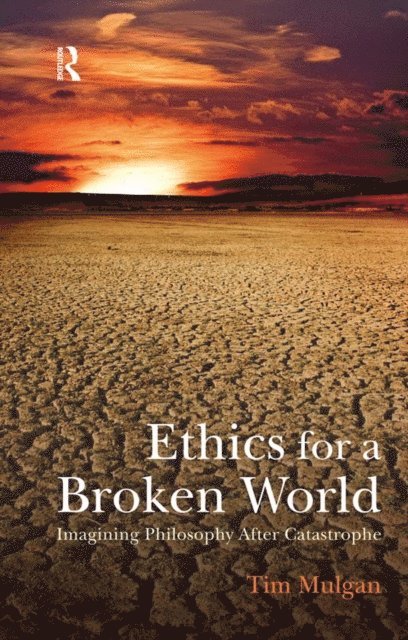
Imagine living in the future in a world already damaged by humankind, a world where resources are insufficient to meet everyone''s basic needs and where a chaotic climate makes life precarious. Then imagine looking back into the past, back to our own time and assessing the ethics of the early twenty-first century. "Ethics for a Broken World" imagines how the future might judge us and how living in a time of global environmental degradation might utterly reshape the politics and ethics of the future. This book is presented as a series of history of philosophy lectures given in the future, studying the classic texts from a past age of affluence, our own time. The central ethical questions of our time are shown to look very different from the perspective of a ruined world. The aim of "Ethics for a Broken" World is to look at our present with the benefit of hindsight - to reimagine contemporary philosophy in an historical context - and to highlight the contingency of our own moral and political ideals.
E-bok
PDF, Engelska, 2014740 kr
Läs direkt efter köp
Imagine living in the future in a world already damaged by humankind, a world where resources are insufficient to meet everyone''s basic needs and where a chaotic climate makes life precarious. Then imagine looking back into the past, back to our own time and assessing the ethics of the early twenty-first century. "Ethics for a Broken World" imagines how the future might judge us and how living in a time of global environmental degradation might utterly reshape the politics and ethics of the future. This book is presented as a series of history of philosophy lectures given in the future, studying the classic texts from a past age of affluence, our own time. The central ethical questions of our time are shown to look very different from the perspective of a ruined world. The aim of "Ethics for a Broken" World is to look at our present with the benefit of hindsight - to reimagine contemporary philosophy in an historical context - and to highlight the contingency of our own moral and political ideals.
Häftad, Engelska, 2007
620 kr
Skickas inom 10-15 vardagar
Utilitarianism - a philosophy based on the principle of the greatest happiness for the greatest number of people - has been hugely influential over the past two centuries. Beyond ethics or morality, utilitarian assumptions and arguments abound in modern economic and political life, especially in public policy. An understanding of utilitarianism is indeed essential to any understanding of contemporary society. "Understanding Utilitarianism" presents utilitarianism very much as a living tradition. The book begins with a summary of the classical utilitarianism of the eighteenth and nineteenth centuries. Subsequent chapters trace the development of the central themes of utilitarian thought over the twentieth century, covering such questions as: What is happiness? Is happiness the only valuable thing? Is utilitarianism about acts or rules or institutions? Is utilitarianism unjust, or implausibly demanding, or impractical? and Where might utilitarianism go in the future?
Häftad, Engelska, 2011
620 kr
Skickas inom 10-15 vardagar
Imagine living in the future in a world already damaged by humankind, a world where resources are insufficient to meet everyone's basic needs and where a chaotic climate makes life precarious. Then imagine looking back into the past, back to our own time and assessing the ethics of the early twenty-first century. "Ethics for a Broken World" imagines how the future might judge us and how living in a time of global environmental degradation might utterly reshape the politics and ethics of the future. This book is presented as a series of history of philosophy lectures given in the future, studying the classic texts from a past age of affluence, our own time. The central ethical questions of our time are shown to look very different from the perspective of a ruined world. The aim of "Ethics for a Broken" World is to look at our present with the benefit of hindsight - to reimagine contemporary philosophy in an historical context - and to highlight the contingency of our own moral and political ideals.