Timothy B. Tyson – författare
Visar alla böcker från författaren . Handla med fri frakt och snabb leverans.
12 produkter
12 produkter
Häftad, Engelska, 2018
110 kr
Skickas
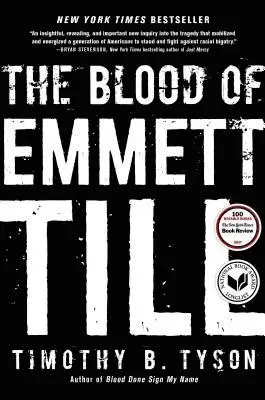
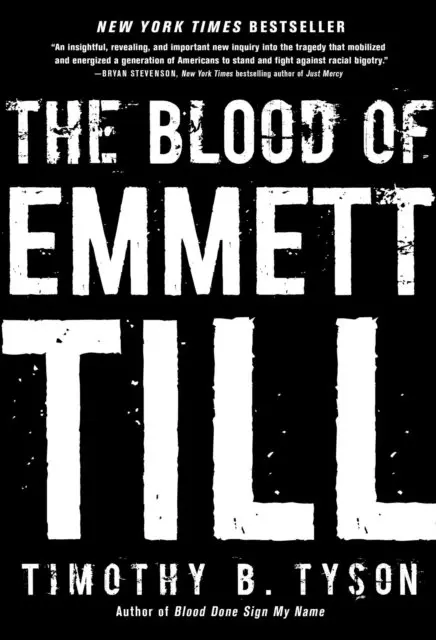
This extraordinary New York Times bestseller reexamines a pivotal event of the civil rights movement—the 1955 lynching of Emmett Till—“and demands that we do the one vital thing we aren’t often enough asked to do with history: learn from it” (The Atlantic). * A New York Times Notable Book * A Washington Post Notable Book * Longlisted for the National Book Award * Winner of the Robert F. Kennedy Book Award *An NPR, Los Angeles Times, and Atlanta Journal-Constitution Best Book of the Year *In 1955, white men in the Mississippi Delta lynched a fourteen-year-old from Chicago named Emmett Till. His murder was part of a wave of white terrorism in the wake of the 1954 Supreme Court decision that declared public school segregation unconstitutional. Only weeks later, Rosa Parks thought about young Emmett as she refused to move to the back of a city bus in Montgomery, Alabama. Five years later, Black students who called themselves “the Emmett Till generation” launched sit-in campaigns that turned the struggle for civil rights into a mass movement. Till’s lynching became the most notorious hate crime in American history. But what actually happened to Emmett Till—not the icon of injustice, but the flesh-and-blood boy? Part detective story, part political history, The Blood of Emmett Till “unfolds like a movie” (The Atlanta Journal-Constitution), drawing on a wealth of new evidence, including a shocking admission of Till’s innocence from the woman in whose name he was killed. “Jolting and powerful” (The Washington Post), the book “provides fresh insight into the way race has informed and deformed our democratic institutions” (Diane McWhorter, Pulitzer Prize–winning author of Carry Me Home) and “calls us to the cause of justice today” (Rev. Dr. William J. Barber, II, president of the North Carolina NAACP).
E-bok
Engelska, 2007205 kr
Läs direkt efter köp
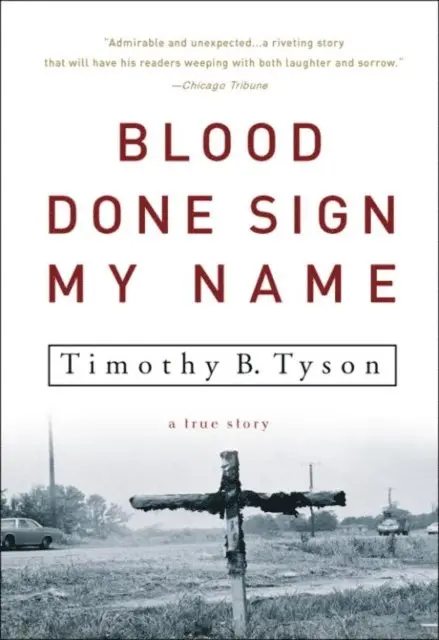
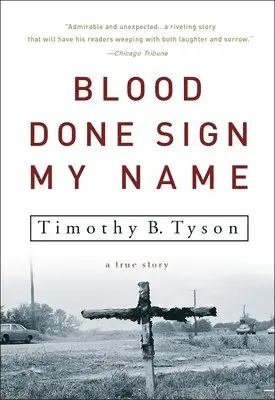
"Daddy and Roger and ''em shot ''em a nigger."Those words, whispered to ten-year-old Tim Tyson by one of his playmates in the late spring of 1970, heralded a firestorm that would forever transform the small tobacco market town of Oxford, North Carolina. On May 11, 1970, Henry Marrow, a 23-year-old black veteran, walked into a crossroads store owned by Robert Teel, a rough man with a criminal record and ties to the Ku Klux Klan, and came out running. Teel and two of his sons chased Marrow, beat him unmercifully, and killed him in public as he pleaded for his life. In the words of a local prosecutor: "They shot him like you or I would kill a snake."Like many small Southern towns, Oxford had barely been touched by the civil rights movement. But in the wake of the killing, young African Americans took to the streets, led by 22-year-old Ben Chavis, a future president of the NAACP. As mass protests crowded the town square, a cluster of returning Vietnam veterans organized what one termed "a military operation." While lawyers battled in the courthouse that summer in a drama that one termed "a Perry Mason kind of thing," the Ku Klux Klan raged in the shadows and black veterans torched the town''s tobacco warehouses. With large sections of the town in flames, Tyson''s father, the pastor of Oxford''s all-white Methodist church, pressed his congregation to widen their vision of humanity and pushed the town to come to terms with its bloody racial history. In the end, however, the Tyson family was forced to move away.Years later, historian Tim Tyson returned to Oxford to ask Robert Teel why he and his sons had killed Henry Marrow. "That nigger committed suicide, coming in here wanting to four-letter-word my daughter-in-law," Teel explained. The black radicals who burned much of Oxford also told Tim their stories. "It was like we had a cash register up there at the pool hall, just ringing up how much money we done cost these white people," one of them explained. "We knew if we cost ''em enough goddamn money they was gonna start changing some things."In the tradition of To Kill a Mockingbird, Blood Done Sign My Name is a classic work of conscience, a defining portrait of a time and place that we will never forget. Tim Tyson''s riveting narrative of that fiery summer and one family''s struggle to build bridges in a time of destruction brings gritty blues truth, soaring gospel vision, and down-home humor to our complex history, where violence and faith, courage and evil, despair and hope all mingle to illuminate America''s enduring chasm of race.From the Hardcover edition.
Häftad, Engelska, 1998
266 kr
Skickas
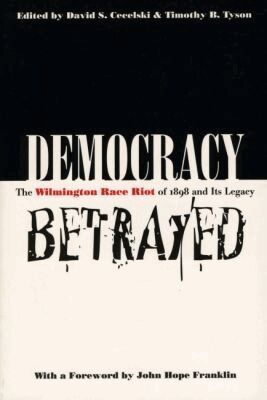
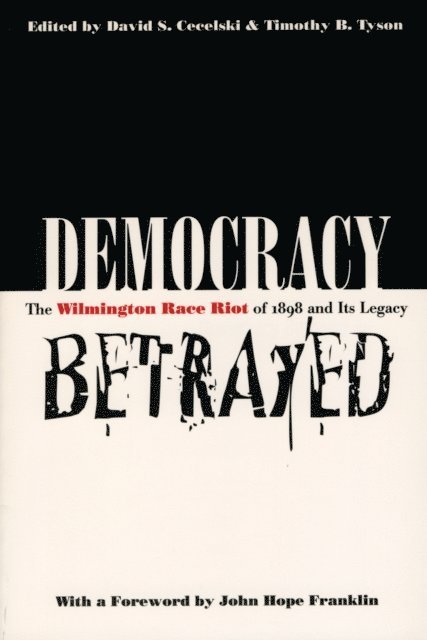
At the close of the nineteenth century, the Democratic Party in North Carolina engineered a white supremacy revolution. Frustrated by decades of African American self-assertion and threatened by an interracial coalition advocating democratic reforms, white conservatives used violence, demagoguery, and fraud to seize political power and disenfranchise black citizens. The most notorious episode of the campaign was the Wilmington ""race riot"" of 1898, which claimed the lives of many black residents and rolled back decades of progress for African Americans in the state. Published on the centennial of the Wilmington race riot, Democracy Betrayed draws together the best new scholarship on the events of 1898 and their aftermath. Contributors to this important book hope to draw public attention to the tragedy, to honor its victims, and to bring a clear and timely historical voice to the debate over its legacy. The contributors are David S. Cecelski, William H. Chafe, Laura F. Edwards, Raymond Gavins, Glenda E. Gilmore, John Haley, Michael Honey, Stephen Kantrowitz, H. Leon Prather Sr., Timothy B. Tyson, LeeAnn Whites, and Richard Yarborough. |Twelve essays on the Wilmington ""race riot"" of 1898--the most notorious episode of a white supremacy campaign in which white conservatives used violence, demagoguery, and fraud to seize political power and disenfranchise black citizens.
Häftad, Engelska, 2001
454 kr
Skickas inom 5-8 vardagar
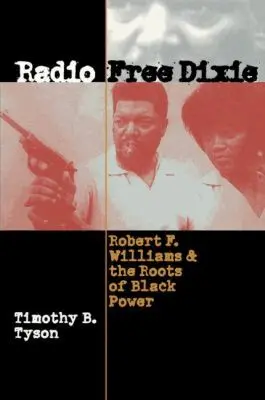
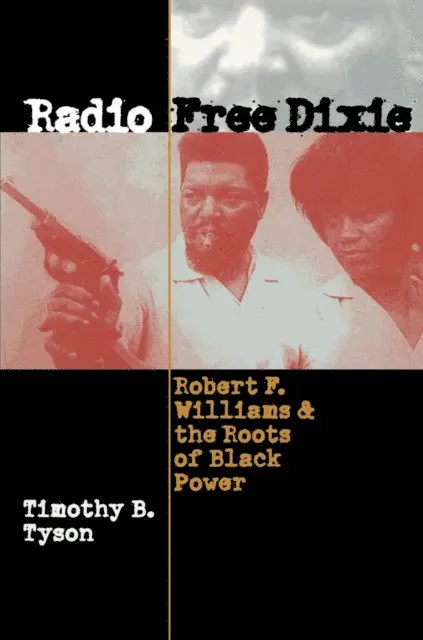
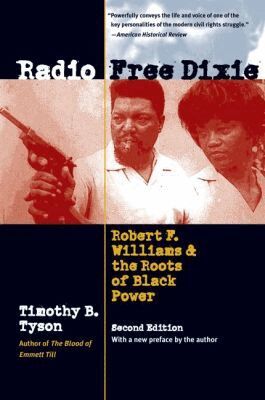
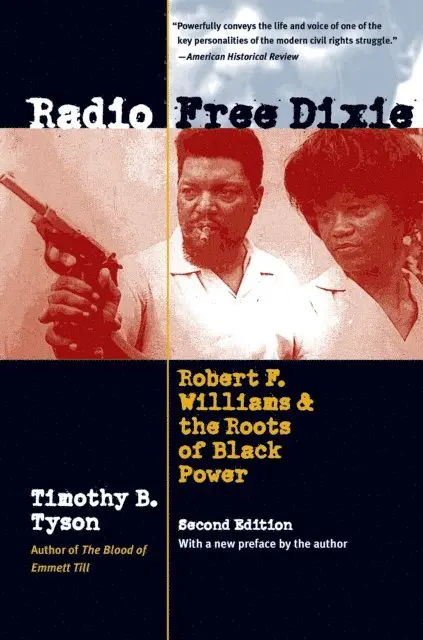
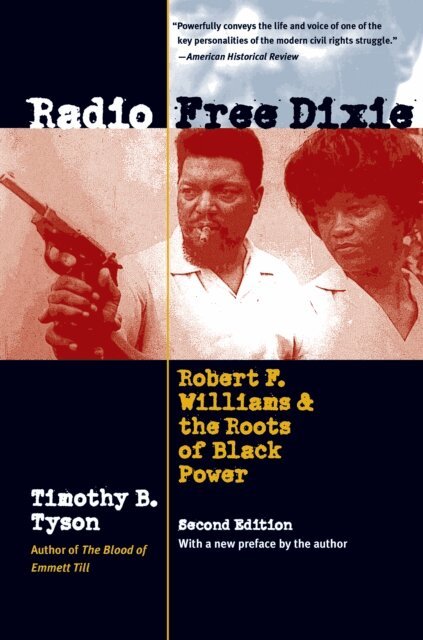
A gripping biography of a controversial black activist This biography tells the riveting story of Robert F. Williams (1925-1996). In the late 1950s, as president of the Monroe, North Carolina, NAACP, Williams organized armed resistan to KKK terrorists - in the process challenging not only white supremacists but also Martin Luther King Jr. and the civil rights movement. As Radio Free Dixie reveals, however, the civil rights movement and the Black Power movement grew out of the same soil, confronted the same predicaments, and were much closer than traditional portrayals suggest. In the civil rights - era South, independent black politics, black culture pride, and ""armed self-reliance"" operated in tension and in tandem with legal efforts and nonviolent protests in the quest for African American freedom.
E-bok
Engelska, 2000518 kr
Läs direkt efter köp
At the close of the nineteenth century, the Democratic Party in North Carolina engineered a white supremacy revolution. Frustrated by decades of African American self-assertion and threatened by an interracial coalition advocating democratic reforms, white conservatives used violence, demagoguery, and fraud to seize political power and disenfranchise black citizens. The most notorious episode of the campaign was the Wilmington “race riot” of 1898, which claimed the lives of many black residents and rolled back decades of progress for African Americans in the state.Published on the centennial of the Wilmington race riot, Democracy Betrayed draws together the best new scholarship on the events of 1898 and their aftermath. Contributors to this important book hope to draw public attention to the tragedy, to honor its victims, and to bring a clear and timely historical voice to the debate over its legacy.The contributors are David S. Cecelski, William H. Chafe, Laura F. Edwards, Raymond Gavins, Glenda E. Gilmore, John Haley, Michael Honey, Stephen Kantrowitz, H. Leon Prather Sr., Timothy B. Tyson, LeeAnn Whites, and Richard Yarborough.
E-bok
Engelska, 2009641 kr
Läs direkt efter köp
This book tells the remarkable story of Robert F. Williams--one of the most influential black activists of the generation that toppled Jim Crow and forever altered the arc of American history. In the late 1950s, as president of the Monroe, North Carolina, branch of the NAACP, Williams and his followers used machine guns, dynamite, and Molotov cocktails to confront Klan terrorists. Advocating "armed self-reliance" by blacks, Williams challenged not only white supremacists but also Martin Luther King Jr. and the civil rights establishment. Forced to flee during the 1960s to Cuba--where he broadcast "Radio Free Dixie," a program of black politics and music that could be heard as far away as Los Angeles and New York City--and then China, Williams remained a controversial figure for the rest of his life. Historians have customarily portrayed the civil rights movement as a nonviolent call on America''s conscience--and the subsequent rise of Black Power as a violent repudiation of the civil rights dream. But Radio Free Dixie reveals that both movements grew out of the same soil, confronted the same predicaments, and reflected the same quest for African American freedom. As Robert Williams''s story demonstrates, independent black political action, black cultural pride, and armed self-reliance operated in the South in tension and in tandem with legal efforts and nonviolent protest.
Inbunden, Engelska, 2026
348 kr
Kommande
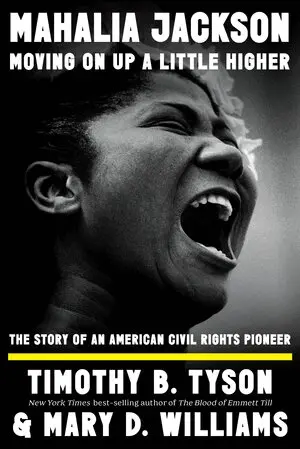
If we remember Mahalia Jackson, we know her as the greatest gospel singer to ever live. The New York Times best-selling author Timothy B. Tyson and acclaimed gospel singer Mary D. Williams, however, bring Jackson back to soaring life by restoring her status as a major civil rights figure. The authors trace Jackson’s career from bitter poverty in New Orleans to global superstardom, revealing how even after meteoric success, Jackson maintained an unwavering devotion to Black freedom. She worked for independent Black political power in the 1930s and 1940s; performed for the Montgomery Bus Boycott; sang in Birmingham and Selma; and performed at the March on Washington, where she prompted Martin Luther King Jr to “Tell ’em about the dream.” Weaving together Jackson’s inspiring life with her soulful music into one sonically transcendent text, this revisionist biography presents Mahalia Jackson as a guiding light for the Civil Rights Movement, whose message still resonates today.
Häftad, Engelska, 2005
253 kr
Skickas inom 3-6 vardagar
Häftad, Engelska, 2020
365 kr
Skickas inom 10-15 vardagar
This classic book tells the remarkable story of Robert F. Williams (1925-1996), one of the most influential black activists of the generation that toppled Jim Crow and forever altered the arc of American history. In the late 1950s, Williams, as president of the Monroe, North Carolina, branch of the NAACP, and his followers used machine guns, dynamite, and Molotov cocktails to confront Klan terrorists. Advocating ""armed self-reliance,"" Williams challenged not only white supremacists but also Martin Luther King Jr. and the civil rights establishment. Forced to flee during the 1960s to Cuba-where he broadcast ""Radio Free Dixie,"" a program of black politics and music that could be heard as far away as Los Angeles and New York City-and then to China, Williams remained a controversial figure for the rest of his life. Radio Free Dixie reveals that nonviolent civil rights protest and armed resistance movements grew out of the same soil, confronted the same predicaments, and reflected the same quest for African American freedom. As Robert Williams's story demonstrates, independent black political action, black cultural pride, and armed self-reliance operated in the South in tension and in tandem with legal efforts and nonviolent protest.
268 kr
Läs direkt efter köp
This classic book tells the remarkable story of Robert F. Williams (1925-1996), one of the most influential black activists of the generation that toppled Jim Crow and forever altered the arc of American history. In the late 1950s, Williams, as president of the Monroe, North Carolina, branch of the NAACP, and his followers used machine guns, dynamite, and Molotov cocktails to confront Klan terrorists. Advocating “armed self-reliance,” Williams challenged not only white supremacists but also Martin Luther King Jr. and the civil rights establishment. Forced to flee during the 1960s to Cuba — where he broadcast “Radio Free Dixie,” a program of black politics and music that could be heard as far away as Los Angeles and New York City — and then to China, Williams remained a controversial figure for the rest of his life. Radio Free Dixie reveals that nonviolent civil rights protest and armed resistance movements grew out of the same soil, confronted the same predicaments, and reflected the same quest for African American freedom. As Robert Williams’s story demonstrates, independent black political action, black cultural pride, and armed self-reliance operated in the South in tension and in tandem with legal efforts and nonviolent protest.
E-bok
Engelska, 201772 kr
Läs direkt efter köp
This extraordinary New York Times bestseller reexamines a pivotal event of the civil rights movement—the 1955 lynching of Emmett Till—“and demands that we do the one vital thing we aren’t often enough asked to do with history: learn from it” (The Atlantic). * A New York Times Notable Book * A Washington Post Notable Book * Longlisted for the National Book Award * Winner of the Robert F. Kennedy Book Award *An NPR, Los Angeles Times, and Atlanta Journal-Constitution Best Book of the Year *In 1955, white men in the Mississippi Delta lynched a fourteen-year-old from Chicago named Emmett Till. His murder was part of a wave of white terrorism in the wake of the 1954 Supreme Court decision that declared public school segregation unconstitutional. Only weeks later, Rosa Parks thought about young Emmett as she refused to move to the back of a city bus in Montgomery, Alabama. Five years later, Black students who called themselves “the Emmett Till generation” launched sit-in campaigns that turned the struggle for civil rights into a mass movement. Till’s lynching became the most notorious hate crime in American history. But what actually happened to Emmett Till—not the icon of injustice, but the flesh-and-blood boy? Part detective story, part political history, The Blood of Emmett Till “unfolds like a movie” (The Atlanta Journal-Constitution), drawing on a wealth of new evidence, including a shocking admission of Till’s innocence from the woman in whose name he was killed. “Jolting and powerful” (The Washington Post), the book “provides fresh insight into the way race has informed and deformed our democratic institutions” (Diane McWhorter, Pulitzer Prize–winning author of Carry Me Home) and “calls us to the cause of justice today” (Rev. Dr. William J. Barber, II, president of the North Carolina NAACP).
E-bok
PDF, Engelska, 2020286 kr
Läs direkt efter köp
This classic book tells the remarkable story of Robert F. Williams (1925-1996), one of the most influential black activists of the generation that toppled Jim Crow and forever altered the arc of American history. In the late 1950s, Williams, as president of the Monroe, North Carolina, branch of the NAACP, and his followers used machine guns, dynamite, and Molotov cocktails to confront Klan terrorists. Advocating “armed self-reliance,” Williams challenged not only white supremacists but also Martin Luther King Jr. and the civil rights establishment. Forced to flee during the 1960s to Cuba — where he broadcast “Radio Free Dixie,” a program of black politics and music that could be heard as far away as Los Angeles and New York City — and then to China, Williams remained a controversial figure for the rest of his life. Radio Free Dixie reveals that nonviolent civil rights protest and armed resistance movements grew out of the same soil, confronted the same predicaments, and reflected the same quest for African American freedom. As Robert Williams’s story demonstrates, independent black political action, black cultural pride, and armed self-reliance operated in the South in tension and in tandem with legal efforts and nonviolent protest.