Timothy Brittain-Catlin - Böcker
Visar alla böcker från författaren Timothy Brittain-Catlin. Handla med fri frakt och snabb leverans.
5 produkter
5 produkter
2 635 kr
Skickas inom 10-15 vardagar
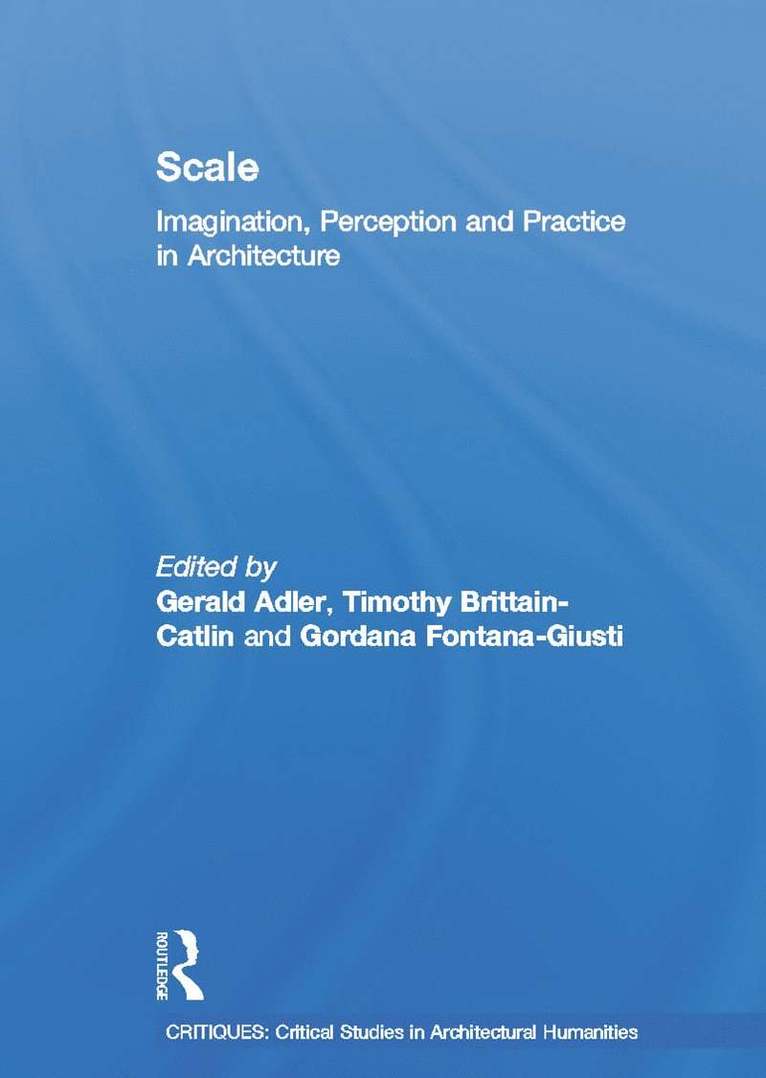
Scale is a word which underlies much of architectural and urban design practice, its history and theory, and its technology. Its connotations have traditionally been linked with the humanities, in the sense of relating to human societies and to human form. ‘To build in scale’ is an aspiration that is usually taken for granted by most of those involved in architectural production, as well as by members of the public; yet in a world where value systems of all kinds are being questioned, the term has come under renewed scrutiny. The older, more particular, meanings in the humanities, pertaining to classical Western culture, are where the sense of scale often resides in cultural production. Scale may be traced back, ultimately, to the discovery of musical harmonies, and in the arithmetic proportional relationship of the building to its parts. One might question the continued relevance of this understanding of scale in the global world of today. What, in other words, is culturally specific about scale? And what does scale mean in a world where an intuitive, visual understanding is often undermined or superseded by other senses, or by hyper-reality? Structured thematically in three parts, this book addresses various issues of scale. The book includes an introduction which sets the scene in terms of current architectural discourse and also contains a visual essay in each section. It is of interest to undergraduate and postgraduate students, academics and practitioners in architecture and architectural theory as well as to students in a range of other disciplines including art history and theory, geography, anthropology and landscape architecture.
775 kr
Skickas inom 10-15 vardagar
Scale is a word which underlies much of architectural and urban design practice, its history and theory, and its technology. Its connotations have traditionally been linked with the humanities, in the sense of relating to human societies and to human form. ‘To build in scale’ is an aspiration that is usually taken for granted by most of those involved in architectural production, as well as by members of the public; yet in a world where value systems of all kinds are being questioned, the term has come under renewed scrutiny. The older, more particular, meanings in the humanities, pertaining to classical Western culture, are where the sense of scale often resides in cultural production. Scale may be traced back, ultimately, to the discovery of musical harmonies, and in the arithmetic proportional relationship of the building to its parts. One might question the continued relevance of this understanding of scale in the global world of today. What, in other words, is culturally specific about scale? And what does scale mean in a world where an intuitive, visual understanding is often undermined or superseded by other senses, or by hyper-reality? Structured thematically in three parts, this book addresses various issues of scale. The book includes an introduction which sets the scene in terms of current architectural discourse and also contains a visual essay in each section. It is of interest to undergraduate and postgraduate students, academics and practitioners in architecture and architectural theory as well as to students in a range of other disciplines including art history and theory, geography, anthropology and landscape architecture.
445 kr
Skickas inom 7-10 vardagar
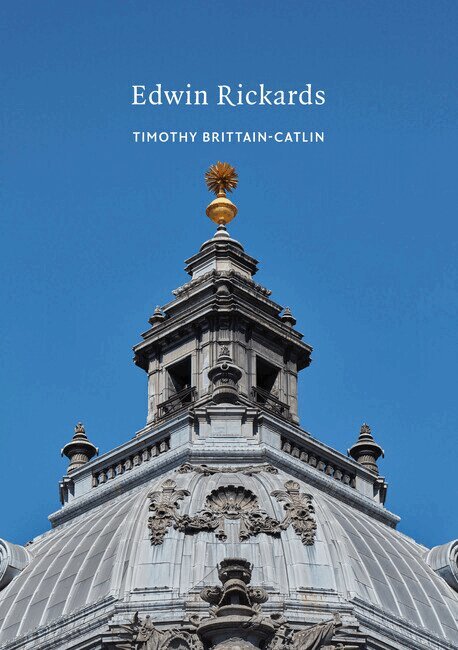
Edwin Rickards was the most flamboyant of Edwardian architects: his buildings were said by John Summerson to fizz like champagne. During a short working life, launched at the age of 25 by winning the competition to design Cardiff City Hall with his partners H.V. Lanchester and James Stewart, he completed four spectacular baroque buildings.Rickards’ work was unique in Edwardian architecture for his personal combination of French and especially Austrian sources. Working closely with H.C. Fehr and Henry Poole, leading practitioners of the New Sculpture, he designed two of the major monuments of the period. As well as being one of the best freehand draughtsmen in London, he was also a prodigious caricaturist. With a foot in the demi-monde and an endless appetite for architectural and personal adventure, Rickards was an unforgettable figure to everyone who met him.Illustrated throughout with stunning new photography by Robin Forster and by Rickards’ own sketches and drawings, this book portrays his close friendship with the novelist Arnold Bennett who described him, along with H.G Wells, as one of ‘the two most interesting, provocative, and stimulating men I have yet encountered’, and his meteoric career that ended with his early death.
554 kr
Skickas inom 5-8 vardagar
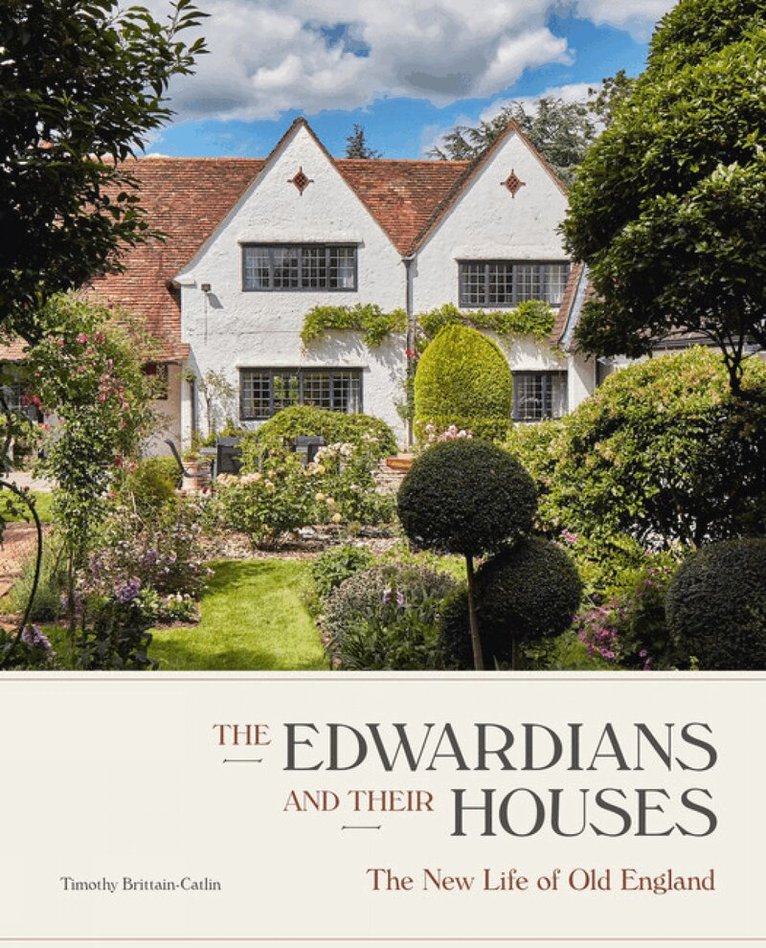
Edwardian domestic architecture was beautiful and varied in style, and was very often designed and built to an unprecedented level of sophistication. It was also astonishingly innovative, and provided new building types for weekends, sport and gardening, as well as fascinating insights into attitudes to historic architecture, health and science. This book is the first radical overview of the period since the 1970s, and focuses on how the leading circle of the Liberal Party, who built incessantly and at every scale, influenced the pattern of building across England. It also looks at the building literature of the period, from Country Life to the mass-production picture books for builders and villa builders, and traces the links between these houses and suburbs on the one hand, and the literature and other creative forms of the period on the other. It is part of a new movement to explore the ways in which architectural history is recorded and adds up to an original interpretation of British culture of the period.
328 kr
Skickas inom 7-10 vardagar
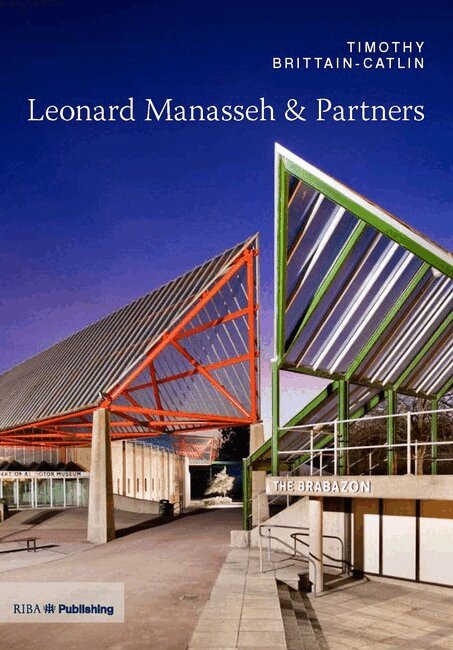
Leonard Manasseh was an ‘architect’s architect’, greatly admired by his contemporaries both on a personal and professional level. He came to prominence at the Festival of Britain and went on to be one of the leading British architects of the 1960s, designing private houses and offices as well as major public commissions. Timothy Brittain-Catlin, architect and architectural historian at the University of Kent, describes how the work of Leonard Manasseh and Partners expresses one of the central themes of the 1950s and 1960s – the apparent conflict between the architect as creative artist on one hand, and as rational technologist and scientist on the other. Leonard Manasseh and his partner Ian Baker were lauded for producing modernist designs that were in keeping with their historical settings or landscapes. Examples include industrial buildings in rural settings, a study for King’s Lynn, undertaken with architect-planner Elizabeth Chesterton, and the project that is most commonly associated with the practice, the National Motor Museum at Beaulieu.Lavishly illustrated with images from Manasseh’s private archive and stunning new photography, this book is an essential read for architects, students and enthusiasts for modernism wanting to learn more about a key practice in British post-war architecture.This book has been commissioned as part of a series of books on Twentieth Century Architects by RIBA Publishing, English Heritage and the Twentieth Century Society.