Timothy Michael Law – författare
Visar alla böcker från författaren Timothy Michael Law. Handla med fri frakt och snabb leverans.
9 produkter
9 produkter
E-bok
PDF, Engelska, 20212 035 kr
Läs direkt efter köp
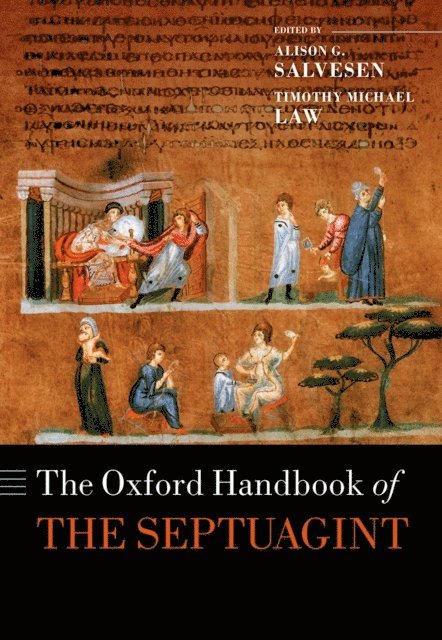
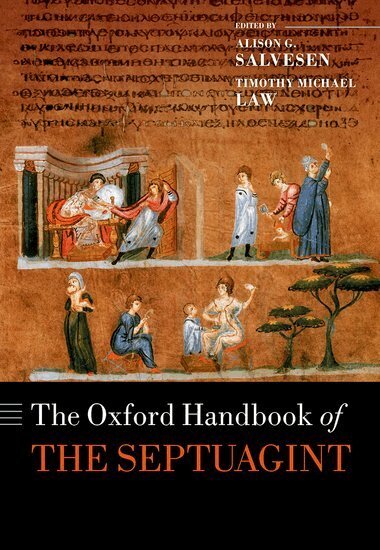
The Septuagint is the term commonly used to refer to the corpus of early Greek versions of Hebrew Scriptures. The collection is of immense importance in the history of both Judaism and Christianity. The renderings of individual books attest to the religious interests of the substantial Jewish population of Egypt during the Hellenistic and Roman periods, and to the development of the Greek language in its Koine phase. The narrative ascribing the Septuagint''s originsto the work of seventy translators in Alexandria attained legendary status among both Jews and Christians. The Septuagint was the version of Scripture most familiar to the writers of the New Testament, and became the authoritative Old Testament of the Greek and Latin Churches. In the early centuriesof Christianity it was itself translated into several other languages, and it has had a continuing influence on the style and content of biblical translations.The Oxford Handbook of the Septuagint features contributions from leading experts in the field considering the history and manuscript transmission of the version, and the study of translation technique and textual criticism. The collection provides surveys of previous and current research on individual books of the Septuagint corpus, on alternative Jewish Greek versions, the Christian ''daughter'' translations, and reception in early Jewish and Christian writers. The Handbookalso includes several conversations with related fields of interest such as New Testament studies, liturgy, and art history.
E-bok
Engelska, 20212 053 kr
Läs direkt efter köp
The Septuagint is the term commonly used to refer to the corpus of early Greek versions of Hebrew Scriptures. The collection is of immense importance in the history of both Judaism and Christianity. The renderings of individual books attest to the religious interests of the substantial Jewish population of Egypt during the Hellenistic and Roman periods, and to the development of the Greek language in its Koine phase. The narrative ascribing the Septuagint''s originsto the work of seventy translators in Alexandria attained legendary status among both Jews and Christians. The Septuagint was the version of Scripture most familiar to the writers of the New Testament, and became the authoritative Old Testament of the Greek and Latin Churches. In the early centuriesof Christianity it was itself translated into several other languages, and it has had a continuing influence on the style and content of biblical translations.The Oxford Handbook of the Septuagint features contributions from leading experts in the field considering the history and manuscript transmission of the version, and the study of translation technique and textual criticism. The collection provides surveys of previous and current research on individual books of the Septuagint corpus, on alternative Jewish Greek versions, the Christian ''daughter'' translations, and reception in early Jewish and Christian writers. The Handbookalso includes several conversations with related fields of interest such as New Testament studies, liturgy, and art history.
E-bok
Engelska, 2013413 kr
Läs direkt efter köp
How did the New Testament writers and the earliest Christians come to adopt the Jewish scriptures as their first Old Testament? And why are our modern Bibles related more to the Rabbinic Hebrew Bible than to the Greek Bible of the early Church?The Septuagint, the name given to the translation of the Hebrew scriptures between the third century BC and the second century AD, played a central role in the Bible''s history. Many of the Hebrew scriptures were still evolving when they were translated into Greek, and these Greek translations, along with several new Greek writings, became Holy Scripture in the early Church. Yet, gradually the Septuagint lost its place at the heart of Western Christianity. At the end of the fourth century, one of antiquity''s brightest minds rejected the Septuagint in favor of the Bible of the rabbis. After Jerome, the Septuagint never regained the position it once had. Timothy Michael Law recounts the story of the Septuagint''s origins, its relationship to the Hebrew Bible, and the adoption and abandonment of the first Christian Old Testament.
Inbunden, Engelska, 2021
2 190 kr
Skickas inom 5-8 vardagar
The Septuagint is the term commonly used to refer to the corpus of early Greek versions of Hebrew Scriptures. The collection is of immense importance in the history of both Judaism and Christianity. The renderings of individual books attest to the religious interests of the substantial Jewish population of Egypt during the Hellenistic and Roman periods, and to the development of the Greek language in its Koine phase. The narrative ascribing the Septuagint's origins to the work of seventy translators in Alexandria attained legendary status among both Jews and Christians. The Septuagint was the version of Scripture most familiar to the writers of the New Testament, and became the authoritative Old Testament of the Greek and Latin Churches. In the early centuries of Christianity it was itself translated into several other languages, and it has had a continuing influence on the style and content of biblical translations.The Oxford Handbook of the Septuagint features contributions from leading experts in the field considering the history and manuscript transmission of the version, and the study of translation technique and textual criticism. The collection provides surveys of previous and current research on individual books of the Septuagint corpus, on alternative Jewish Greek versions, the Christian 'daughter' translations, and reception in early Jewish and Christian writers. The Handbook also includes several conversations with related fields of interest such as New Testament studies, liturgy, and art history.
Inbunden, Engelska, 2013
1 904 kr
Skickas inom 5-8 vardagar
Most readers do not know about the Bible used almost universally by early Christians, or about how that Bible was birthed, how it grew to prominence, and how it differs from the one used as the basis for most modern translations. Although it was one of the most important events in the history of our civilization, the translation of the Hebrew Scriptures into Greek in the third century BCE is an event almost unknown outside of academia. Timothy Michael Law offers the first book to make this topic accessible to a wider audience.Retrospectively, we can hardly imagine the history of Christian thought, and the history of Christianity itself, without the Old Testament. When the Emperor Constantine adopted the Christian faith, his fusion of the Church and the State ensured that the Christian worldview (which by this time had absorbed Jewish ideals that had come to them through the Greek translation) would leave an imprint on subsequent history. This book narrates in a fresh and exciting way the story of the Septuagint, the Greek Scriptures of the ancient Jewish Diaspora that became the first Christian Old Testament.
Häftad, Engelska, 2013
381 kr
Skickas inom 5-8 vardagar
How did the New Testament writers and the earliest Christians come to adopt the Jewish scriptures as their first Old Testament? And why are our modern Bibles related more to the Rabbinic Hebrew Bible than to the Greek Bible of the early Church?The Septuagint, the name given to the translation of the Hebrew scriptures between the third century BC and the second century AD, played a central role in the Bible's history. Many of the Hebrew scriptures were still evolving when they were translated into Greek, and these Greek translations, along with several new Greek writings, became Holy Scripture in the early Church.Yet, gradually the Septuagint lost its place at the heart of Western Christianity. At the end of the fourth century, one of antiquity's brightest minds rejected the Septuagint in favor of the Bible of the rabbis. After Jerome, the Septuagint never regained the position it once had. Timothy Michael Law recounts the story of the Septuagint's origins, its relationship to the Hebrew Bible, and the adoption and abandonment of the first Christian Old Testament.
E-bok
PDF, Engelska, 2013413 kr
Läs direkt efter köp
How did the New Testament writers and the earliest Christians come to adopt the Jewish scriptures as their first Old Testament? And why are our modern Bibles related more to the Rabbinic Hebrew Bible than to the Greek Bible of the early Church?The Septuagint, the name given to the translation of the Hebrew scriptures between the third century BC and the second century AD, played a central role in the Bible''s history. Many of the Hebrew scriptures were still evolving when they were translated into Greek, and these Greek translations, along with several new Greek writings, became Holy Scripture in the early Church. Yet, gradually the Septuagint lost its place at the heart of Western Christianity. At the end of the fourth century, one of antiquity''s brightest minds rejected the Septuagint in favor of the Bible of the rabbis. After Jerome, the Septuagint never regained the position it once had. Timothy Michael Law recounts the story of the Septuagint''s origins, its relationship to the Hebrew Bible, and the adoption and abandonment of the first Christian Old Testament.
Inbunden, Engelska, 2011
2 197 kr
Skickas inom 11-20 vardagar
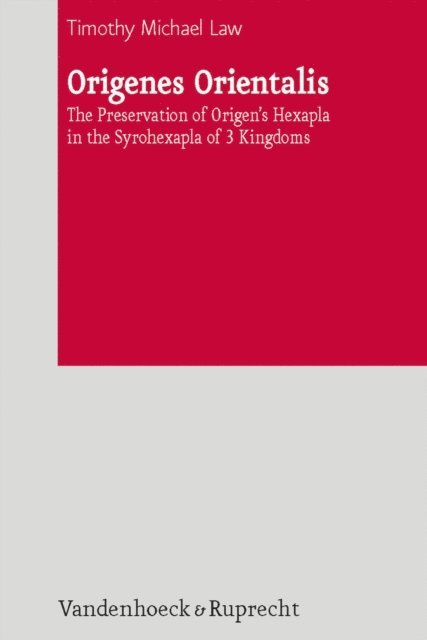
The Syrohexapla is widely believed to be a faithful witness to the Hexapla of Origen. This Syriac version was produced in the seventh century on the basis of Greek texts related to Origen's six-columned masterpiece of biblical scholarship. The signs used in Origen's Hexapla, as well as the readings of several Greek Jewish versions which are no longer fully extant, are preserved in this version. The present study evaluates the Syrohexapla as a witness to these hexaplaric materials in 3 Kingdoms (1 Kings).The nearly 600 signs preserved in the Syrohexapla are analysed, divided into correctly marked asterisks, correctly marked obeli, and inaccurately marked readings. The more than 300 readings attributed to the Greek Jewish versions are treated separately. Finally, by including a chapter which examines a portion of the many readings in the Syrohexapla for which no hexaplaric sign has been preserved, the author balances assessments of the reliability of the Syrohexapla for studying the remains of Origen's Hexapla.This study prepares the way for the author's new critical edition of the hexaplaric fragments of 3 Kingdoms.
E-bok
PDF, Engelska, 20111 610 kr
Läs direkt efter köp
The Syrohexapla is widely believed to be a faithful witness to the Hexapla of Origen. This Syriac version was produced in the seventh century on the basis of Greek texts related to Origen''s six-columned masterpiece of biblical scholarship. The signs used in Origen''s Hexapla, as well as the readings of several Greek Jewish versions which are no longer fully extant, are preserved in this version. The present study evaluates the Syrohexapla as a witness to these hexaplaric materials in 3 Kingdoms (1 Kings).The nearly 600 signs preserved in the Syrohexapla are analysed, divided into correctly marked asterisks, correctly marked obeli, and inaccurately marked readings. The more than 300 readings attributed to the Greek Jewish versions are treated separately. Finally, by including a chapter which examines a portion of the many readings in the Syrohexapla for which no hexaplaric sign has been preserved, the author balances assessments of the reliability of the Syrohexapla for studying the remains of Origen''s Hexapla.This study prepares the way for the author''s new critical edition of the hexaplaric fragments of 3 Kingdoms.