Timothy Pachirat - Böcker
Visar alla böcker från författaren Timothy Pachirat. Handla med fri frakt och snabb leverans.
3 produkter
3 produkter
248 kr
Skickas inom 7-10 vardagar
A political scientist goes undercover in a modern industrial slaughterhouse for this twenty-first-century update of Upton Sinclair’s The JungleThis is an account of industrialized killing from a participant’s point of view. The author, political scientist Timothy Pachirat, was employed undercover for five months in a Great Plains slaughterhouse where 2,500 cattle were killed per day—one every twelve seconds. Working in the cooler as a liver hanger, in the chutes as a cattle driver, and on the kill floor as a food-safety quality-control worker, Pachirat experienced firsthand the realities of the work of killing in modern society. He uses those experiences to explore not only the slaughter industry but also how, as a society, we facilitate violent labor and hide away that which is too repugnant to contemplate.Through his vivid narrative and ethnographic approach, Pachirat brings to life massive, routine killing from the perspective of those who take part in it. He shows how surveillance and sequestration operate within the slaughterhouse and in its interactions with the community at large. He also considers how society is organized to distance and hide uncomfortable realities from view. With much to say about issues ranging from the sociology of violence and modern food production to animal rights and welfare, Every Twelve Seconds is an important and disturbing work.
2 088 kr
Skickas inom 10-15 vardagar
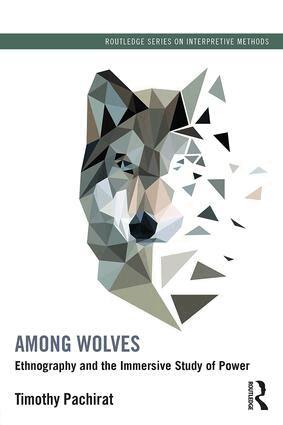
Summoned by an anonymous Prosecutor, ten contemporary ethnographers gather in an aging barn to hold a trial of Alice Goffman’s controversial ethnography, On the Run. But before the trial can get underway, a one-eyed wolfdog arrives with a mysterious liquid potion capable of rendering the ethnographers invisible in their fieldsites. Presented as a play that unfolds in seven acts, the ensuing drama provides readers with both a practical guide for how to conduct immersive participant-observation research and a sophisticated theoretical engagement with the relationship between ethnography as a research method and the operation of power. By interpolating "how-to" aspects of ethnographic research with deeper questions about ethnography’s relationship to power, this book presents a compelling introduction for those new to ethnography and rich theoretical insights for more seasoned ethnographic practitioners from across the social sciences. Just as ethnography as a research method depends crucially on serendipity, surprise, and an openness to ambiguity, the book’s dramatic and dialogic format encourages novices and experts alike to approach the study of power in ways that resist linear programs and dogmatic prescriptions. The result is a playful yet provocative invitation to rekindle those foundational senses of wonder and generative uncertainty that are all too often excluded from conversations about the methodologies and methods we bring to the study of the social world.
576 kr
Skickas inom 10-15 vardagar
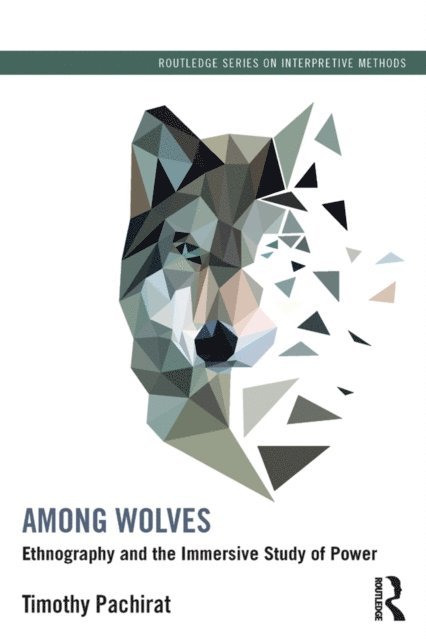
Summoned by an anonymous Prosecutor, ten contemporary ethnographers gather in an aging barn to hold a trial of Alice Goffman’s controversial ethnography, On the Run. But before the trial can get underway, a one-eyed wolfdog arrives with a mysterious liquid potion capable of rendering the ethnographers invisible in their fieldsites. Presented as a play that unfolds in seven acts, the ensuing drama provides readers with both a practical guide for how to conduct immersive participant-observation research and a sophisticated theoretical engagement with the relationship between ethnography as a research method and the operation of power. By interpolating "how-to" aspects of ethnographic research with deeper questions about ethnography’s relationship to power, this book presents a compelling introduction for those new to ethnography and rich theoretical insights for more seasoned ethnographic practitioners from across the social sciences. Just as ethnography as a research method depends crucially on serendipity, surprise, and an openness to ambiguity, the book’s dramatic and dialogic format encourages novices and experts alike to approach the study of power in ways that resist linear programs and dogmatic prescriptions. The result is a playful yet provocative invitation to rekindle those foundational senses of wonder and generative uncertainty that are all too often excluded from conversations about the methodologies and methods we bring to the study of the social world.