Tina Søreide - Böcker
Visar alla böcker från författaren Tina Søreide. Handla med fri frakt och snabb leverans.
7 produkter
7 produkter
673 kr
Skickas inom 7-10 vardagar
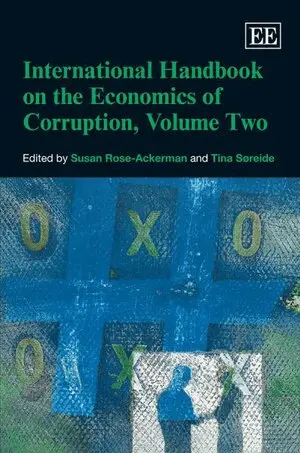
A companion volume to the International Handbook on the Economics of Corruption published in 2006, the specially commissioned papers in Volume Two present some of the best policy-oriented research in the field. They stress the institutional roots of corruption and include new research on topics ranging from corruption in regulation and procurement to vote buying and private firm payoffs.Understanding the consequences of corrupt transactions requires one to know what is being bought with a bribe and how the behavior of public and private actors has been affected. The contributors therefore emphasize how the economic analysis of corruption must take account of the broader context within which bribery and self-dealing operate. Several chapters offer new approaches to empirical research on corruption that range from individual-level data to the macro-economy. Chapters with an explicit policy focus deal with the efficacy of anti-corruption agencies, multi-stakeholder initiatives, red flag warning systems and international conventions.This cutting-edge work will be an unmatched resource for scholars and students of corruption, professionals in international aid and finance organizations, and scholars and professionals with more general interests in economic and political development.Contributors: T.S. Aidt, D.M. Aldrighi, E. Auriol, F. Boehm, E. Buscaglia, B. Clausen, S. Cole, A. Estache, B. Flyvbjerg, Y. Jeong, C. Kenny, A. Kraay, A. Lambert-Mogiliansky, E. Molloy, P. Murrell, M. Musatova, L.V. Peisakhin, G. Piga, J.D. Potter, F. Recanatini, S. Rose-Ackerman, T. Søreide, S. Straub, M. Tavits, A. Tran, R. Truex, M. Vagliasindi, P.C. Vicente, R.J. Weiner, L. Wren-Lewis
204 kr
Skickas inom 10-15 vardagar
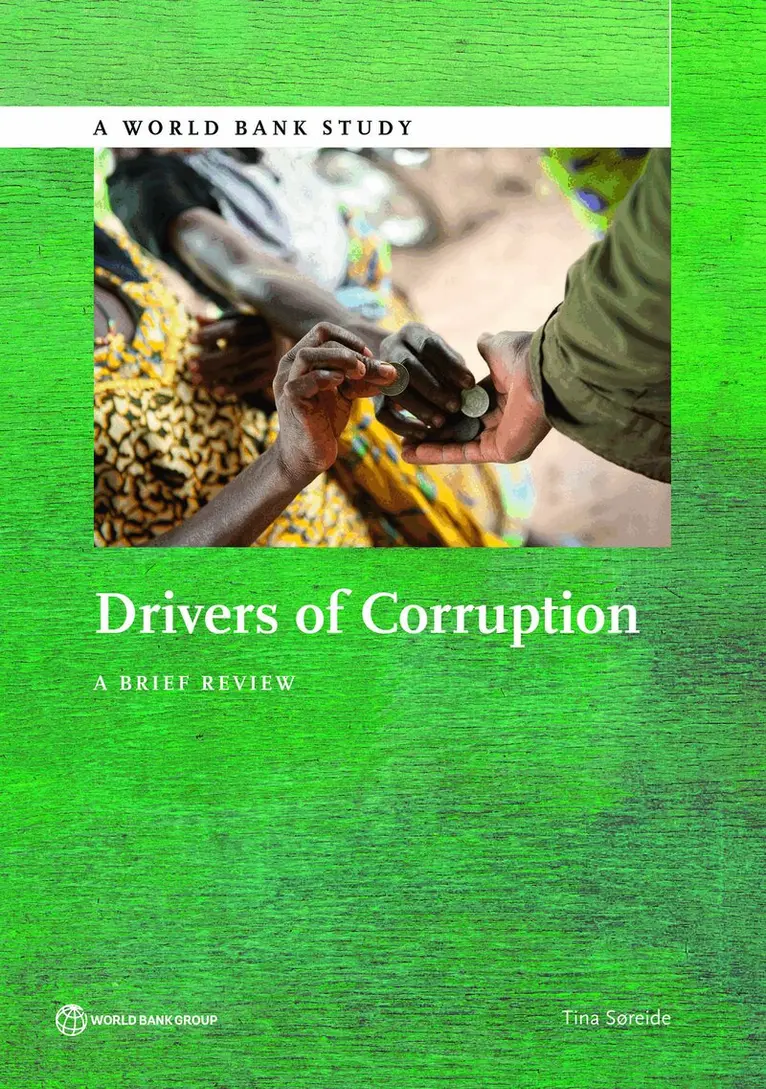
This report provides an overview of arguments explaining the risk of corruption. Corrupt acts are subject to decision making authority and assets available for grabbing. These assets can be stolen, created by artificial shortage, or become available as the result of a market failure. Assets that are especially exposed to corruption include profits from the private sector, revenues from the export of natural resources, aid and loans, and the proceeds of crime. Whether or not opportunities for corruption are exploited depends on the individuals involved, the institution or society they are part of, and the law enforcement circumstances. Corruption usually persists in situations in which players are aware of the facts but nonetheless condone the practice. Absence of reaction can result from information asymmetries (in which the people who are supposed to act are not aware of the need to act), coordination failure, patronage-determined loyalty, and incentive problems at the political level. This review of results and insights from different parts of the scholarly literature on corruption focuses on areas where research can guide anticorruption policy. The report also describes a number of corruption-related challenges in need of more attention from researchers.
474 kr
Skickas inom 7-10 vardagar
All societies develop their own norms about what is fair behavior and what is not. Violations of these norms, including acts of corruption, can collectively be described as forms of 'grabbing'. This unique volume addresses how grabbing hinders development at the sector level and in state administration. The contributors - researchers and practitioners who work on the ground in developing countries - present empirical data on the mechanisms at play and describe different types of unethical practices.The book's sixteen case studies explore why certain practices constitute forms of grabbing, what implications they have for the achievement of development goals, and how policy options should take the characteristics of grabbing into account. A broad range of sectors are covered, including extractive industries, construction, ports, utilities, finance, health, pharmaceuticals and education. The authors discuss political checks and balances, democratic elections and the law enforcement system, as well as the government s role in the allocation of land and as a development partner in other countries.The volume's original approach makes it a valuable resource for researchers and students interested in development, economics, governance and corruption. Development aid practitioners, as well as politicians and public officials in developing countries, will find it a useful aid in their work.Contributors: I. Amundsen, J. Andvig, T. Barasa, G. Bel, B. Chinsinga, L. Corkin, A. Estache, R. Foucart, S. Gloppen, S.-E. Helle, K. Hussman, E.G. Jansen, P. Le Billon, I. Lindkvist, J. F. Marteau, M. Poisson, G. Raballand, L. Rakner, J.C. Rivillas, I.A. Skage, A. Strand, A. Tostensen, J. Wells, L. Wren-Lewis
1 644 kr
Skickas inom 7-10 vardagar
Criminal law efficiency is a concept often referred to but seldom defined. Clarity, the author argues, is necessary for finding practical solutions to fundamental challenges in this area of law, especially with the criminal justice system itself at risk.Tina Søreide offers views in contrast to mainstream ideas on optimal criminal law responses to corruption, with emphasis on the fundamental role of the criminal justice system in the fight against corruption, and the effect this can have on other mechanisms in society. Her analysis explains the concept of criminal law efficiency through economic approaches and why many criminal law responses to corruption are at risk of becoming 'façade strategies' that may, in fact facilitate corruption.Corruption and Criminal Justice offers insights into the obstacles that policymakers and government advisors cannot ignore. It serves as an invaluable resource for advanced students and academics interested in law, economics, and large corporations.
2 022 kr
Skickas inom 7-10 vardagar
Achieving effective enforcement in cases of complex, multi-layered, multi-jurisdictional acts of bribery that occur in utmost secrecy is a challenging area of corporate crime enforcement. This thought-provoking book examines the scope, benefits and challenges of negotiated settlements - a form of non-trial enforcement - as a mechanism, and demonstrates the need for a more harmonized and principled approach to deterring corporate bribery.Written by a global team of experts with backgrounds in legal practice, policy work and academia, this timely book offers a truly international perspective, considering negotiated settlements in view of a variety of different legal systems and traditions. Drawing on recent empirical research, the contributors' analyses of these settlements in the context of fundamental criminal law principles offer unique insight and functional solutions to the difficult problem of holding corporations liable for crime.The book's deep reflection on criminal law principles will be beneficial for scholars and students of economic crime, corruption and criminal law. Equally, its contributions to a policy area undergoing rapid development will be invaluable for policymakers, enforcement practitioners and government officials.Contributors include: J. Arlen, R. Berzero, L. Borlini, K.E. Davis, P.H. Dubois, B. Garrett, S. Hawley, C. King, D. Kos, S. Lonati, N. Lord, L.A. Low, A. Makinwa, S. Oded, K.M. Peters, M. Pieth, B. Prelogar, T. Søreide, K. Vagle, S. Williams-Elegbe
3 293 kr
Skickas inom 7-10 vardagar
Presenting the broad spectrum of interdisciplinary academic research on corruption, this essential reference book examines anti-corruption legislation, governance mechanisms, international instruments and other preventative measures intended to tackle corruption.Including over 100 entries and adopting a comprehensive approach to researching and combating corruption, this Encyclopedia covers the key ideas, concepts and theories in corruption law. Featuring contemporary case studies from around the world, the work analyses the intersection of corruption law and the social sciences, as well as various manifestations of corruption – including bribery in both the private and public sectors, embezzlement and criminal mismanagement, and money laundering. The Encyclopedia also explores the work of intergovernmental anti-corruption organizations, such as the United Nations Convention Against Corruption (UNCAC) and the OECD Convention. This Encyclopedia will be essential reading for students and scholars of economic crime, law and business, and regulation and governance, as well as for international regulators, policymakers and politicians. Key Features:Over 100 concise entries from 124 international and interdisciplinary contributorsCase studies from across the globeDiscussion of anti-corruption legislation and governance mechanismsExploration of preventative measures and the future of tackling corruption
3 470 kr
Skickas inom 7-10 vardagar
A companion volume to the International Handbook on the Economics of Corruption published in 2006, the specially commissioned papers in Volume Two present some of the best policy-oriented research in the field. They stress the institutional roots of corruption and include new research on topics ranging from corruption in regulation and procurement to vote buying and private firm payoffs.Understanding the consequences of corrupt transactions requires one to know what is being bought with a bribe and how the behavior of public and private actors has been affected. The contributors therefore emphasize how the economic analysis of corruption must take account of the broader context within which bribery and self-dealing operate. Several chapters offer new approaches to empirical research on corruption that range from individual-level data to the macro-economy. Chapters with an explicit policy focus deal with the efficacy of anti-corruption agencies, multi-stakeholder initiatives, red flag warning systems and international conventions.This cutting-edge work will be an unmatched resource for scholars and students of corruption, professionals in international aid and finance organizations, and scholars and professionals with more general interests in economic and political development.Contributors: T.S. Aidt, D.M. Aldrighi, E. Auriol, F. Boehm, E. Buscaglia, B. Clausen, S. Cole, A. Estache, B. Flyvbjerg, Y. Jeong, C. Kenny, A. Kraay, A. Lambert-Mogiliansky, E. Molloy, P. Murrell, M. Musatova, L.V. Peisakhin, G. Piga, J.D. Potter, F. Recanatini, S. Rose-Ackerman, T. Søreide, S. Straub, M. Tavits, A. Tran, R. Truex, M. Vagliasindi, P.C. Vicente, R.J. Weiner, L. Wren-Lewis