T.M. Luhrmann - Böcker
Visar alla böcker från författaren T.M. Luhrmann. Handla med fri frakt och snabb leverans.
4 produkter
4 produkter
156 kr
Skickas inom 7-10 vardagar
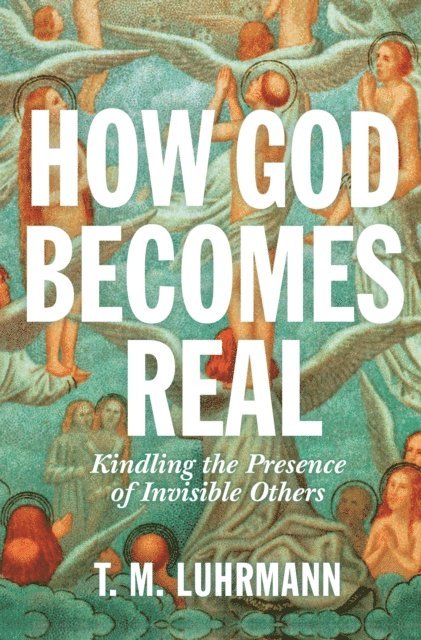
The hard work required to make God real, how it changes the people who do it, and why it helps explain the enduring power of faithHow do gods and spirits come to feel vividly real to people—as if they were standing right next to them? Humans tend to see supernatural agents everywhere, as the cognitive science of religion has shown. But it isn’t easy to maintain a sense that there are invisible spirits who care about you. In How God Becomes Real, acclaimed anthropologist and scholar of religion T. M. Luhrmann argues that people must work incredibly hard to make gods real and that this effort—by changing the people who do it and giving them the benefits they seek from invisible others—helps to explain the enduring power of faith.Drawing on ethnographic studies of evangelical Christians, pagans, magicians, Zoroastrians, Black Catholics, Santeria initiates, and newly orthodox Jews, Luhrmann notes that none of these people behave as if gods and spirits are simply there. Rather, these worshippers make strenuous efforts to create a world in which invisible others matter and can become intensely present and real. The faithful accomplish this through detailed stories, absorption, the cultivation of inner senses, belief in a porous mind, strong sensory experiences, prayer, and other practices. Along the way, Luhrmann shows why faith is harder than belief, why prayer is a metacognitive activity like therapy, why becoming religious is like getting engrossed in a book, and much more.A fascinating account of why religious practices are more powerful than religious beliefs, How God Becomes Real suggests that faith is resilient not because it provides intuitions about gods and spirits—but because it changes the faithful in profound ways.
Del 11 - Ethnographic Studies in Subjectivity
Our Most Troubling Madness
Case Studies in Schizophrenia across Cultures
Inbunden, Engelska, 2016
557 kr
Skickas inom 7-10 vardagar
Schizophrenia has long puzzled researchers in the fields of psychiatric medicine and anthropology. Why is it that the rates of developing schizophrenia - long the poster child for the biomedical model of psychiatric illness - are low in some countries and higher in others? And why do migrants to Western countries find that they are at higher risk for this disease after they arrive? T. M. Luhrmann and Jocelyn Marrow argue that the root causes of schizophrenia are not only biological, but also sociocultural. This book gives an intimate, personal account of those living with serious psychotic disorder in the United States, India, Africa, and Southeast Asia. It introduces the notion that social defeat-the physical or symbolic defeat of one person by another-is a core mechanism in the increased risk for psychotic illness. Furthermore, "care-as-usual" treatment as it occurs in the United States actually increases the likelihood of social defeat, while "care-as-usual" treatment in a country like India diminishes it.
Del 11 - Ethnographic Studies in Subjectivity
Our Most Troubling Madness
Case Studies in Schizophrenia across Cultures
Häftad, Engelska, 2016
242 kr
Skickas inom 7-10 vardagar
Schizophrenia has long puzzled researchers in the fields of psychiatric medicine and anthropology. Why is it that the rates of developing schizophrenia - long the poster child for the biomedical model of psychiatric illness - are low in some countries and higher in others? And why do migrants to Western countries find that they are at higher risk for this disease after they arrive? T. M. Luhrmann and Jocelyn Marrow argue that the root causes of schizophrenia are not only biological, but also sociocultural. This book gives an intimate, personal account of those living with serious psychotic disorder in the United States, India, Africa, and Southeast Asia. It introduces the notion that social defeat-the physical or symbolic defeat of one person by another-is a core mechanism in the increased risk for psychotic illness. Furthermore, "care-as-usual" treatment as it occurs in the United States actually increases the likelihood of social defeat, while "care-as-usual" treatment in a country like India diminishes it.
330 kr
Skickas inom 7-10 vardagar
The hard work required to make God real, how it changes the people who do it, and why it helps explain the enduring power of faithHow do gods and spirits come to feel vividly real to people—as if they were standing right next to them? Humans tend to see supernatural agents everywhere, as the cognitive science of religion has shown. But it isn’t easy to maintain a sense that there are invisible spirits who care about you. In How God Becomes Real, acclaimed anthropologist and scholar of religion T. M. Luhrmann argues that people must work incredibly hard to make gods real and that this effort—by changing the people who do it and giving them the benefits they seek from invisible others—helps to explain the enduring power of faith.Drawing on ethnographic studies of evangelical Christians, pagans, magicians, Zoroastrians, Black Catholics, Santeria initiates, and newly orthodox Jews, Luhrmann notes that none of these people behave as if gods and spirits are simply there. Rather, these worshippers make strenuous efforts to create a world in which invisible others matter and can become intensely present and real. The faithful accomplish this through detailed stories, absorption, the cultivation of inner senses, belief in a porous mind, strong sensory experiences, prayer, and other practices. Along the way, Luhrmann shows why faith is harder than belief, why prayer is a metacognitive activity like therapy, why becoming religious is like getting engrossed in a book, and much more.A fascinating account of why religious practices are more powerful than religious beliefs, How God Becomes Real suggests that faith is resilient not because it provides intuitions about gods and spirits—but because it changes the faithful in profound ways.