Tom Bösser - Böcker
Visar alla böcker från författaren Tom Bösser. Handla med fri frakt och snabb leverans.
2 produkter
2 produkter
1 095 kr
Skickas inom 10-15 vardagar
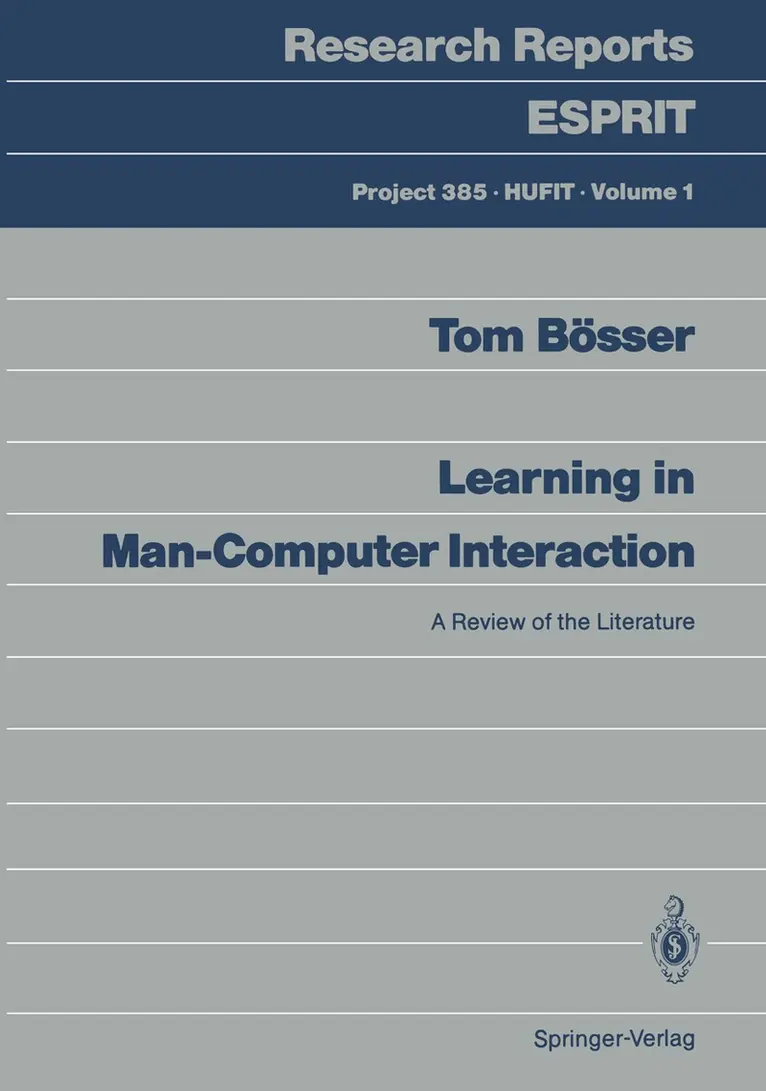
In the beginning of the 1980's it became evident that the European IT industry needed a substantial collaborative effort in the area of pre-competitive research and development. At that time several studies indicated that in the 90's and later a strategic lack in the economic power of European industry as a whole might result from the lack .of a competitive position in the key area of information technology. Therefore a strategic research program in this area was initiated by the Commission of the European Communities. This program was carefully planned and several hundred experts were involved in the process of definition and implementation. The program was named ESPRIT - European Strategic Programme for Research and Development in Information Technologies. At a very early phase of the program it was obvious that a substantial collaborative multinational effort in the direction of human factors in information technology should be undertaken. It became clear that only with the incorporation of human-factors-oriented knowledge into the product design technologies of the 90's could later success in the market be assured. Moreover, it was felt that Europe especially is well equipped to deal thoroughly with user issues in relation to information technology.
1 095 kr
Skickas inom 10-15 vardagar
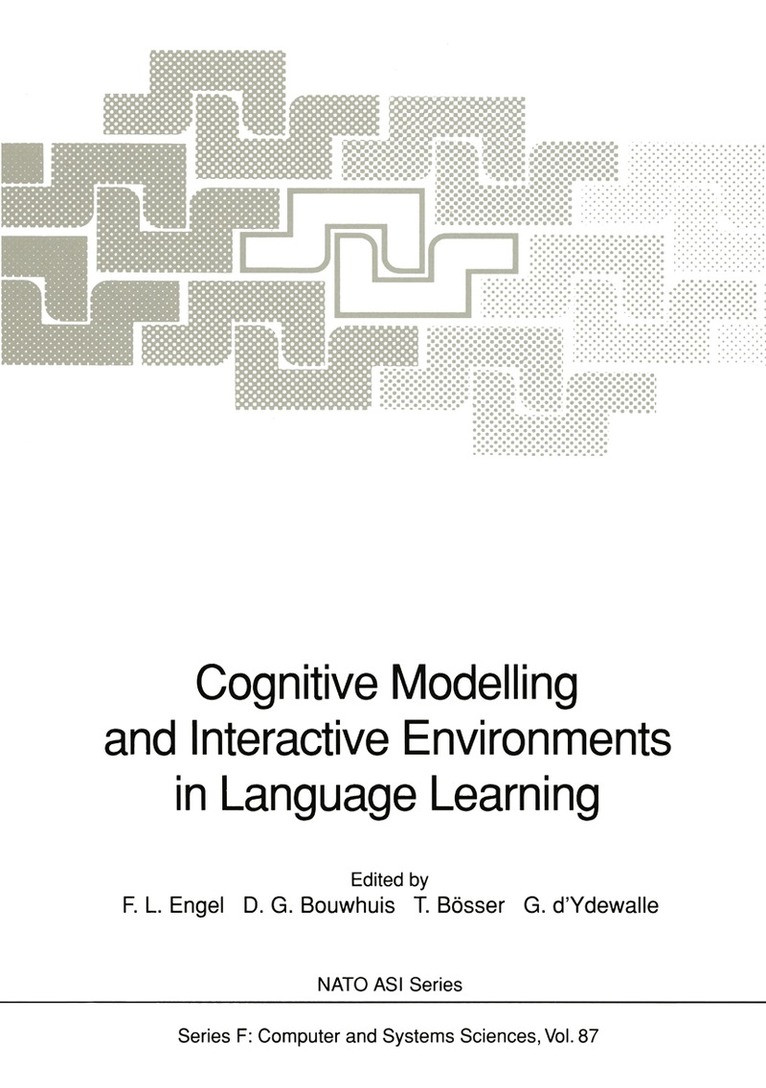
The papers in this book are the result of the NATO conference "Cognitive Modelling and Inter active Environments" that was held in Mierlo, the Netherlands, November 5 - 8, 1990. Within the framework of the NATO Advanced Research Workshops this invitational conference was naturally on learning, but it emphasized a number of factors that are not generally treated in dis cussions on learning and specifically in computer-assisted learning. It was realized by the orig inators of the conference that, with respect to computer-assisted instruction, the stage has not nearly been reached where it is well known how a successful interactive instructional environ ment has to be created. This contrasts strongly with the sheer number of computerized learning programs that exist already and continue to be produced. Frequently the motivation to create a computer-assisted learning program is heavily connected with a scientific discipline. Logically it is the proper task for instructional science to produce instructional programs. The high degree of formalization in linguistics allows one often in a straightforward way, to au tomate learning programs for language instruction. Artificial intelligence, in its endeavour to capture basic principles of knowledge representation and knowledge acquisition, leads naturally to Intelligent Tutoring Systems. Computer science is the logical breeding ground for programs that manipulate knowledge for many different students, that register actions reliably, and that automate parts of time-intensive teaching tasks. The joint concern of all of these approaches is the transfer of knowledge.