Tomáš Inspektor – författare
Visar alla böcker från författaren Tomáš Inspektor. Handla med fri frakt och snabb leverans.
12 produkter
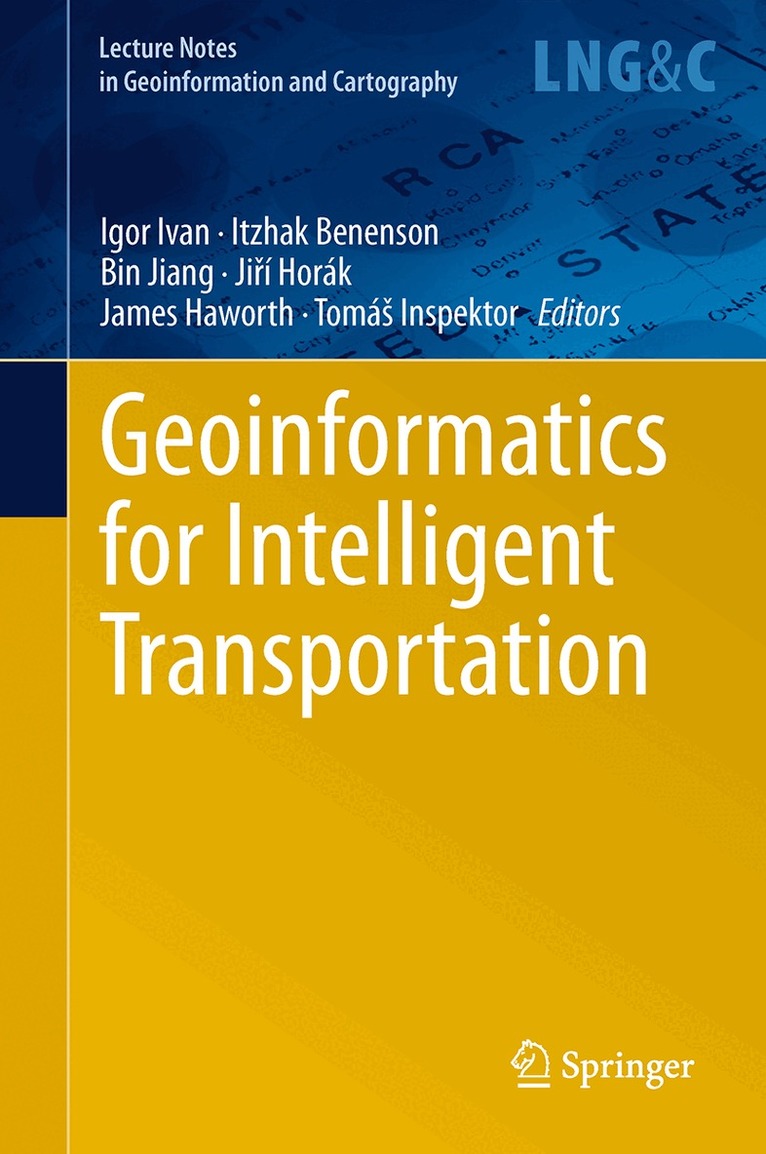
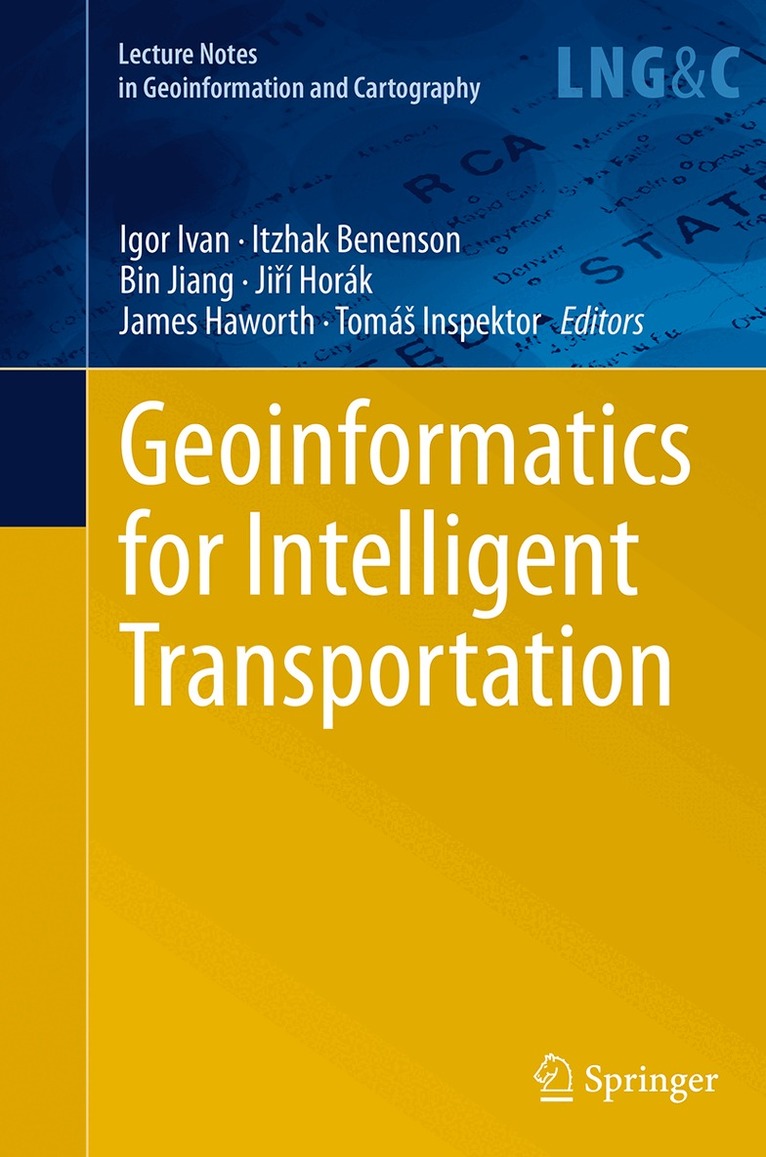
Geoinformatics for Intelligent Transportation
Av Igor Ivan, Itzhak Benenson m. fl.
Inbunden, 2014
1093 kr
Lägg i varukorg
The aim of the book is to present and discuss new methods, issues and challenges involved in geoinformatics’ contribution to making transportation more intelligent, efficient and human-friendly. It covers a wide range of topics related to transportation and geoinformatics. The themes are divided …
Geoinformatics for Intelligent Transportation
Av Tomas Inspektor, James Haworth m. fl.
E-bok, 2014
1427 kr
Lägg i varukorg
The aim of the book is to present and discuss new methods, issues and challenges involved in geoinformatics’ contribution to making transportation more intelligent, efficient and human-friendly. It covers a wide range of topics related to transportation and geoinformatics. The themes are divided …
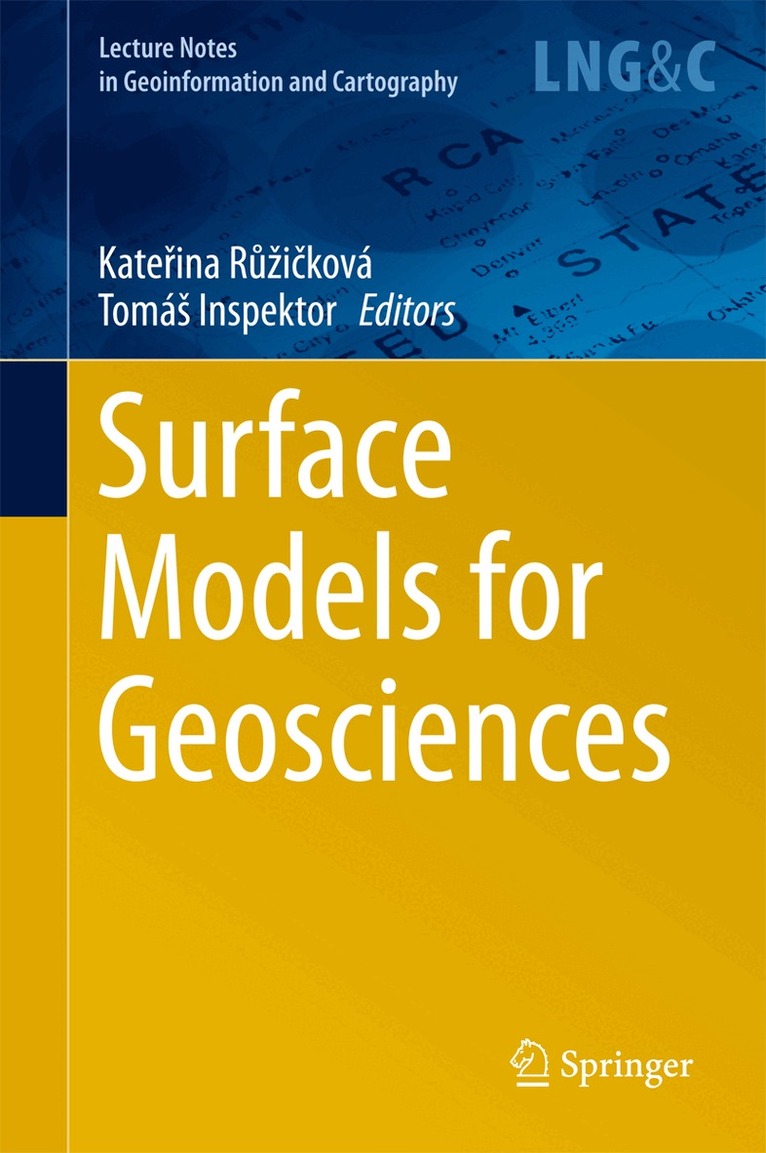
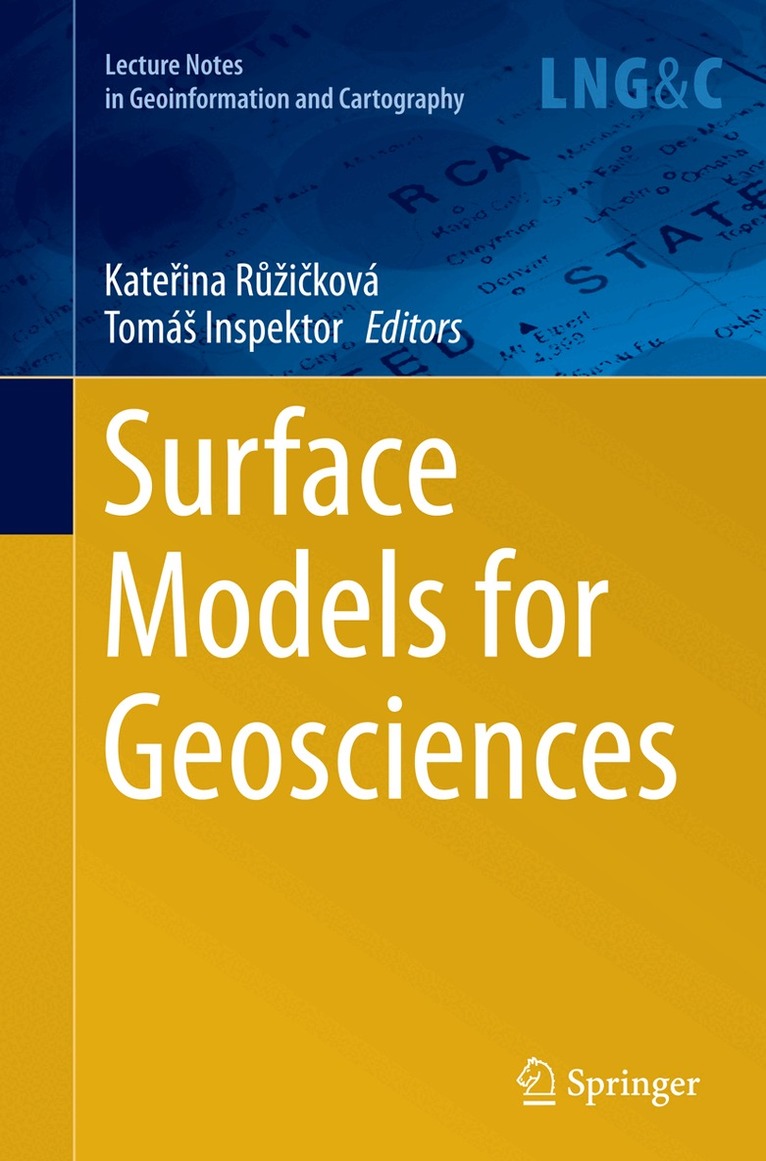
Surface Models for Geosciences
Av Kateřina Růžičková, Tomáš Inspektor
Inbunden, 2015
1093 kr
Lägg i varukorg
The aim of the conference is to present and discuss new methods, issues and challenges encountered in all parts of the complex process of gradual development and application of digital surface models. This process covers data capture, data generation, storage, model creation, validation, …
Surface Models for Geosciences
Av Tomas Inspektor, Katerina Ruzickova
E-bok, 2015
1459 kr
Lägg i varukorg
The aim of the conference is to present and discuss new methods, issues and challenges encountered in all parts of the complex process of gradual development and application of digital surface models. This process covers data capture, data generation, storage, model creation, validation, …
Geoinformatics for Intelligent Transportation
Av Igor Ivan, Itzhak Benenson m. fl.
Häftad, 2016
1093 kr
Lägg i varukorg
The aim of the book is to present and discuss new methods, issues and challenges involved in geoinformatics’ contribution to making transportation more intelligent, efficient and human-friendly. It covers a wide range of topics related to transportation and geoinformatics. The themes are divided …
Surface Models for Geosciences
Av Kateřina Růžičková, Tomáš Inspektor
Häftad, 2016
1093 kr
Lägg i varukorg
The aim of the conference is to present and discuss new methods, issues and challenges encountered in all parts of the complex process of gradual development and application of digital surface models. This process covers data capture, data generation, storage, model creation, validation, …
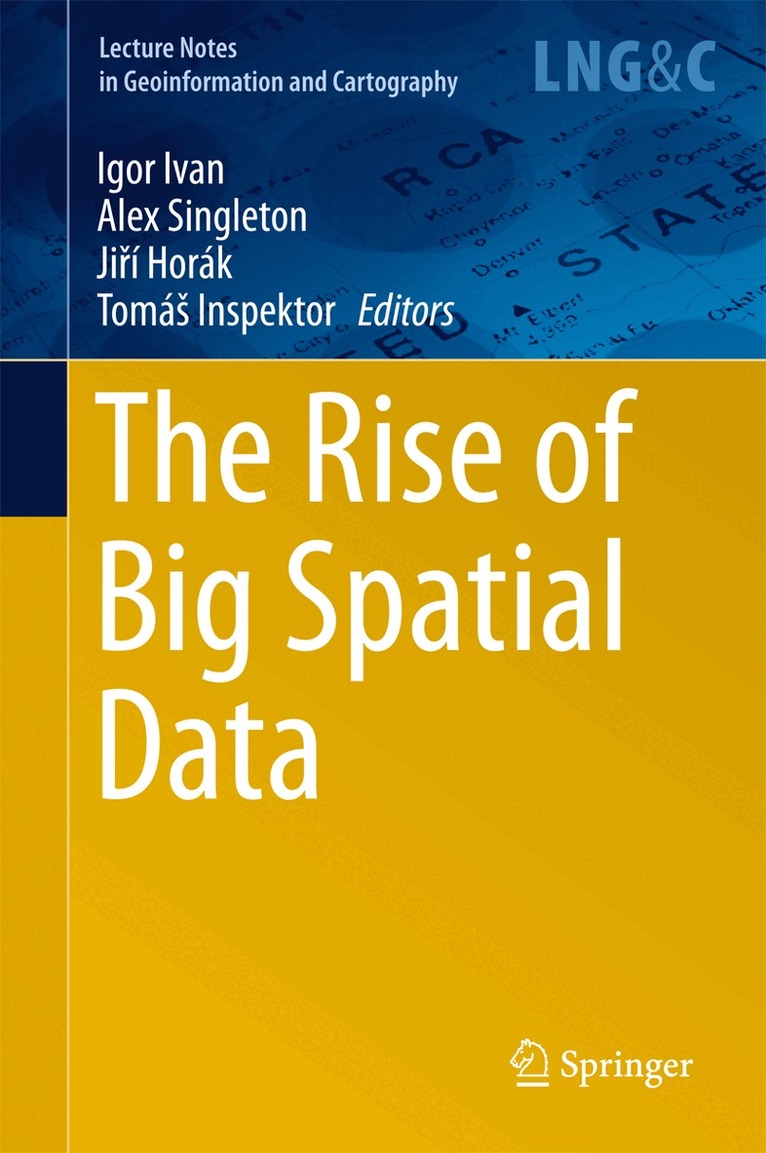
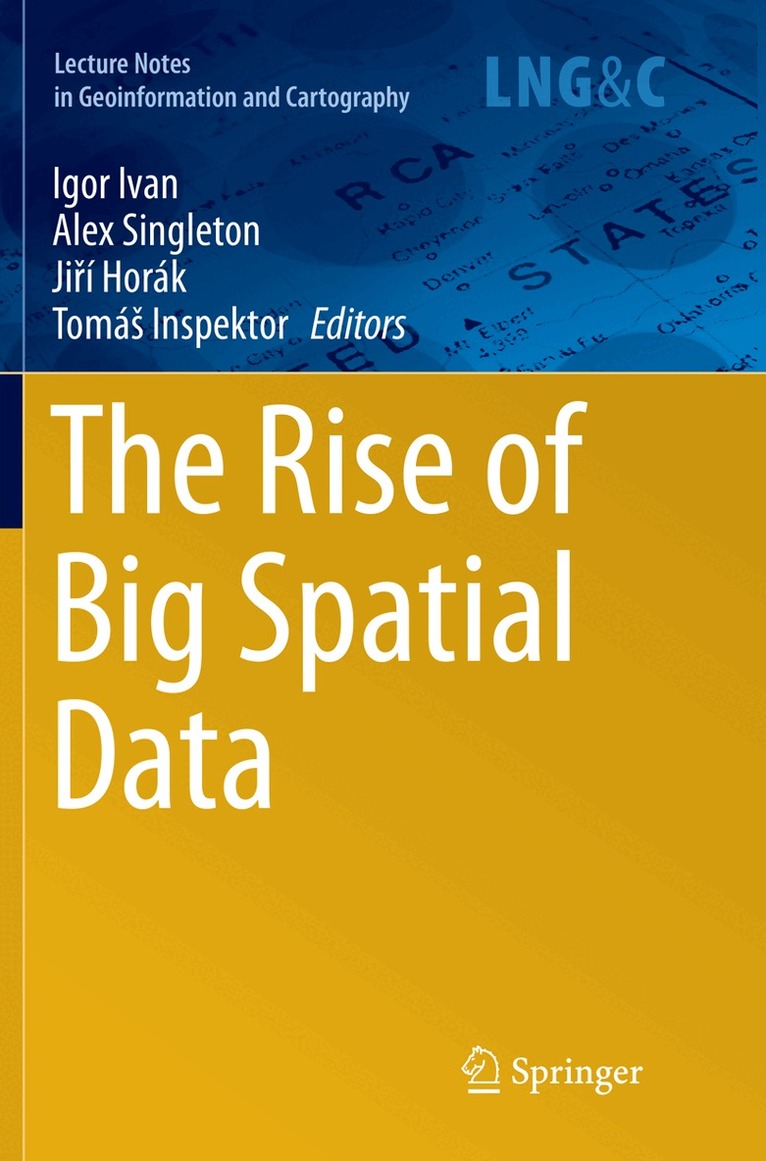
Rise of Big Spatial Data
Av Igor Ivan, Alex Singleton m. fl.
Inbunden, 2016
2505 kr
Lägg i varukorg
This edited volume gathers the proceedings of the Symposium GIS Ostrava 2016, the Rise of Big Spatial Data, held at the Technical University of Ostrava, Czech Republic, March 16–18, 2016. Combining theoretical papers and applications by authors from around the globe, it summarises the latest …
Rise of Big Spatial Data
Av Tomas Inspektor, Jiri Horak m. fl.
E-bok, 2016
3181 kr
Lägg i varukorg
This edited volume gathers the proceedings of the Symposium GIS Ostrava 2016, the Rise of Big Spatial Data, held at the Technical University of Ostrava, Czech Republic, March 16–18, 2016. Combining theoretical papers and applications by authors from around the globe, it summarises the latest …
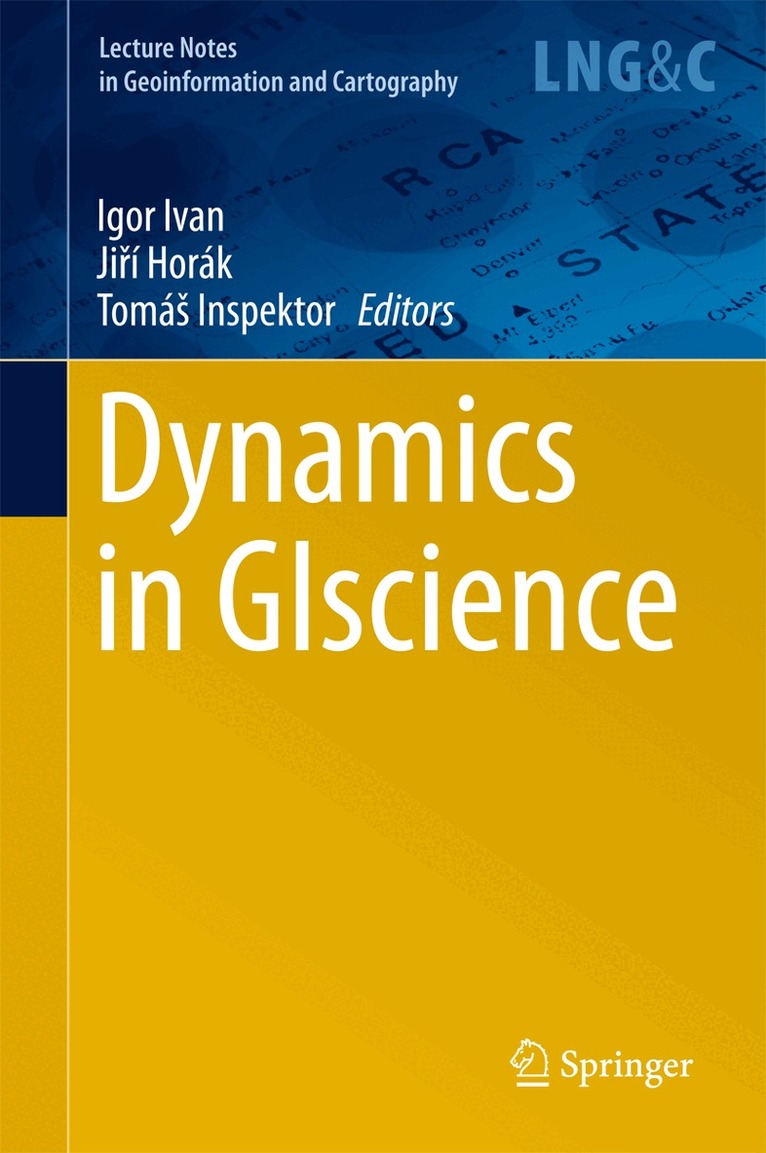
Dynamics in GIscience
Av Igor Ivan, Jiří Horák m. fl.
Inbunden, 2017
2179 kr
Lägg i varukorg
This book is intended for researchers, practitioners and students who are interested in the current trends and want to make their GI applications and research dynamic. Time is the key element of contemporary GIS: mobile and wearable electronics, sensor networks, UAVs and other mobile snoopers, the …
Dynamics in GIscience
Av Tomas Inspektor, Jiri Horak m. fl.
E-bok, 2017
2925 kr
Lägg i varukorg
This book is intended for researchers, practitioners and students who are interested in the current trends and want to make their GI applications and research dynamic. Time is the key element of contemporary GIS: mobile and wearable electronics, sensor networks, UAVs and other mobile snoopers, the …
Rise of Big Spatial Data
Av Igor Ivan, Alex Singleton m. fl.
Häftad, 2018
2505 kr
Lägg i varukorg
This edited volume gathers the proceedings of the Symposium GIS Ostrava 2016, the Rise of Big Spatial Data, held at the Technical University of Ostrava, Czech Republic, March 16–18, 2016. Combining theoretical papers and applications by authors from around the globe, it summarises the latest …
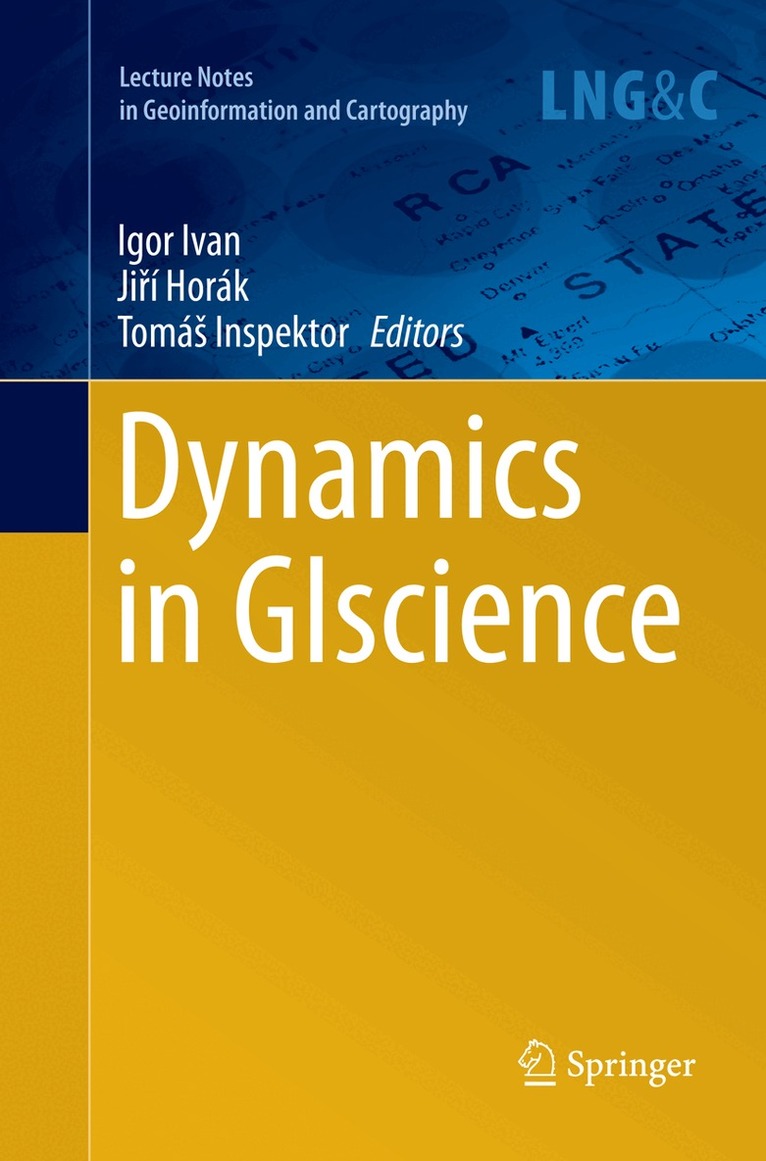
Dynamics in GIscience
Av Igor Ivan, Jiří Horák m. fl.
Häftad, 2018
2179 kr
Lägg i varukorg
This book is intended for researchers, practitioners and students who are interested in the current trends and want to make their GI applications and research dynamic. Time is the key element of contemporary GIS: mobile and wearable electronics, sensor networks, UAVs and other mobile snoopers, the …