Tony Gillespie – författare
Visar alla böcker från författaren Tony Gillespie. Handla med fri frakt och snabb leverans.
3 produkter
3 produkter
2 901 kr
Läs direkt efter köp
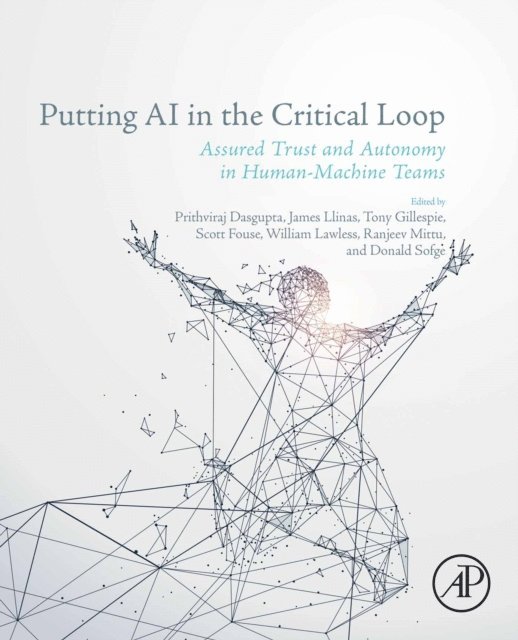
Providing a high level of autonomy for a human-machine team requires assumptions that address behavior and mutual trust. The performance of a human-machine team is maximized when the partnership provides mutual benefits that satisfy design rationales, balance of control, and the nature of autonomy. The distinctively different characteristics and features of humans and machines are likely why they have the potential to work well together, overcoming each other''s weaknesses through cooperation, synergy, and interdependence which forms a "collective intelligence. Trust is bidirectional and two-sided; humans need to trust AI technology, but future AI technology may also need to trust humans.Putting AI in the Critical Loop: Assured Trust and Autonomy in Human-Machine Teams focuses on human-machine trust and "assured performance and operation in order to realize the potential of autonomy. This book aims to take on the primary challenges of bidirectional trust and performance of autonomous systems, providing readers with a review of the latest literature, the science of autonomy, and a clear path towards the autonomy of human-machine teams and systems. Throughout this book, the intersecting themes of collective intelligence, bidirectional trust, and continual assurance form the challenging and extraordinarily interesting themes which will help lay the groundwork for the audience to not only bridge the knowledge gaps, but also to advance this science to develop better solutions.- Assesses the latest research advances, engineering challenges, and the theoretical gaps surrounding the question of autonomy- Reviews the challenges of autonomy (e.g., trust, ethics, legalities, etc.), including gaps in the knowledge of the science- Offers a path forward to solutions- Investigates the value of trust by humans of HMTs, as well as the bidirectionality of trust, understanding how machines learn to trust their human teammates
Häftad, Engelska, 2024
2 038 kr
Skickas inom 10-15 vardagar
Putting AI in the Critical Loop: Assured Trust and Autonomy in Human-Machine Teams takes on the primary challenges of bidirectional trust and performance of autonomous systems, providing readers with a review of the latest literature, the science of autonomy, and a clear path towards the autonomy of human-machine teams and systems. Throughout this book, the intersecting themes of collective intelligence, bidirectional trust, and continual assurance form the challenging and extraordinarily interesting themes which will help lay the groundwork for the audience to not only bridge knowledge gaps, but also to advance this science to develop better solutions. The distinctively different characteristics and features of humans and machines are likely why they have the potential to work well together, overcoming each other's weaknesses through cooperation, synergy, and interdependence which forms a "collective intelligence.� Trust is bidirectional and two-sided; humans need to trust AI technology, but future AI technology may also need to trust humans.Assesses the latest research advances, engineering challenges, and the theoretical gaps surrounding the question of autonomyReviews the challenges of autonomy (e.g., trust, ethics, legalities, etc.), including gaps in the knowledge of the scienceOffers a path forward to solutionsInvestigates the value of trust by humans of HMTs, as well as the bidirectionality of trust, understanding how machines learn to trust their human teammates
Inbunden, Engelska, 2019
1 913 kr
Skickas inom 3-6 vardagar
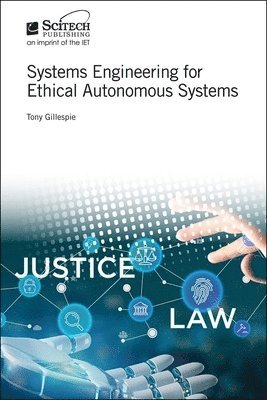
The transfer of responsibility for decisions and actions from humans to machines presents difficult problems for all those concerned with new concepts, their development and use. This book gives practical help by discussing the issues in the context of product design, and gives a methodology to solve them.The design cycle for autonomous systems is described, set in the context of human decision-making and the evolving ethical and legal environment. These are explained in separate chapters that will be invaluable to engineers and all the professions associated with autonomous systems.Systems engineering methods, used for weapon systems, are described. These are developed for both military and civil applications. A detailed worked example demonstrates the legal limits imposed on Lethal Autonomous Weapon Systems (LAWS) by current international law.