Torben Krings – författare
Visar alla böcker från författaren Torben Krings. Handla med fri frakt och snabb leverans.
5 produkter
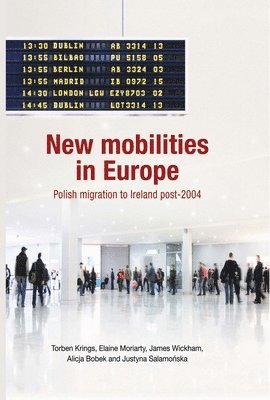
New Mobilities in Europe
Polish Migration to Ireland Post-2004
Av Torben Krings, Elaine Moriarty m. fl.
Inbunden, 2013
1123 kr
Lägg i varukorg
This book examines Polish migration to Ireland in the context of ‘new mobilities in Europe’. It includes detailed accounts of the working lives of a group of mainly skilled Polish migrants in Dublin. They were interviewed at regular intervals as part of a Qualitative Panel Study. Through this novel …
Die Transnationalisierung der Arbeitswelt am Beispiel von Erwerbsmobilität in der Europäischen Union
Häftad, 2022
670 kr
Lägg i varukorg
Dieses Buch untersucht den Bedeutungswandel innereuropäischer Erwerbsmobilität im 21. Jahrhundert. Im Mittelpunkt stehen die Triebkräfte, die Arbeitsmarktauswirkungen und die Regulierung dieser Mobilität. Es wird gezeigt, dass es in den „postindustriellen“ Gesellschaften Westeuropas eine Nachfrage …
Die Transnationalisierung der Arbeitswelt am Beispiel von Erwerbsmobilität in der Europäischen Union
E-bok, 2022
717 kr
Lägg i varukorg
Dieses Buch untersucht den Bedeutungswandel innereuropäischer Erwerbsmobilität im 21. Jahrhundert. Im Mittelpunkt stehen die Triebkräfte, die Arbeitsmarktauswirkungen und die Regulierung dieser Mobilität. Es wird gezeigt, dass es in den „postindustriellen“ Gesellschaften Westeuropas eine Nachfrage …
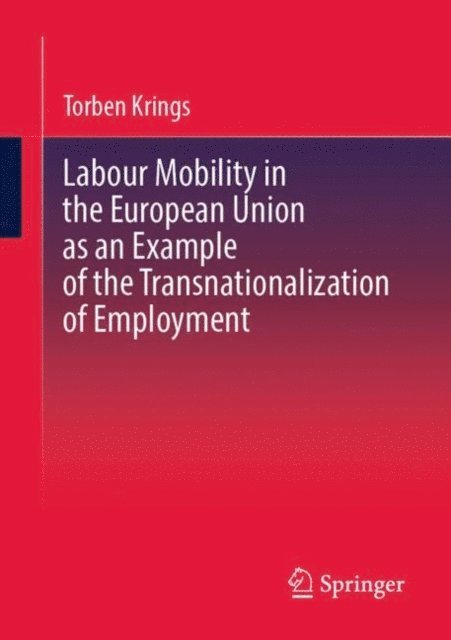
Labour Mobility in the European Union as an Example of the Transnationalization of Employment
Häftad, 2024
825 kr
Lägg i varukorg
This book examines the changing significance of intra-European labor mobility in the 21st century. The focus is on the driving forces, the labor market effects and the regulation of this mobility. It is shown that there is a demand for workers with different qualifications in the "post-industrial" …
Labour Mobility in the European Union as an Example of the Transnationalization of Employment
E-bok, 2024
1059 kr
Lägg i varukorg
This book examines the changing significance of intra-European labor mobility in the 21st century. The focus is on the driving forces, the labor market effects and the regulation of this mobility. It is shown that there is a demand for workers with different qualifications in the "post-industrial" …