
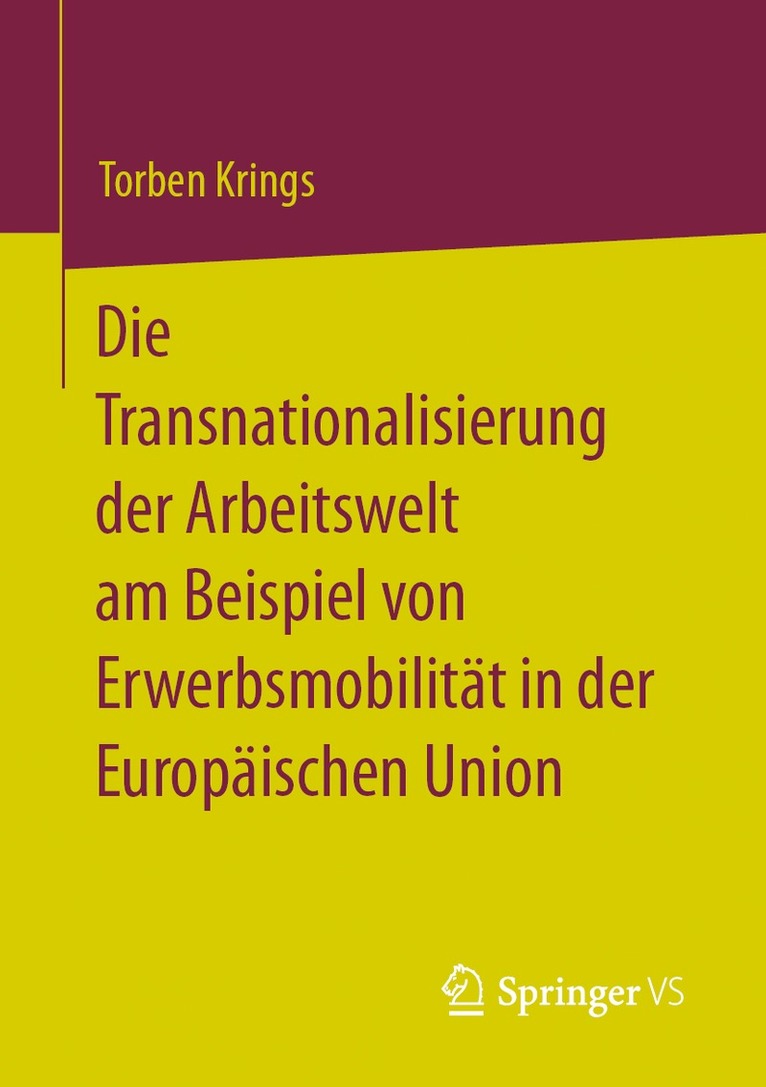
Die Transnationalisierung der Arbeitswelt am Beispiel von Erwerbsmobilität in der Europäischen Union
Torben Krings
Häftad, 2022
672 kr
1 037 kr
Läs direkt i Bokus Reader – eller ladda ned till din enhet
This book examines the changing significance of intra-European labor mobility in the 21st century. The focus is on the driving forces, the labor market effects and the regulation of this mobility. It is shown that there is a demand for workers with different qualifications in the "post-industrial" societies of Western Europe. This demand is primarily met by migration from the enlarged EU. However, this is no longer traditional labor migration, but the mobility of EU citizens. This brings with it new opportunities, but also challenges in a transnational mobility space, which is also a space of inequality.
Torben Krings
Häftad, 2022
672 kr
Torben Krings
702 kr
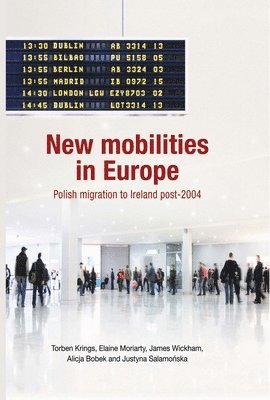
Torben Krings, Elaine Moriarty, James Wickham, Alicja Bobek, Justyna Salamonska
Inbunden, 2013
1 099 kr

Torben Krings
Häftad, 2024
828 kr
Torben Krings
702 kr
Torben Krings
Häftad, 2022
672 kr
Torben Krings, Elaine Moriarty, James Wickham, Alicja Bobek, Justyna Salamonska
Inbunden, 2013
1 099 kr





1 037 kr
Läs direkt i Bokus Reader – eller ladda ned till din enhet
This book examines the changing significance of intra-European labor mobility in the 21st century. The focus is on the driving forces, the labor market effects and the regulation of this mobility. It is shown that there is a demand for workers with different qualifications in the "post-industrial" societies of Western Europe. This demand is primarily met by migration from the enlarged EU. However, this is no longer traditional labor migration, but the mobility of EU citizens. This brings with it new opportunities, but also challenges in a transnational mobility space, which is also a space of inequality.
Torben Krings
Häftad, 2022
672 kr
Torben Krings
702 kr
Torben Krings, Elaine Moriarty, James Wickham, Alicja Bobek, Justyna Salamonska
Inbunden, 2013
1 099 kr
Torben Krings
Häftad, 2024
828 kr
Torben Krings
702 kr
Torben Krings
Häftad, 2022
672 kr
Torben Krings, Elaine Moriarty, James Wickham, Alicja Bobek, Justyna Salamonska
Inbunden, 2013
1 099 kr
1 037 kr
Läs direkt i Bokus Reader – eller ladda ned till din enhet
This book examines the changing significance of intra-European labor mobility in the 21st century. The focus is on the driving forces, the labor market effects and the regulation of this mobility. It is shown that there is a demand for workers with different qualifications in the "post-industrial" societies of Western Europe. This demand is primarily met by migration from the enlarged EU. However, this is no longer traditional labor migration, but the mobility of EU citizens. This brings with it new opportunities, but also challenges in a transnational mobility space, which is also a space of inequality.
Torben Krings
Häftad, 2022
672 kr
Torben Krings
702 kr
Torben Krings, Elaine Moriarty, James Wickham, Alicja Bobek, Justyna Salamonska
Inbunden, 2013
1 099 kr
Torben Krings
Häftad, 2024
828 kr
Torben Krings
702 kr
Torben Krings
Häftad, 2022
672 kr
Torben Krings, Elaine Moriarty, James Wickham, Alicja Bobek, Justyna Salamonska
Inbunden, 2013
1 099 kr