Tore Petersen - Böcker
Visar alla böcker från författaren Tore Petersen. Handla med fri frakt och snabb leverans.
4 produkter
4 produkter
645 kr
Skickas inom 10-15 vardagar
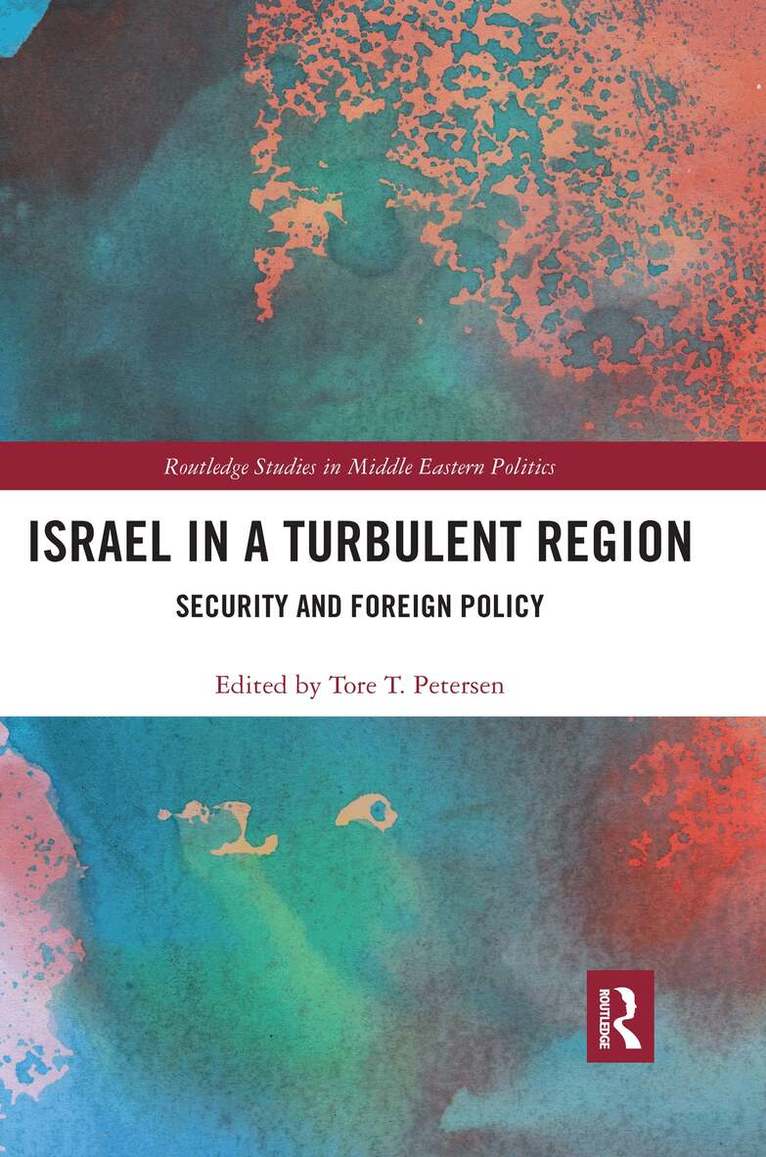
This anthology examines and deconstructs what Israeli security looks like and how its various security identities have evolved both before the establishment of the state and in the years and decades since 1948. It casts light on how aspects of Israel’s foreign relations have been shaped as much by internal politics as by external challenge. Further, not only does it answer the questions surrounding Israel’s past, but examines carefully what type of country it has now become.Compared to much of the turbulence in the region, Israel’s diplomacies have been remarkably resilient and inventive. With the background of 100th anniversary of the Balfour declaration this book is a multidisciplinary study using several different methodological approaches; from discursive analyses, to theories of memories and identity, to interviews with Israeli soldiers in the field, to a legal approach to the topic, as well as International Relations studies and traditional archival studies. South Africa was one of Israel’s main partners in terms of security cooperation and weapons research and development until the fall of the apartheid regime. This has been compensated with Israel opening up diplomatic relations with China (1991) and India (1992) and extending its ties with Japan. While the EU often criticize Israel’s policies against the Palestinians, this is mostly rhetoric as for practical purposes Israel is like a member of the EU. This comprehensive volume studying contemporary Israel is an invaluable resource for students and scholars interested in Foreign and Security Policy, Israel and the Middle East.
2 091 kr
Skickas inom 10-15 vardagar
This anthology examines and deconstructs what Israeli security looks like and how its various security identities have evolved both before the establishment of the state and in the years and decades since 1948. It casts light on how aspects of Israel’s foreign relations have been shaped as much by internal politics as by external challenge. Further, not only does it answer the questions surrounding Israel’s past, but examines carefully what type of country it has now become.Compared to much of the turbulence in the region, Israel’s diplomacies have been remarkably resilient and inventive. With the background of 100th anniversary of the Balfour declaration this book is a multidisciplinary study using several different methodological approaches; from discursive analyses, to theories of memories and identity, to interviews with Israeli soldiers in the field, to a legal approach to the topic, as well as International Relations studies and traditional archival studies. South Africa was one of Israel’s main partners in terms of security cooperation and weapons research and development until the fall of the apartheid regime. This has been compensated with Israel opening up diplomatic relations with China (1991) and India (1992) and extending its ties with Japan. While the EU often criticize Israel’s policies against the Palestinians, this is mostly rhetoric as for practical purposes Israel is like a member of the EU. This comprehensive volume studying contemporary Israel is an invaluable resource for students and scholars interested in Foreign and Security Policy, Israel and the Middle East.
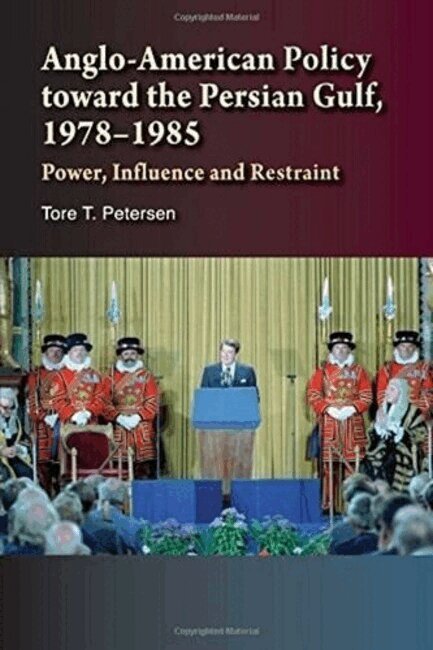
Anglo-American Policy Toward the Persian Gulf, 1978-1985
Power, Influence and Restraint
Inbunden, Engelska, 2014
1 693 kr
Skickas inom 7-10 vardagar
For many commentators and historians the announcement of the Carter Doctrine signaled the end of the British presence and the final transfer of power to the United States in the Persian Gulf. But on the ground the reality was different, after the announcement of the British leaving the Persian Gulf in 1971, formal positions were replaced by informal ones. Britain still ran much of the political, economic and military life in the lower Gulf and in the Arabian Peninsula. The transition from formal to informal empire was seamless: British influence remained large and almost paramount in the region. Margaret Thatcher's premiership saw a sharp increase in British influence not only in the traditional British enclaves of the Persian Gulf sheikdoms, but surprisingly even in Saudi Arabia. The historic Al-Yamamah deal with Saudi Arabia in 1985, selling advanced fighter aircraft, was Britain's largest ever arms deal. While British influence in the Gulf increased, the Americans floundered culminating in the ignominy of the Iran/Contra scandal, and the Reagan administration meekly accepting Iraqi dictator Saddam Hussein's apology for attacking the USS Stark killing 34 American sailors in May 1987 payback for the Irani-American rapprochement. Tore T. Petersen sets out the policy objectives of Great Britain and the United States as they confronted the initial emergence of fundamentalist Islam, with the occupation of the Holy Mosque in Mecca and Khomenei's revolution in Iran. Research by the author in the Nixon, Carter and Reagan presidential libraries provides strong evidence for US strategy based on Nixonian foreign policy objectives, supported all the way through to the Reagan administration.
Anglo-American Policy Toward the Persian Gulf, 1978-1985
Power, Influence and Restraint
Häftad, Engelska, 2015
503 kr
Skickas inom 7-10 vardagar
For many commentators and historians the announcement of the Carter Doctrine signaled the end of the British presence and the final transfer of power to the United States in the Persian Gulf. But on the ground the reality was different, after the announcement of the British leaving the Persian Gulf in 1971, formal positions were replaced by informal ones. Britain still ran much of the political, economic and military life in the lower Gulf and in the Arabian Peninsula. The transition from formal to informal empire was seamless: British influence remained large and almost paramount in the region. Margaret Thatcher's premiership saw a sharp increase in British influence not only in the traditional British enclaves of the Persian Gulf sheikdoms, but surprisingly even in Saudi Arabia. The historic Al-Yamamah deal with Saudi Arabia in 1985, selling advanced fighter aircraft, was Britain's largest ever arms deal. While British influence in the Gulf increased, the Americans floundered culminating in the ignominy of the Iran/Contra scandal, and the Reagan administration meekly accepting Iraqi dictator Saddam Hussein's apology for attacking the USS Stark killing 34 American sailors in May 1987 payback for the Irani-American rapprochement. Tore T. Petersen sets out the policy objectives of Great Britain and the United States as they confronted the initial emergence of fundamentalist Islam, with the occupation of the Holy Mosque in Mecca and Khomenei's revolution in Iran. Research by the author in the Nixon, Carter and Reagan presidential libraries provides strong evidence for US strategy based on Nixonian foreign policy objectives, supported all the way through to the Reagan administration.