Toshiaki Tamaki – författare
Visar alla böcker från författaren Toshiaki Tamaki. Handla med fri frakt och snabb leverans.
7 produkter
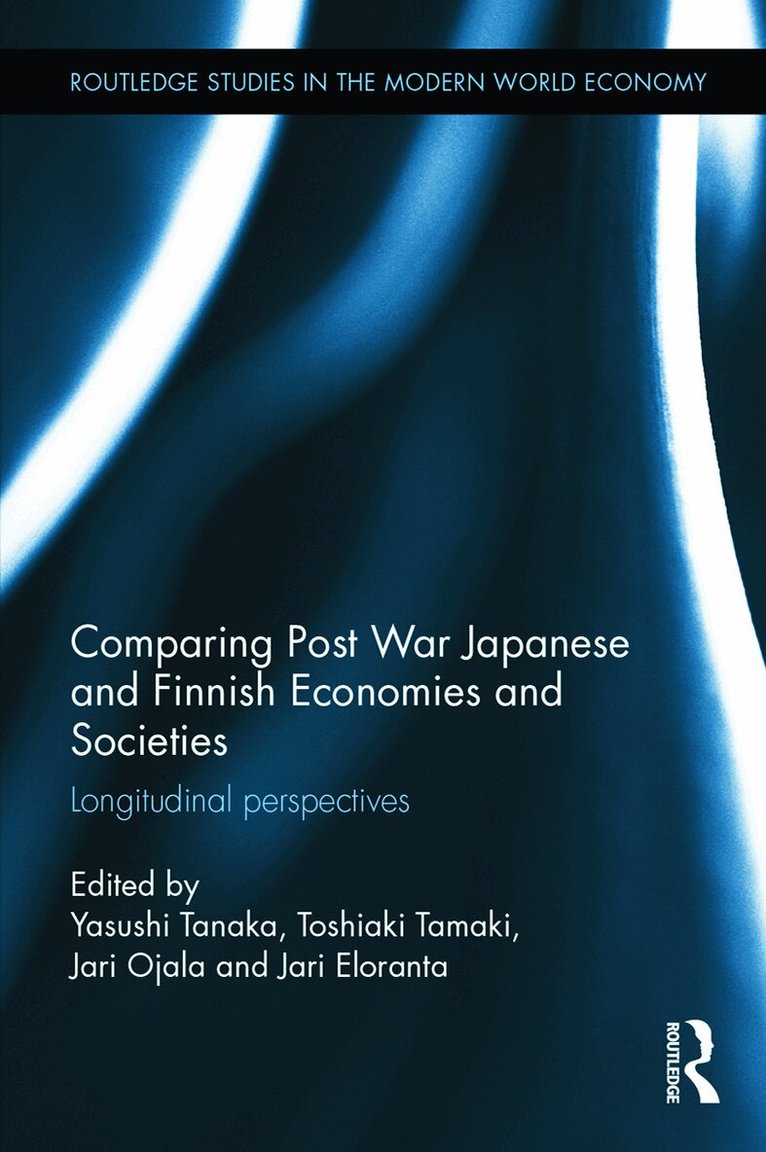
Comparing Post War Japanese and Finnish Economies and Societies
Longitudinal perspectives
Av Yasushi Tanaka, Toshiaki Tamaki m. fl.
Inbunden, 2014
2760 kr
Lägg i varukorg
This book compares two countries with striking parallels in economic and political outcomes, yet with some distinct features in terms of institutional structures, relative size, and culture. Therefore, this book forms a fruitful platform for the study of the similarities and differences in the …
Merchants in Global Economic History
Intermediation, Information, Trust, and Exchange
E-bok, 2026
838 kr
Lägg i varukorg
In this book, Toshiaki Tamaki analyses merchant and entrepreneurial activity from ancient times to the twenty-first century, arguing that these intermediaries drive global market expansion and institutional development, as they help to connect distant regions and reduce information asymmetry. The …
Merchants in Global Economic History
Intermediation, Information, Trust, and Exchange
E-bok, 2026
838 kr
Lägg i varukorg
In this book, Toshiaki Tamaki analyses merchant and entrepreneurial activity from ancient times to the twenty-first century, arguing that these intermediaries drive global market expansion and institutional development, as they help to connect distant regions and reduce information asymmetry. The …
Merchants in Global Economic History
Intermediation, Information, Trust, and Exchange
Inbunden, 2026
2601 kr
Lägg i varukorg
In this book, Toshiaki Tamaki analyses merchant and entrepreneurial activity from ancient times to the twenty-first century, arguing that these intermediaries drive global market expansion and institutional development, as they help to connect distant regions and reduce information asymmetry.The …
Comparing Post War Japanese and Finnish Economies and Societies
Longitudinal perspectives
Av Yasushi Tanaka, Toshiaki Tamaki m. fl.
Häftad, 2018
725 kr
Lägg i varukorg
This book compares two countries with striking parallels in economic and political outcomes, yet with some distinct features in terms of institutional structures, relative size, and culture. Therefore, this book forms a fruitful platform for the study of the similarities and differences in the …
Comparing Post War Japanese and Finnish Economies and Societies
Longitudinal perspectives
Av Jari Eloranta, Jari Ojala m. fl.
E-bok, 2014
849 kr
Lägg i varukorg
This book compares two countries with striking parallels in economic and political outcomes, yet with some distinct features in terms of institutional structures, relative size, and culture. Therefore, this book forms a fruitful platform for the study of the similarities and differences in the …
Comparing Post War Japanese and Finnish Economies and Societies
Longitudinal perspectives
Av Jari Eloranta, Jari Ojala m. fl.
E-bok, 2014
830 kr
Lägg i varukorg
This book compares two countries with striking parallels in economic and political outcomes, yet with some distinct features in terms of institutional structures, relative size, and culture. Therefore, this book forms a fruitful platform for the study of the similarities and differences in the …